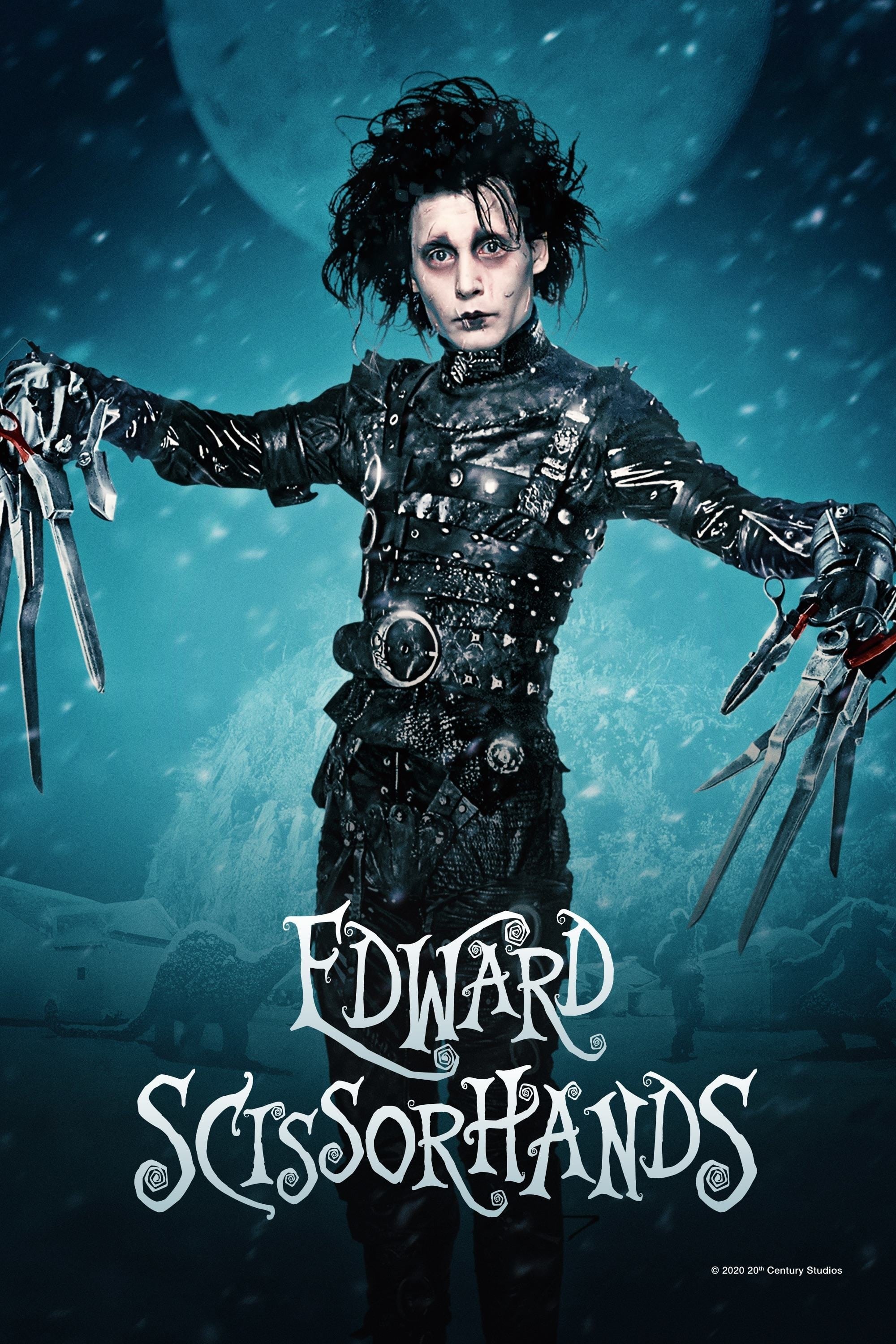
Edward Scissorhands (1990) Movie Review
Edward Scissorhands (1990) Movie Review
In the vast landscape of cinematic fairy tales, few films capture the delicate balance between whimsy and melancholy quite like Tim Burton’s Edward Scissorhands. Released in 1990, this gothic romantic fantasy stands as a masterpiece that transcends conventional storytelling, weaving together themes of acceptance, isolation, and the bittersweet nature of love. More than three decades after its release, Edward Scissorhands remains a testament to Burton’s visionary filmmaking and continues to resonate with audiences worldwide.
A Gothic Fairy Tale for the Modern Age
Edward Scissorhands tells the story of an artificial humanoid created by an eccentric inventor who dies before completing his work, leaving his creation with scissor blades instead of hands. When Avon saleswoman Peg Boggs discovers Edward living alone in a gothic mansion overlooking a pastel-colored suburb, she brings him into her family’s world, setting in motion a tale that explores the complexities of being different in a conformist society.
The film’s narrative structure follows the classic fairy tale formula while subverting expectations at every turn. Burton and screenwriter Caroline Thompson crafted a story that functions simultaneously as:
• A modern retelling of Frankenstein • A commentary on suburban conformity • A meditation on the nature of acceptance • A poignant love story between outcasts
The genius of Edward Scissorhands lies in its ability to maintain emotional authenticity while operating within a deliberately artificial world. The story never feels forced or manipulative, instead allowing its themes to emerge naturally through character interactions and visual storytelling.
Exceptional Performances That Define a Generation
Johnny Depp’s Career-Defining Performance
Johnny Depp‘s portrayal of Edward represents one of cinema’s most remarkable physical performances. Drawing inspiration from silent film legends Charlie Chaplin and Buster Keaton, Depp communicates Edward’s inner world almost entirely through facial expressions and body language. His approach to the character demonstrates an understanding that true emotion often transcends words.
Depp’s preparation for the role involved extensive study of silent film techniques, and this dedication shows in every frame. Edward’s movements are simultaneously graceful and awkward, powerful and vulnerable. The actor manages to convey:
• Childlike wonder at discovering the suburban world • Deep loneliness stemming from years of isolation • Genuine affection for the family that takes him in • Tragic awareness of his own limitations • Profound love that he cannot fully express
This performance marked the beginning of Depp’s long and fruitful collaboration with Burton, establishing him as one of cinema’s most versatile character actors.
Winona Ryder’s Luminous Kim
Winona Ryder brings depth and authenticity to Kim, Edward’s love interest, avoiding the trap of playing a one-dimensional romantic lead. Ryder’s Kim is a teenager caught between different worlds – the superficial expectations of her suburban environment and the genuine connection she feels with Edward.
Ryder’s performance captures the complexity of a young woman experiencing first love while grappling with social pressures. Her chemistry with Depp, enhanced by their real-life relationship at the time, adds layers of authenticity to their on-screen romance. Kim’s journey from initial fear to understanding to deep affection feels organic and emotionally honest.
A Supporting Cast of Suburban Archetypes
The ensemble cast surrounding the central romance creates a vivid tapestry of suburban life. Dianne Wiest shines as Peg Boggs, the kind-hearted Avon lady whose compassion sets the story in motion. Wiest brings genuine warmth to the role, making Peg’s acceptance of Edward feel natural rather than contrived.
Anthony Michael Hall effectively embodies the film’s antagonist as Jim, Kim’s jealous boyfriend. Hall’s performance avoids caricature while still representing the narrow-minded conformity that Edward threatens. Vincent Price, in his final role, brings gravitas and pathos to the inventor, creating a touching connection between Edward’s creation and his ultimate fate.
The neighborhood women, including Kathy Baker as the sexually aggressive Joyce, represent different aspects of suburban curiosity and prejudice. Each character serves a specific narrative function while maintaining individual personality traits that make them feel real despite the film’s fantastical elements.
Visual Mastery and Production Design
Burton’s visual approach to Edward Scissorhands creates one of cinema’s most distinctive aesthetic experiences. The contrast between Edward’s gothic mansion and the candy-colored suburb below establishes the film’s central tension between individuality and conformity.
Color Palette and Symbolism
The film’s color scheme operates on multiple symbolic levels:
• Pastel suburbia represents safety, conformity, and superficial beauty • Gothic grays and blacks of Edward’s world suggest mystery, depth, and authenticity • Edward’s pale complexion marks him as otherworldly yet vulnerable • The winter snow in the final act provides purification and renewal
Production designer Bo Welch’s work earned BAFTA recognition, and rightfully so. Every visual element, from the perfectly manicured lawns to the deliberately artificial house designs, contributes to the film’s thematic resonance.
Costume Design and Makeup
Colleen Atwood’s costume design brilliantly reinforces character development through visual choices. Edward’s leather outfit, designed to suggest both gothic romanticism and practical necessity, becomes iconic in its simplicity. The suburban residents’ clothing reflects their personalities while maintaining the film’s heightened reality.
The makeup work, particularly Edward’s distinctive appearance, required extensive daily preparation. The scissor hands themselves, created by Stan Winston’s team, function as both practical tools and powerful metaphors for the character’s isolation and unique gifts.
Danny Elfman’s Enchanting Score
Danny Elfman‘s musical contribution to Edward Scissorhands cannot be overstated. The main theme, with its music box delicacy and emotional sweep, perfectly captures the film’s bittersweet tone. Elfman’s score enhances every emotional beat while never overwhelming the intimate character moments.
The music serves multiple narrative functions:
- Establishing emotional atmosphere in key scenes
- Bridging the gap between realistic and fantastical elements
- Providing continuity between different tonal shifts
- Enhancing the film’s fairy tale qualities
The score’s enduring popularity, including a Grammy nomination, testifies to its effectiveness in supporting Burton’s vision while standing alone as a beautiful piece of music.
Themes That Resonate Across Generations
Acceptance and Belonging
At its core, Edward Scissorhands explores the universal human need for acceptance and belonging. Edward’s journey from isolation to temporary acceptance to ultimate rejection mirrors the experience of anyone who has felt different or marginalized. The film suggests that true acceptance requires understanding and compassion, qualities often lacking in conformist societies.
The Price of Difference
The film examines how society treats those who don’t fit established norms. Edward’s unique abilities initially make him popular, but his differences ultimately become sources of fear and suspicion. This theme resonates particularly strongly in contemporary discussions about diversity and inclusion.
Artificial vs. Authentic
Burton contrasts the artificial perfection of suburbia with Edward’s authentic, if unconventional, nature. The film suggests that genuine beauty and worth often exist outside conventional expectations, while superficial perfection may mask shallow values.
Love and Sacrifice
The romance between Edward and Kim explores love’s transformative power while acknowledging its limitations. Their relationship demonstrates that true love sometimes requires sacrifice and that the most profound connections don’t always result in traditional happy endings.
Cultural Impact and Legacy
Since its release, Edward Scissorhands has achieved significant cultural impact, influencing everything from fashion to filmmaking aesthetics. The film’s themes continue to resonate with new generations discovering Burton’s unique vision.
Critical Reception and Awards
The film received widespread critical acclaim upon release, with particular praise for:
• Depp’s breakthrough performance • Burton’s distinctive visual style
• The film’s emotional depth • Elfman’s memorable score • The successful blend of genres
The movie earned numerous award nominations, including Academy Award recognition for makeup and BAFTA wins for production design. These accolades reflect the film’s technical achievements alongside its artistic merit.
Influence on Popular Culture
Edward Scissorhands has inspired countless references, parodies, and homages across various media. The character has become an instantly recognizable icon, while the film’s aesthetic has influenced fashion, art, and subsequent filmmaking. Recent tributes, including a Super Bowl commercial featuring Timothée Chalamet, demonstrate the enduring appeal of Burton’s creation.
For those interested in exploring more films that blend fantasy with social commentary, HablemosMoney offers extensive coverage of cinema that challenges conventional storytelling while entertaining audiences.
Technical Excellence in Service of Story
Cinematography and Visual Effects
The film’s cinematography, handled by Stefan Czapsky, creates distinct visual languages for different story elements. The suburban sequences utilize bright, even lighting that emphasizes the artificial perfection of the community, while Edward’s mansion scenes employ dramatic shadows and Gothic compositions.
The practical effects work, particularly the scissor hands themselves, demonstrates the power of tangible props over digital alternatives. Edward’s interactions with his environment feel genuine because the effects are physically present, allowing Depp to react authentically to his character’s limitations and abilities.
Editing and Pacing
The film’s editing maintains a deliberate pace that allows emotional moments to breathe while building tension toward the inevitable climax. The structure balances comedy and drama effectively, never allowing either element to overwhelm the other.
Key sequences, such as Edward’s ice sculpture creation and the final confrontation, demonstrate sophisticated editing that enhances both visual spectacle and emotional impact.
Contemporary Relevance
More than thirty years after its release, Edward Scissorhands remains remarkably relevant to contemporary audiences. Themes of social media conformity, acceptance of differences, and the tension between authenticity and artificial perfection speak directly to modern concerns.
The film’s exploration of how communities react to outsiders has gained additional resonance in an era of increased awareness about marginalized groups and social justice. Edward’s experience reflects broader patterns of how society often fetishizes difference while ultimately rejecting those who don’t conform.
Minor Criticisms and Areas for Discussion (Edward Scissorhands)
While Edward Scissorhands succeeds brilliantly in most areas, some elements merit critical discussion:
Pacing in the Second Act
The film’s middle section occasionally feels rushed as it establishes Edward’s integration into suburban life. Some character relationships could benefit from additional development time, particularly the dynamics within the Boggs family.
Supporting Character Development
While the main characters receive excellent development, some supporting roles function more as archetypes than fully realized individuals. This approach serves the film’s fairy tale nature but occasionally limits emotional complexity.
Resolution Ambiguity
The film’s ending, while emotionally satisfying, leaves certain plot elements unresolved. Some viewers may desire more concrete closure regarding Edward’s future and the community’s ultimate reaction to events.
Box Office Success and Commercial Impact (Edward Scissorhands)
Edward Scissorhands proved that original, artistic filmmaking could achieve commercial success. With a budget of $20 million, the film grossed over $86 million worldwide, demonstrating audience appetite for unique storytelling approaches.
The film’s success enabled Burton to continue developing distinctive projects while proving that fantasy films could appeal to broad audiences without sacrificing artistic integrity. This commercial validation influenced subsequent decisions by studios to support unconventional projects.
Final Verdict (Edward Scissorhands)
Edward Scissorhands stands as a remarkable achievement in cinema, successfully blending multiple genres while maintaining emotional honesty and visual splendor. Burton’s direction, combined with exceptional performances from Johnny Depp and Winona Ryder, creates a film that operates simultaneously as entertainment and art.
The movie’s exploration of themes like acceptance, love, and belonging ensures its continued relevance while its distinctive visual style maintains freshness across multiple viewings. Edward Scissorhands succeeds because it never sacrifices emotional truth for spectacle, creating a genuine connection between its fantastical premise and universal human experiences.
Rating: ★★★★★ (5/5 Stars)
Edward Scissorhands earns its place among cinema’s great romantic fantasies through its perfect balance of whimsy and depth, humor and pathos, spectacle and intimacy. This is filmmaking that reminds us why movies can be transformative experiences, offering both escape and insight into the human condition.
For audiences discovering Burton’s work or returning to this beloved classic, Edward Scissorhands continues to offer rewards through its rich symbolism, exceptional craftsmanship, and timeless themes. It remains essential viewing for anyone interested in cinema that dares to be different while speaking to universal truths about love, acceptance, and the courage to be authentic in an often hostile world.