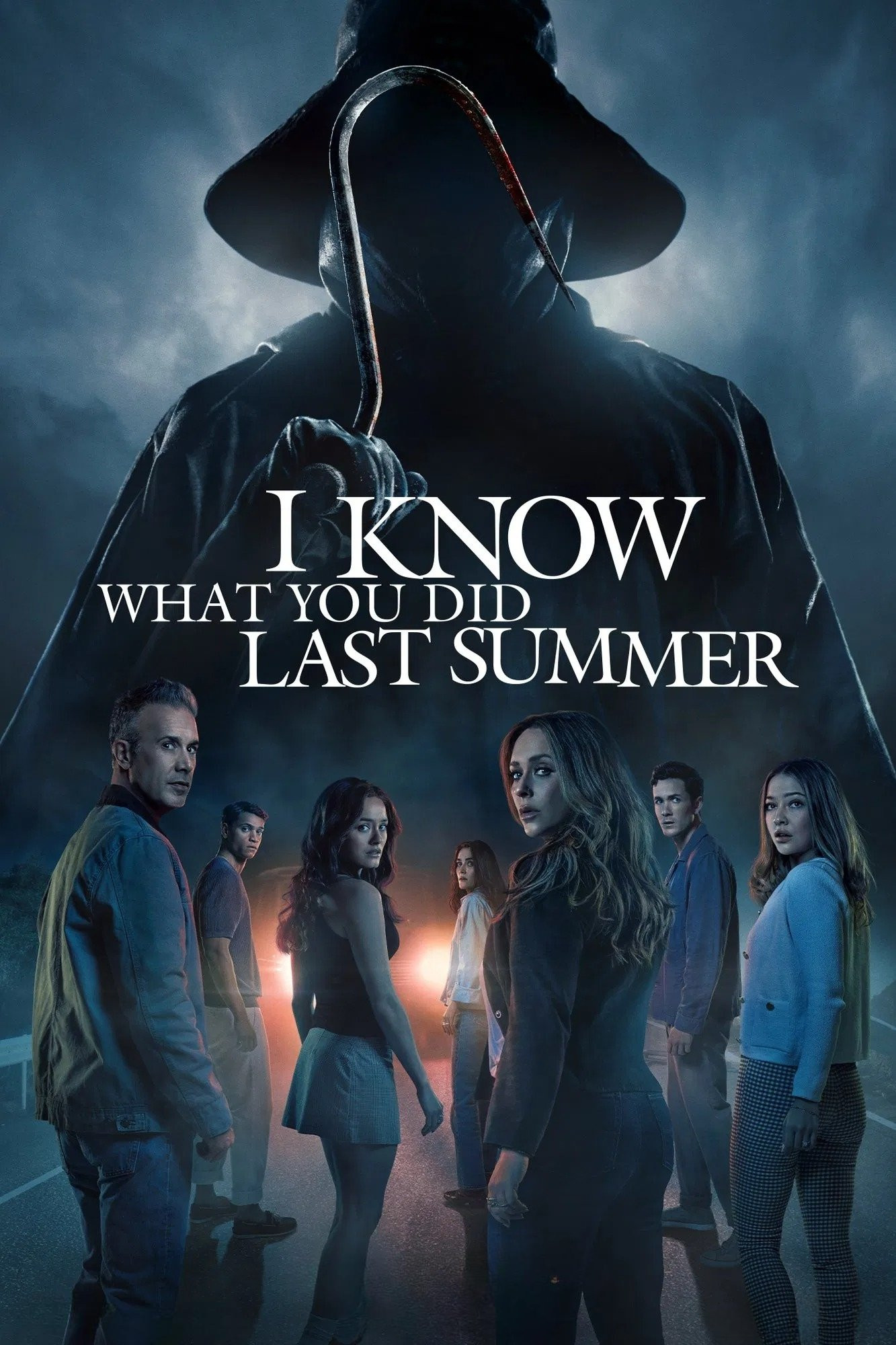
I Know What You Did Last Summer (2025) Movie Review
I Know What You Did Last Summer (2025) Movie Review
Twenty-seven years after the original slasher phenomenon terrorized audiences and defined late 90s horror cinema, I Know What You Did Last Summer returns to haunt a new generation. Director Jennifer Kaytin Robinson takes the helm of this legacy sequel, bringing fresh blood to the iconic franchise while honoring its murderous roots. But does this 2025 installment successfully revive the hook-wielding terror, or does it sink under the weight of nostalgia?
A Deadly Return to Southport
I Know What You Did Last Summer transports viewers back to the coastal town of Southport, North Carolina, where the infamous 1997 massacre once painted the streets red. The film opens with Ava Brucks (Madelyn Cline) returning to her hometown for her friend Danica Richards’ engagement party on the Fourth of July. What begins as a celebration quickly spirals into nightmare territory when a group of five friends—Ava, Danica (Madelyn Cline), Milo Griffin (Jonah Hauer-King), Teddy Spencer (Tyriq Withers), and recently rehabilitated Stevie Ward (Sarah Pidgeon)—become entangled in a deadly car accident during a late-night drive.
The premise mirrors the original I Know What You Did Last Summer with chilling precision: a group of young adults covers up their involvement in a fatal incident, only to find themselves stalked by a mysterious killer exactly one year later. Robinson and co-writer Sam Lansky understand the formula that made the franchise a cultural touchstone, but they’re not content to simply rehash old scares.
The Legacy Characters Return
One of the most compelling aspects of this sequel is the return of Jennifer Love Hewitt and Freddie Prinze Jr. as Julie James and Ray Bronson, the survivors of the original Southport Massacre. Unlike many legacy sequels that treat returning characters as mere cameos, I Know What You Did Last Summer gives these beloved characters substantial roles that meaningfully advance the story.
“If I’m going to come back 27 years later, I don’t want to just be in it for five seconds,” Hewitt explained in a Parade interview. “I want to carve out the time to really be in it, to make it matter for people.”
Both actors deliver performances that feel authentic to their characters’ trauma while showcasing their evolution over nearly three decades. Prinze Jr. and Hewitt’s on-screen chemistry remains electric, even as their characters navigate the bitter aftermath of divorce and the lasting psychological scars from their youth. Their presence elevates the material beyond simple nostalgia bait, grounding the supernatural terror in genuine emotional stakes.
Fresh Faces, Familiar Fears
The New Generation Cast
The success of any slasher film hinges on audiences caring about the characters being stalked, and Robinson has assembled an impressive ensemble of rising stars. Madelyn Cline, best known for her breakout role in Outer Banks, brings depth and vulnerability to Danica Richards. Cline navigates the character’s guilt and terror with remarkable skill, particularly in the film’s more intense psychological moments.
Chase Sui Wonders (The Studio) delivers a standout performance as Ava Brucks, the reluctant returnee whose homecoming unleashes hell. Wonders masterfully balances Ava’s initial skepticism with growing desperation as the body count rises. Her chemistry with the ensemble creates authentic friendship dynamics that make the eventual betrayals all the more devastating.
Jonah Hauer-King (The Little Mermaid) brings complexity to Milo Griffin, Ava’s ex-boyfriend caught between loyalty and survival. Tyriq Withers (Atlanta) commands attention as Teddy Spencer, while Sarah Pidgeon (Tiny Beautiful Things) delivers a nuanced portrayal of Stevie Ward, the group’s most vulnerable member fresh from rehabilitation.
Character Development and Relationships
Robinson wisely chose to age up the characters beyond high school, allowing for more mature themes and complicated relationships. The cast genuinely feels like a group of friends bound by shared trauma, which makes their inevitable fracturing under pressure all the more impactful. The director created what she calls an environment of “ordered fun” on set, and this camaraderie translates beautifully to screen.
The character dynamics explore themes of guilt, redemption, and the long-term consequences of our actions—topics that resonate more powerfully with adult characters than traditional teenage protagonists. This maturity allows I Know What You Did Last Summer to examine how past mistakes can define our futures in ways that feel authentically dramatic rather than melodramatic.
Visual Style and Technical Excellence (I Know What You Did Last Summer)
Cinematography and Locations
Cinematographer Elisha Christian captures the coastal beauty of Southport while maintaining an underlying sense of dread. The film was shot across multiple stunning locations, including Newport Beach, White Bay, and Paddington in Sydney, Australia, as well as Los Angeles. These scenic backdrops provide a gorgeous contrast to the violence that unfolds, creating the kind of beautiful-yet-sinister atmosphere that made the original so memorable.
The film’s visual language pays homage to classic slasher aesthetics while incorporating modern filmmaking techniques. Robinson draws inspiration from Steven Spielberg’s Jaws, particularly in how she builds tension through suggestion rather than constant gore. The hook-wielding killer remains genuinely terrifying, with practical effects work that feels visceral and immediate.
Score and Sound Design
Composer Chanda Dancy crafts a score that both honors and updates the franchise’s musical legacy. The 20-track soundtrack album, released by Milan Records, perfectly complements the film’s tonal shifts between nostalgic warmth and bone-chilling terror. The sound design enhances every scare, from the subtle creaking of floorboards to the visceral impact of the killer’s hook.
Whether you’re planning a horror movie marathon during your next vacation (check out TravelTripHolidaysWorld for the perfect getaway destinations) or simply looking for a thrilling night in, the film’s technical craftsmanship ensures an immersive experience that will keep you on edge.
Strengths and Memorable Moments (I Know What You Did Last Summer)
What Works
I Know What You Did Last Summer succeeds primarily because it respects its source material while finding fresh angles to explore. Key strengths include:
• Strong ensemble chemistry that makes viewers genuinely care about the characters • Effective practical effects that feel visceral and immediate • Meaningful inclusion of legacy characters rather than superficial cameos • Mature themes that resonate beyond typical slasher fare • Gorgeous cinematography that balances beauty with terror • Clever plot twists that subvert expectations without feeling gimmicky
The film’s most successful sequences combine psychological terror with well-executed action. Robinson understands that the best slasher films make audiences care about the victims, and she takes time to develop these relationships before unleashing the killer.
Standout Scenes
Several sequences deserve particular recognition for their technical and narrative excellence. The initial car accident is staged with remarkable tension, using practical effects and careful pacing to create genuine impact. The killer’s first appearance masterfully builds dread through shadows and suggestion before delivering a brutal payoff.
The film’s climactic confrontation brings together all narrative threads while delivering satisfying character arcs for both new and returning characters. Without spoiling specific details, the final revelation completely recontextualizes earlier scenes while staying true to the franchise’s themes of guilt and consequences.
Areas for Improvement (I Know What You Did Last Summer)
Pacing Issues
Despite its many strengths, I Know What You Did Last Summer suffers from occasional pacing problems. The first act takes considerable time establishing character relationships and motivations, which strengthens emotional investment but may test the patience of viewers expecting immediate scares. Some middle sequences feel slightly repetitive, following familiar slasher patterns without adding fresh elements.
Predictable Elements
While the film delivers several genuine surprises, certain plot developments follow predictable slasher conventions. Experienced horror fans may anticipate some character deaths and red herrings before they occur. The film works best when it subverts these expectations rather than fulfilling them.
Tonal Inconsistencies
Robinson occasionally struggles to balance the film’s nostalgic elements with modern sensibilities. Some dialogue feels artificially contemporary, while other moments lean too heavily into 90s pastiche. These tonal shifts rarely derail the experience but can momentarily break immersion.
Critical Reception and Box Office Performance (I Know What You Did Last Summer)
Professional Reviews
Critical reception for I Know What You Did Last Summer has been decidedly mixed, with 36% of 190 critics’ reviews being positive on Rotten Tomatoes. The consensus reads: “Faithfully harkening back to the original for better or worse, this I Know What You Did Last Summer reboot serves up plenty of nostalgia without finding a compelling hook of its own.”
Metacritic assigned the film a score of 42 out of 100, based on 32 critics, indicating “mixed or average” reviews. However, some critics praised specific elements, with IndieWire’s Alison Foreman giving the film a B+ and describing it as a “lean, mean serial killer flick.”
Audience Response
Audience reactions have been more positive than critical consensus suggests, with CinemaScore polling giving the film an average grade of C+ on an A+ to F scale. Many viewers appreciate the film’s respect for franchise legacy while introducing compelling new characters and storylines.
For more detailed analysis of horror film trends and reviews, HablemosMoney (HablemosMoney) offers comprehensive coverage of genre cinema and contemporary film criticism.
Box Office Performance
As of August 1, 2025, I Know What You Did Last Summer has grossed $27 million in the United States and Canada, and $22 million in other territories, for a worldwide total of $49 million. The film debuted to $13 million, finishing third at the box office during its opening weekend.
While these numbers represent modest commercial success, they demonstrate continued audience appetite for franchise horror when executed with care and respect for source material.
Cultural Impact and Franchise Future (I Know What You Did Last Summer)
Legacy and Influence
I Know What You Did Last Summer arrives during a resurgence of interest in 90s horror, alongside successful franchises like Scream and Halloween. The film contributes to ongoing conversations about trauma, accountability, and the cyclical nature of violence that define contemporary horror cinema.
The movie’s themes of past actions haunting present lives feel particularly relevant in our current cultural moment. Social media’s permanent memory and cancel culture’s long reach give new weight to the franchise’s central question: what happens when our mistakes refuse to stay buried?
Production Notes and Behind-the-Scenes
The film’s production journey reflects Hollywood’s complex relationship with intellectual property revival. Plans for a fourth film in the franchise started in 2014, when Mike Flanagan and Jeff Howard signed on to write a reboot with no connection to the previous installments. However, that version never materialized.
Following the cancellation of the 2021 television series adaptation, the project was relaunched when Robinson pitched her version to Sony Pictures. This development history demonstrates both the challenges and opportunities inherent in reviving beloved franchises.
Robinson’s passion for the source material shines through every frame. As one critic noted, she “loves that movie more than anyone else,” and this affection translates into respectful handling of iconic characters and themes.
Final Verdict (I Know What You Did Last Summer)
I Know What You Did Last Summer succeeds as both nostalgic throwback and contemporary horror film, though it doesn’t quite achieve greatness in either category. The film’s strongest asset is its cast—both returning veterans and fresh faces—who bring genuine emotional investment to familiar material.
Robinson demonstrates clear affection for the franchise while finding meaningful ways to update its themes for modern audiences. The technical craftsmanship is consistently strong, from Christian’s beautiful cinematography to Dancy’s effective score. While the film occasionally stumbles with pacing and predictability, it delivers enough genuine scares and emotional resonance to satisfy both longtime fans and newcomers.
For horror enthusiasts seeking quality genre entertainment, I Know What You Did Last Summer offers a satisfying return to Southport’s bloody shores. The film respects its legacy while carving out space for new stories, suggesting that this franchise still has life—and death—left in it.
Rating: 7/10
I Know What You Did Last Summer earns recommendation for its strong performances, technical excellence, and respectful handling of beloved characters. While it may not revolutionize the slasher genre, it demonstrates that franchise filmmaking can honor the past while pointing toward the future.
Whether you’re a longtime fan of the series or curious about what made 90s horror so compelling, this latest installment provides enough thrills, chills, and genuine emotional stakes to warrant a trip to the theater. Just remember: in Southport, the past never truly dies—it just waits for the perfect moment to strike.
For those interested in deeper horror film analysis and reviews, channels like C.A.A.M on YouTube offer engaging short-form content exploring genre cinema and film criticism.