Slow Horses Season 5 TV Review
Slow Horses Season 5 TV Review
In an era when prestige television often takes years between seasons and beloved series fade into obscurity while awaiting production schedules, Slow Horses stands as a remarkable anomaly. Apple TV+’s espionage thriller has delivered its fifth season in just over three years, maintaining an impressive consistency of quality that few shows can match. Based on Mick Herron’s fifth Slough House novel, London Rules, this latest installment demonstrates why the series has become one of the most reliable and entertaining offerings on television. With Gary Oldman returning as the brilliantly abrasive Jackson Lamb and the ensemble cast firing on all cylinders, Season 5 proves that some television magic just keeps getting better.
The Setup: Terror in London and Tech Romance
Season 5 opens with an immediately gripping premise that feels disturbingly relevant to our current moment. When a mass shooting rocks London during a contentious mayoral election campaign, the Slow Horses find themselves pulled into yet another crisis that Regent’s Park would rather handle without them. The violence intensifies political tensions between incumbent Mayor Zafar Jaffrey, played with understated gravitas by Nick Mohammed, and his right-wing populist challenger Dennis Gimbal, portrayed by Christopher Villiers with the perfect blend of calculated ambition and thinly veiled extremism.
The season’s central mystery revolves around resident tech genius Roddy Ho, played with delicious self-delusion by Christopher Chung, who suddenly acquires a glamorous girlfriend named Tara, portrayed by Hiba Bennani. This development immediately raises red flags among the Slough House team, who know that someone as socially inept and self-absorbed as Roddy doesn’t simply attract beautiful women by accident. As a series of increasingly bizarre events unfold across the city, it becomes clear that nothing is coincidental and everything connects to a larger destabilization strategy targeting London’s infrastructure and political landscape.
What makes this premise work so effectively is how it leverages our familiarity with the characters. We’ve spent four seasons watching Roddy’s oblivious narcissism and social awkwardness, so his romantic subplot immediately feels like a setup even before any actual evidence emerges. The writers understand these characters intimately, and they trust the audience to bring that knowledge to bear on the unfolding mystery.
Performance Excellence Across the Board
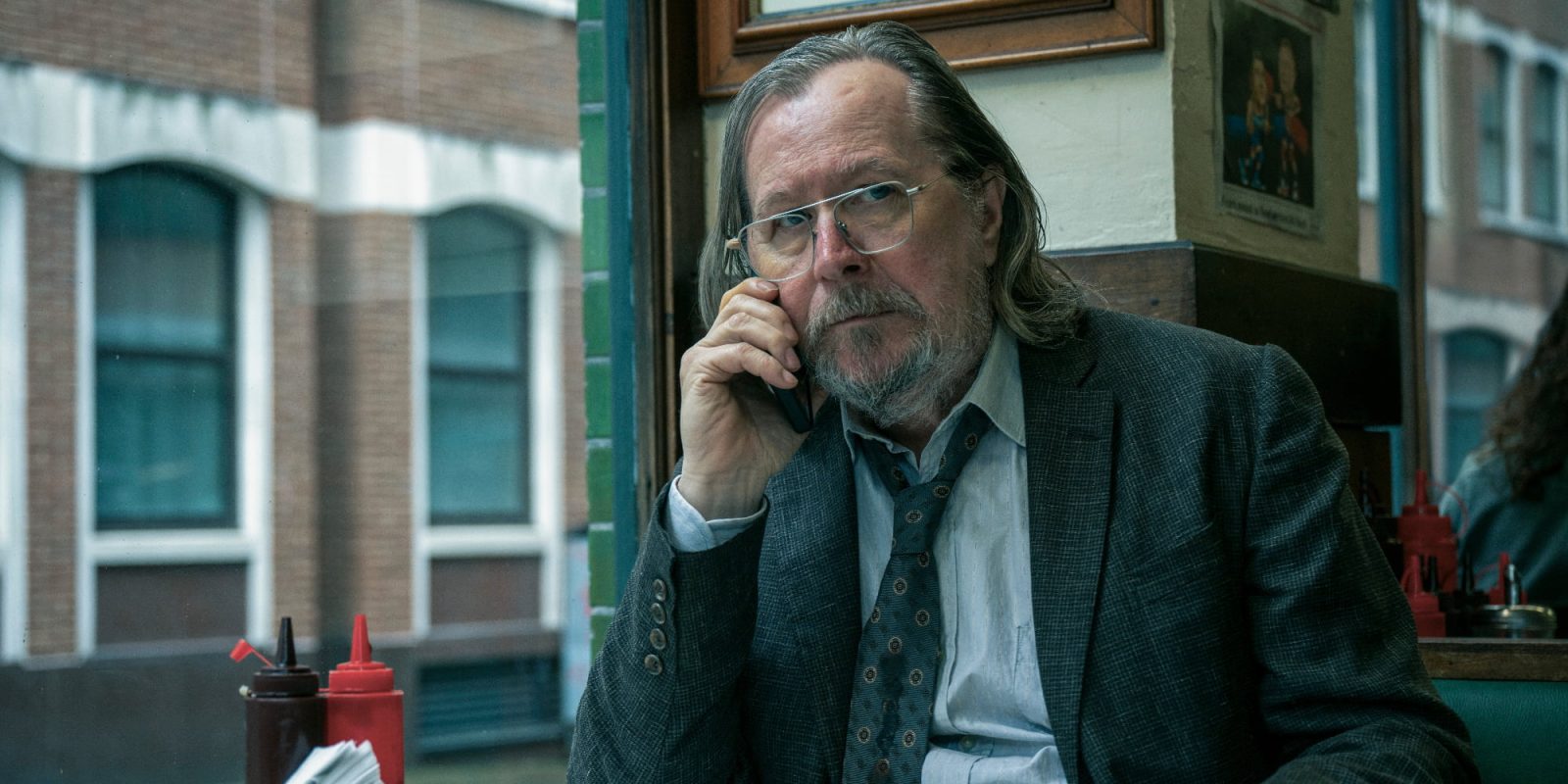
Gary Oldman, now officially Sir Gary Oldman following his recent knighthood, continues to deliver one of television’s most compelling performances as Jackson Lamb. His portrayal of the slovenly, flatulent, brilliantly tactical spymaster remains the beating heart of Slow Horses. Oldman imbues Lamb with layers of world-weary cynicism, sharp intelligence, and surprising emotional depth beneath the crude exterior. There’s a moment in episode three where Lamb tells a story that could be either a confession or a coded message, and Oldman plays it with such ambiguity that you’re left genuinely uncertain of his character’s intentions. It’s masterclass acting that justifies every award nomination he’s received.
This season, however, some viewers noted that Lamb appears less frequently than in previous seasons, particularly in the middle episodes. While this shift in focus allows other characters more room to breathe and develop, Oldman’s magnetic presence is such that his absences are keenly felt. When he does appear, though, he makes every second count. His interactions with Catherine Standish, played with quiet strength by Saskia Reeves, continue to provide the series’ emotional anchor, showcasing a relationship built on mutual respect, exasperation, and deep loyalty.
Jack Lowden continues to grow into the role of River Cartwright with impressive nuance. River remains caught between his ambitions for redemption and his growing acceptance of life among the Slough House rejects. Lowden, who recently welcomed his first child with wife and fellow actor Saoirse Ronan, brings a maturity to the character this season that feels organic to River’s journey. His scenes investigating the mass shooting and later confronting potential terrorism threats showcase an agent who has learned from his mistakes but still possesses the reckless determination that landed him in Slough House initially.
Kristin Scott Thomas elevates every scene as Diana Taverner, MI5’s Second Desk who ascends to First Desk by season’s end. Scott Thomas, renowned for performances in The English Patient, Four Weddings and a Funeral, and Gosford Park, plays Taverner as a woman who is simultaneously brilliant, ruthless, and increasingly desperate to maintain control in a bureaucracy that rewards appearances over competence. Her power struggle with the bumbling Director-General Claude Whelan, portrayed with perfect incompetence by James Callis, provides some of the season’s most darkly comedic moments.
The supporting ensemble remains exceptional. Rosalind Eleazar as Louisa Guy brings professionalism and emotional complexity to a character who serves as the team’s conscience. Aimee-Ffion Edwards gives Shirley Dander the perfect mix of volatility and vulnerability, particularly in scenes dealing with her ongoing struggles with anger and substance issues. Ruth Bradley returns as Emma Flyte, the straight-laced head of the Dogs who navigates the morally murky waters of internal MI5 politics with increasing unease.
The London Rules: Espionage in a Destabilized City
The season’s title references the unwritten rules of espionage that Jackson Lamb knows all too well: in the intelligence world, you always cover your back. This theme permeates every aspect of the narrative as characters navigate shifting alliances, hidden agendas, and the realization that threats can come from unexpected quarters. The adaptation of Herron’s novel smartly maintains the book’s sharp political commentary while updating certain elements to feel immediately contemporary.
The terror attacks that drive the plot feel disturbingly plausible, avoiding the over-the-top spectacle that often plagues spy thrillers. Instead, Slow Horses Season 5 focuses on the chaos that follows violence, the political opportunism that springs from tragedy, and the painstaking work of connecting disparate pieces of intelligence into a coherent threat assessment. It’s espionage work that feels authentic rather than glamorous, which has always been the series’ greatest strength.
Director Saul Metzstein, who previously helmed Season 3, returns to deliver six episodes of remarkable visual consistency. The cinematography captures London as both a majestic historical city and a modern metropolis vulnerable to contemporary threats. Much like planning a comprehensive journey through TravelTripHolidaysWorld might reveal London’s many layered attractions, the series showcases the city as a character itself: beautiful, dangerous, and full of secrets hiding in plain sight.
Strengths That Define the Season (Slow Horses)
- Consistent pacing and tension: Unlike many streaming shows that suffer from mid-season sag, Slow Horses Season 5 maintains momentum throughout its six episodes. Each installment advances the plot meaningfully while allowing time for character development and the darkly comic moments that define the series.
- Political commentary without preaching: The season tackles issues of right-wing populism, electoral manipulation, and terrorism without becoming heavy-handed. The satire is sharp but never sacrifices narrative coherence for political point-scoring. Dennis Gimbal represents a particular strain of dangerous politician without becoming a cartoon villain.
- Character evolution: Long-running series often struggle to develop characters in meaningful ways, but Slow Horses continues finding new facets to explore. Roddy’s arc this season forces him to confront his own vulnerability, while Diana Taverner’s promotion to First Desk creates new pressures that test her already questionable ethics.
- The humor-drama balance: Few shows manage to be genuinely funny and genuinely tense, often in the same scene. The series’ ability to generate laughs from Jackson Lamb’s outrageous behavior while maintaining stakes that feel life-or-death is remarkable. This tonal dexterity prevents the show from becoming either too grim or too frivolous.
- Efficient storytelling: Six episodes proves the perfect length for this story. There’s no padding, no unnecessary subplots, no wheel-spinning. Every scene serves either plot, character, or both. In an era of bloated streaming seasons, this efficiency feels almost revolutionary.
Critiques and Minor Stumbles (Slow Horses)
While Season 5 maintains the series’ high quality standards, it’s not without minor issues. The most frequently cited criticism involves Jackson Lamb’s reduced screen time in the middle episodes. While this allows other characters to shine, Oldman’s presence is so magnetic that his absences create noticeable gaps in energy. Some viewers have speculated whether this might indicate the actor’s reduced involvement going forward, though there’s no evidence to support such concerns beyond the natural ebb and flow of ensemble storytelling.
The subplot involving Roddy’s girlfriend, while essential to the plot, occasionally strains credibility. Even accounting for Roddy’s massive ego and desperate desire for validation, his complete failure to recognize obvious warning signs requires significant suspension of disbelief. The writers try to justify this through Roddy’s established personality traits, but the setup sometimes feels more like plot necessity than organic character behavior.
Additionally, while the season’s political commentary is generally well-handled, a few moments veer toward the obvious. Dennis Gimbal’s character occasionally feels like a collection of populist politician tropes rather than a fully realized individual. Christopher Villiers does his best with the material, but the writing doesn’t always give him the complexity that other antagonists in the series have enjoyed.
Some longtime fans of both the show and Mick Herron’s novels have noted that certain book elements didn’t translate to screen, particularly some of the darker humor and more cynical observations about British politics. These are minor losses in the grand scheme, but readers coming to the adaptation with specific expectations might find certain favorite moments absent or altered.
The Season’s Standout Moments (Slow Horses)
Episode one’s opening mass shooting sequence is directed with restraint and impact, avoiding gratuitous violence while capturing the horror and chaos of such events. The immediate aftermath, with emergency services responding and political figures calculating how to spin the tragedy, feels uncomfortably authentic.
The interrogation scene between Diana Taverner and Roddy in episode three showcases both actors at their best. Scott Thomas plays Taverner’s frustration and strategic thinking perfectly, while Chung allows us to see Roddy’s facade crack under pressure. It’s a masterclass in acting and writing working in harmony.
Episode five’s act of sabotage that grinds London to a halt demonstrates the series’ understanding that terrorism isn’t always about body counts. The paranoia and disruption caused by sophisticated attacks on infrastructure can be just as destabilizing as violence, perhaps more so because the threat becomes omnipresent rather than isolated.
The season finale delivers the intense action and emotional payoffs that fans expect, with Jackson Lamb orchestrating a response to the final attack that showcases both his tactical brilliance and his genuine care for his team. The final shot of Lamb’s foot, mentioned by several enthusiastic viewers, provides a perfect punctuation mark that veterans of the series will appreciate.
Themes of Loyalty, Failure, and Redemption (Slow Horses)
At its core, Slow Horses has always been about people who failed and what they do with that failure. Season 5 deepens this exploration by asking whether redemption is even possible or desirable in a system as broken as MI5. The Slow Horses succeed repeatedly not by playing by the rules but by being underestimated, overlooked, and willing to operate outside bureaucratic constraints that paralyze Regent’s Park.
Jackson Lamb embodies this philosophy completely. He’s crude, inappropriate, and seemingly past his prime, which makes him the perfect leader for a team of washouts. But his tactical mind remains sharp, and his loyalty to his “Joes” never wavers, even when they drive him to distraction. The series suggests that the intelligence community’s obsession with appearances and plausible deniability creates more problems than it solves.
The relationship between competence and failure forms another key theme. Diana Taverner represents the “successful” side of MI5, ascending to First Desk through political maneuvering and careful image management. Yet she consistently makes decisions that endanger operations and lives because she’s more concerned with perception than reality. Meanwhile, the Slow Horses, dismissed as failures, repeatedly save the day precisely because they’re not invested in protecting their reputations.
Comparison to Previous Seasons and Series Context (Slow Horses)
Comparing Season 5 to earlier Slow Horses installments is somewhat like ranking championships of a dynasty team. Even if this isn’t the absolute peak of the series, it’s still exceptional television that surpasses most of its competitors. The consensus among fans seems to be that while Seasons 2-4 might edge slightly ahead in terms of pure narrative tightness, Season 5 offers more character depth and thematic complexity.
The season also benefits from the accumulated character development of previous years. We understand these people intimately now, which makes their decisions and conflicts resonate more deeply. When Shirley struggles with her demons or River grapples with his family legacy, we bring years of context to these moments that enriches them immeasurably.
For viewers seeking more analysis of how Slow Horses fits into the broader landscape of British spy fiction, resources like FilmCritiq offer thoughtful examinations of the series’ place in the genre. The show represents a fascinating middle ground between the realistic grittiness of The Bureau and the more stylized approach of recent James Bond films, maintaining just enough realism to ground its action while allowing for the heightened circumstances that make for compelling television.
Content creators focused on television analysis, such as those at C.A.A.M, have provided excellent breakdowns of the series’ storytelling techniques and thematic concerns for viewers wanting to dig deeper into what makes Slow Horses so effective.
Production Values and Technical Excellence (Slow Horses)
The technical aspects of Slow Horses Season 5 maintain the high standards established in previous years. The production design authentically captures both the grim functionality of Slough House and the sterile bureaucracy of Regent’s Park headquarters. These environments tell stories about institutional values and priorities without a single line of dialogue.
The score, provided by Daniel Pemberton, continues to blend jazzy undertones with tension-building orchestration. The opening theme remains one of television’s most distinctive, immediately establishing the show’s blend of cool professionalism and barely contained chaos. Throughout the season, the music enhances rather than overwhelms, knowing when to step back and let silence do the work.
The editing deserves particular praise for juggling multiple storylines without creating confusion. With the Slow Horses often working different angles of the same case, the series could easily become muddled, but sharp editing maintains clarity while building tension through cross-cutting and carefully calibrated reveals.
Looking Forward: Season 6 and Beyond (Slow Horses)
With Slow Horses already renewed through Season 7 and reportedly having completed filming on Season 6, the show’s future seems secure. The next season will adapt both Joe Country and Slough House, Herron’s sixth and seventh novels, suggesting a potentially larger scope. Additionally, longtime showrunner Will Smith will step away after Season 5, with Gaby Chiappe taking over for Season 6, which could introduce subtle shifts in tone and approach.
The consistency with which Apple TV+ has supported the series stands in stark contrast to the erratic treatment many shows receive from streaming platforms. This commitment allows the creative team to plan long-term character arcs and maintain the remarkable production pace that has delivered five seasons in just over three years. For comparison, many streaming shows take longer than that to produce their second season.
Who Should Watch Season 5 (Slow Horses)
- Existing fans of the series: If you’ve enjoyed previous seasons, Season 5 delivers more of what makes Slow Horses great while pushing characters into new territory. It’s essential viewing for anyone invested in these characters and their ongoing journeys.
- Spy fiction enthusiasts: Fans of realistic, character-driven espionage stories will find much to appreciate. The series offers a refreshing alternative to the superhero spies of many contemporary thrillers, focusing instead on flawed individuals doing difficult work in morally complex situations.
- Gary Oldman admirers: If you appreciate Oldman’s legendary versatility, his performance as Jackson Lamb represents some of his finest television work. It’s a role that allows him to showcase both his dramatic depth and considerable comic timing.
- Viewers seeking intelligent political commentary: The season’s exploration of populism, terrorism, and electoral politics feels timely without being preachy. It trusts audiences to draw their own conclusions while presenting uncomfortable truths about modern democracy.
- Anyone tired of bloated streaming series: The six-episode format proves that tight, focused storytelling remains possible in the streaming era. There’s no filler, no wheel-spinning, just excellent television from start to finish.
Final Verdict: Excellence Maintained (Slow Horses)
Slow Horses Season 5 proves that consistency need not mean stagnation. While it may not represent the absolute peak of the series, it delivers another round of exceptional spy fiction that balances humor, tension, political commentary, and character development with remarkable skill. The reduced presence of Jackson Lamb in certain episodes represents the only significant critique, and even that allows other characters the space to grow and shine.
Gary Oldman continues to anchor the series with one of television’s finest performances, while the ensemble cast proves equally essential to the show’s success. The adaptation of London Rules maintains the sharp political edge of Mick Herron’s source material while making smart adjustments for television. The result is a season that feels both timely and timeless, addressing contemporary anxieties about terrorism and political extremism through the lens of classic spy fiction.
The series has become appointment television in an era when that term has lost much of its meaning. Each weekly episode drop becomes an event, prompting discussion and analysis that continues until the next installment arrives. This is television as it should be: smart, engaging, beautifully crafted, and willing to trust its audience’s intelligence.
For those who haven’t yet experienced Slow Horses, Season 5 might not be the ideal entry point, despite its standalone story elements. The accumulated character development and relationship dynamics mean the emotional beats land most effectively for viewers who have been with these characters from the beginning. However, for those willing to invest in the full series, the journey proves immensely rewarding, with Season 5 representing another strong chapter in one of modern television’s most consistent dramas.
As showrunner Will Smith prepares to hand the reins to new leadership for Season 6, Season 5 stands as a testament to what he and his team have built: a series that respects its source material, trusts its actors, and delivers week after week without compromise. In the often-disappointing landscape of streaming television, where promising shows frequently disappoint or disappear, Slow Horses remains a beacon of what’s possible when talent, commitment, and vision align.
Bottom Line (Slow Horses)
In a television landscape increasingly dominated by disappointing sequels, canceled shows, and creative compromises, Slow Horses stands apart. Season 5 delivers another round of intelligent, entertaining spy fiction that proves the series’ success was no fluke. With Gary Oldman leading an exceptional ensemble cast through a twisty narrative that balances humor and suspense with precision, the season reminds us why this show has become one of streaming’s most reliable pleasures. If you’ve been with the Slow Horses from the beginning, you already know you’re watching. If you haven’t yet discovered this gem, now’s the perfect time to catch up before Season 6 arrives. This is television done right, and it deserves your attention.