
Dog Man (2025): Movie Review
Dog Man (2025): Movie Review
TL;DR: Dog Man delivers a frenzied energy that never lets up, delighting kids while throwing their parents a bone, making it a solid family entertainment option despite some pacing issues.
Introduction: From Page to Screen
DreamWorks Animation brings Dav Pilkey’s beloved graphic novel series to life in Dog Man, a vibrant animated adventure that captures the essence of childhood imagination. Based on the popular Captain Underpants spin-off series, this film represents the second film in the Captain Underpants franchise and marks an ambitious adaptation of one of the most successful children’s book series in recent years.
The premise is wonderfully absurd: when a faithful police dog and his human police officer owner are injured together on the job, a harebrained but life-saving surgery fuses the two of them together and Dog Man is born. What follows is a wild ride through a world where logic takes a backseat to pure, unadulterated fun.
Plot and Storyline
The Origin Story
Dog Man begins with the tragic yet comical origin of our titular hero. Officer Knight and his loyal canine partner Greg face a dangerous bomb-defusing mission that goes horribly wrong. Through an experimental surgery that sounds like something out of a Saturday morning cartoon, the two are merged into one being – half dog, half man, all hero.
The story follows Dog Man as he navigates his new identity while pursuing his arch-nemesis, Petey the Cat (voiced brilliantly by Pete Davidson). Petey’s latest plan is to clone himself, creating the kitten Lil Petey, to double his ability to do crime stuff. However, the plot takes an unexpected emotional turn when the clone kitten develops a bond with Dog Man, leading to questions about family, loyalty, and what it means to belong.
Narrative Structure and Pacing
Dog Man moves at breakneck speed, which proves to be both its greatest strength and occasional weakness. The film has super fast pacing as well as amazing drawn animation and editing, keeping young audiences thoroughly engaged. However, some critics noted that the film kicks off strongly but loses focus midway, circling around the repetitive theme of Petey’s arrest.
The film successfully adapts multiple books from the Dog Man series, though this ambitious approach sometimes leads to narrative congestion. The film loosely adapts the first, third, and seventh Dog Man books, creating a story that feels both familiar to readers and accessible to newcomers.
Animation and Visual Style
Comic Book Aesthetics Come to Life
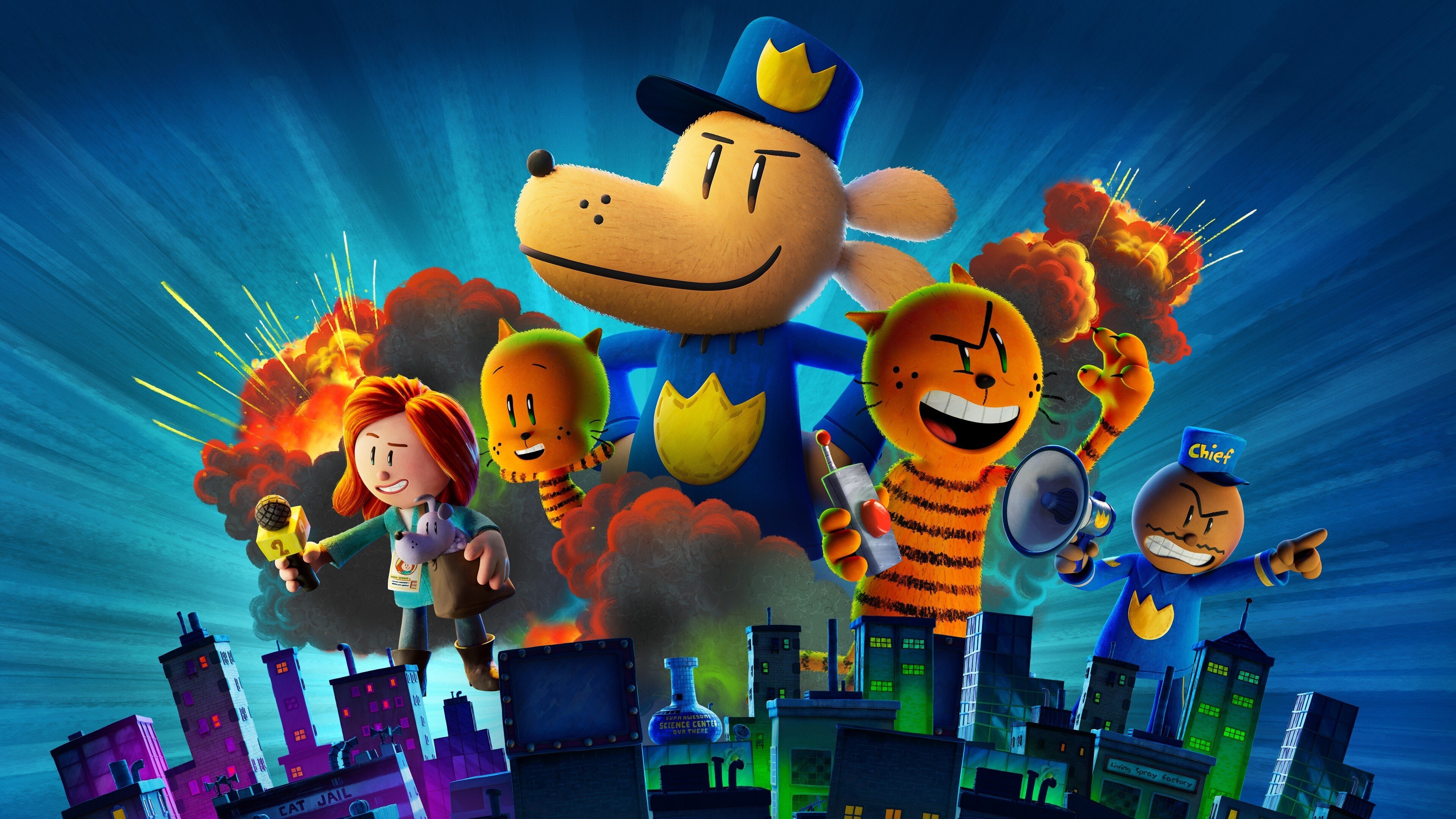
One of Dog Man’s most impressive achievements is its visual presentation. The animation is fire and successfully captures the essence of Pilkey’s original artwork. The film employs a unique animation style that captures the art in the books to a tee, making it feel like readers are watching their favorite pages come to life.
The bright, lively visual style matches the tone of the story, with an amusing combination of realistic textures and dimensional shapes for Dog Man’s head and simplified, cartoonish lines to indicate his facial expressions. This hybrid approach perfectly reflects the character’s dual nature – both human and canine.
Technical Excellence
The animation team at Jellyfish Pictures has created a visual feast that maintains the comic book’s energy while adding cinematic flair. The film features dynamic action sequences, including a fight between animated buildings, that showcase the medium’s potential for creative storytelling.
Voice Acting and Character Development
Pete Davidson as Petey the Cat
Pete Davidson brings remarkable depth to what could have been a one-dimensional villain. Petey is a complicated character. He’s like your average guy who wants to be bad but, deep down, knows he should do the right thing. His flaws and tough past make him relatable. Davidson’s performance captures both the character’s villainous aspirations and underlying vulnerability.
Supporting Cast Excellence
The voice cast delivers across the board:
• Lil Rel Howery as Chief provides the perfect straight-man energy to Dog Man’s antics • Isla Fisher brings intelligence and warmth to news reporter Sarah Hatoff
• Lucas Hopkins Calderon makes his film debut as Lil Petey, bringing innocence and heart to the role • Ricky Gervais adds his distinctive English accent as the villainous Flippy the Fish • Peter Hastings provides vocal effects for Dog Man himself, perfectly capturing the character’s canine nature
Isla Fisher was already quite familiar with the source material before signing on to voice Sarah Hatoff, as her children are fans of the book series, bringing authentic enthusiasm to her performance.
Themes and Messages
Family and Belonging
At its core, Dog Man explores profound themes about family and identity. The relationship between Petey and his clone Lil Petey raises questions about nature versus nurture. There are some excellent topics for family discussion, like Petey’s question, “How come I made you, but you’re not like me?”
The film demonstrates how chosen family can be just as meaningful as biological relationships. Dog Man’s journey toward accepting himself while building connections with others provides valuable lessons for young viewers about self-acceptance and the importance of community.
Good vs. Evil with Nuance
While maintaining its lighthearted tone, Dog Man presents villains with depth and motivation. The film avoids simple black-and-white morality, instead showing how circumstances and choices shape character. This approach aligns with modern animated storytelling trends that emphasize emotional complexity even in children’s entertainment.
Humor and Entertainment Value
Multi-Layered Comedy
Dog Man succeeds in creating humor that works on multiple levels. The jokes come fast enough to benefit from repeat viewings, with content that entertains both children and adults. The film includes a sly reference to the prison being run by the mayor’s brother, a call-out to kids like the ADHD and dyslexic Pilkey who “got kicked out of class and drew comics instead,” a G-rated version of “Die Hard”‘s most famous catchphrase.
True silliness is one of the most delightful forms of humor and one of the most difficult, as delicate as a soap bubble, and Dog Man largely achieves this challenging balance. The film’s commitment to “playful anarchy” creates genuine moments of joy.
Target Audience Appeal
The movie clearly knows its audience. It’s all very, very silly. That, combined with the relentless pace, should ensure that it delights its target audience of under-tens. However, the film also includes enough sophisticated humor and emotional depth to keep adults engaged.
Box Office Performance and Critical Reception
Commercial Success
Dog Man has proven to be a commercial success for DreamWorks. As of March 23, 2025, Dog Man has grossed over $96.2 million in the United States and Canada, and $34.3 million in other territories for a worldwide total of $130 million. The film debuted to $36 million, topping the box office and became the third consecutive box office-topping debut for DreamWorks after Kung Fu Panda 4 and The Wild Robot.
Critical Response
Critics have generally responded positively to Dog Man. On the review aggregator website Rotten Tomatoes, 80% of 96 critics’ reviews are positive, with Metacritic assigning the film a score of 66 out of 100, based on 22 critics, indicating “generally favorable” reviews.
Audiences surveyed by CinemaScore gave the film an average grade of “A” on an A+ to F scale, indicating strong audience satisfaction. The film was even nominated at the 2025 Kids’ Choice Awards for Favorite Animated Movie.
Production Values and Direction
Peter Hastings’ Vision
Director Peter Hastings, who previously worked on The Epic Tales of Captain Underpants, brings clear passion for Pilkey’s work to Dog Man. Hastings describes the appeal of Pilkey’s work as “playful anarchy,” but they both know we want to see the good guys save the day.
The film benefits from Hastings’ understanding of the source material and his ability to translate the books’ energy to the screen. His experience with similar material shows in the film’s confident tone and pacing.
Technical Achievements
From a production standpoint, Dog Man represents solid craftsmanship. The film maintains visual consistency while delivering complex action sequences and emotional beats. The sound design and musical score complement the visuals without overwhelming the story.
For those interested in the business side of animation, the film’s success demonstrates the continued viability of book-to-screen adaptations in the current market, similar to financial trends discussed on platforms like HablemosMoney.
Areas for Improvement
Pacing Issues
While the film’s energy is generally a strength, some viewers found it overwhelming. It’s exhausting, according to some critics who felt the relentless pace occasionally worked against the story’s emotional moments.
Character Development Balance
The main character feels like he’s more of a supporting character for the cat who ends up having more development than anyone. Dog Man himself sometimes feels underdeveloped compared to the more complex antagonist relationships in the film.
Target Audience Limitations
The film’s appeal is largely limited to its intended demographic. Overall this film isn’t for me, it’s for Children who can’t think as yet, children who can’t follow a plot but understand what is going on in a scene, as one critic noted, though this assessment may be overly harsh.
Streaming and Availability
For families looking to watch Dog Man, the film follows Universal’s standard release pattern. Dog Man was made available for purchase and rent on digital streaming services on February 18, 2025. The film was released on April 1 on DVD and Blu-ray.
The streaming schedule includes the film will stream on Peacock for the first four months of the pay-TV window, which will begin on May 30, before moving to Netflix for the next ten and then returning to Peacock for the remaining four.
Final Verdict
Dog Man succeeds in its primary mission: creating an entertaining family film that honors its source material while expanding its world for the big screen. While it may not reach the artistic heights of some recent animated films, it delivers exactly what its target audience wants – pure, joyful entertainment with heart.
Strengths:
• Faithful adaptation of beloved source material • Strong voice acting, particularly Pete Davidson as Petey • Vibrant animation that captures the comic book aesthetic • Multi-layered humor appealing to various age groups • Meaningful themes about family and belonging • Strong box office performance and audience satisfaction
Weaknesses:
• Occasionally overwhelming pacing • Dog Man character could use more development • Limited appeal beyond target demographic • Some narrative congestion from adapting multiple books
Conclusion
Dog Man is one of those films that proves movies for kids don’t have to be dumb. While it may not revolutionize animation or provide profound cinematic insights, it accomplishes something equally valuable: creating genuine joy for its intended audience while respecting both children’s intelligence and parents’ need for entertainment.
For families with young children, especially those familiar with the Dog Man books, this film offers a satisfying adaptation that captures the spirit of Pilkey’s creation. It’s a reminder that sometimes the best family entertainment comes from embracing silliness and finding heart in the most unexpected places.
Rating: 7.5/10 – A solid family film that delivers on its promises, even if it doesn’t exceed them.
Whether you’re a longtime fan of Dog Man or discovering this world for the first time, the film provides enough energy, humor, and heart to justify the journey. In a landscape often dominated by franchise filmmaking and corporate entertainment, Dog Man feels refreshingly focused on pure fun – and sometimes, that’s exactly what audiences need.
Originally posted 2025-03-23 20:33:33.
Leave a Reply