
Green Book (2018): Movie Review
Green Book (2018): Movie Review
Introduction
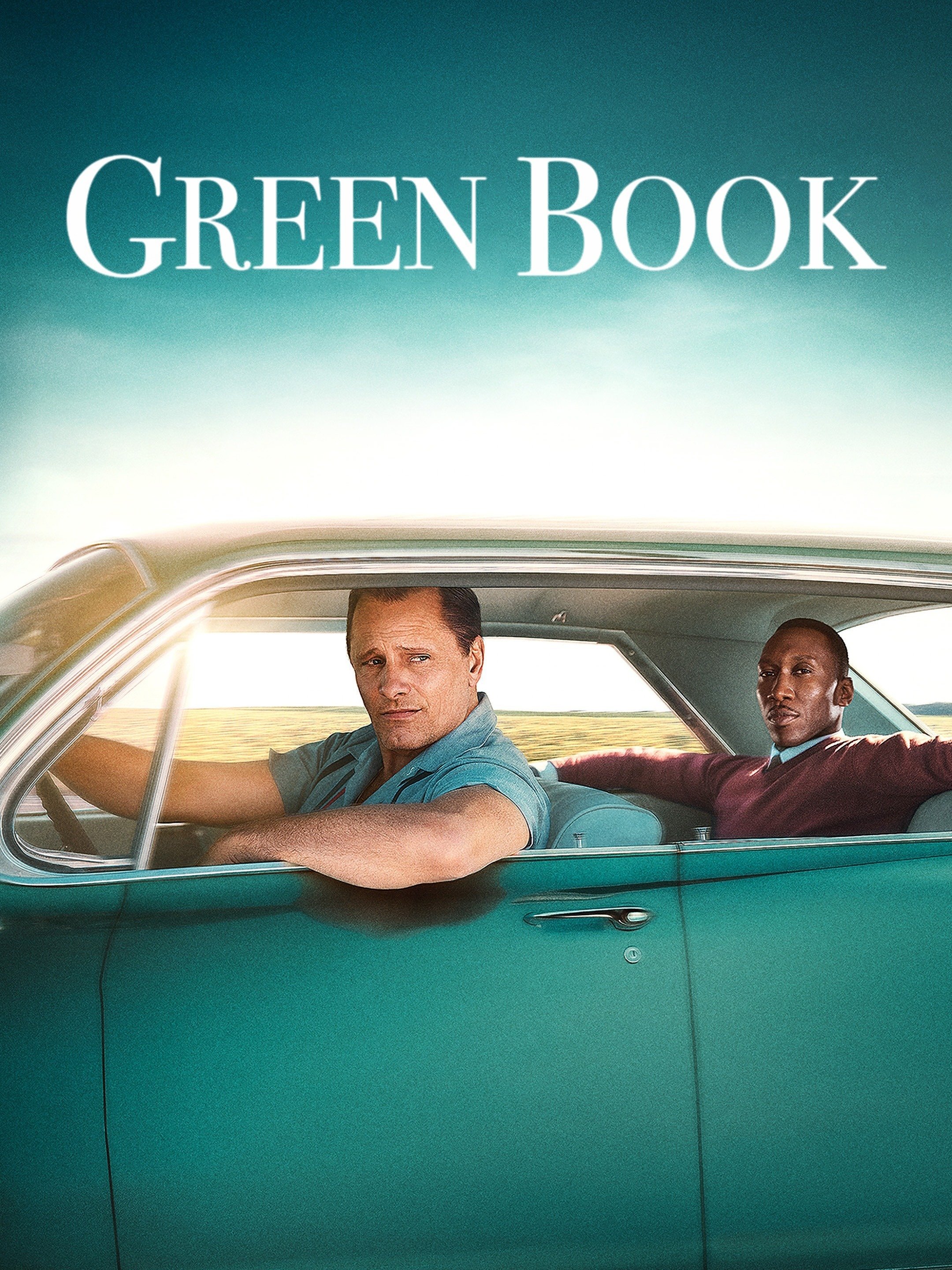
In an era where discussions about race relations continue to dominate social discourse, Green Book emerges as a poignant narrative that takes us back to the early 1960s, when America was still deeply entrenched in segregation. Directed by Peter Farrelly, this 2018 biographical comedy-drama presents an unlikely friendship between an African American classical pianist, Dr. Don Shirley (Mahershala Ali), and his Italian-American driver, Tony “Lip” Vallelonga (Viggo Mortensen). Their journey through the Deep South becomes not just a physical expedition but a profound exploration of prejudice, dignity, and unexpected connection.
Named after “The Negro Motorist Green Book,” a travel guide for African Americans during the Jim Crow era, Green Book delivers a blend of humor, tension, and emotional resonance that earned it the Academy Award for Best Picture in 2019. Despite some controversy surrounding its historical accuracy and perspective, the film captivates with stellar performances and a heartwarming narrative of mutual transformation.
Plot Summary
Set in 1962, Green Book begins in the Bronx, where we meet Tony Lip, a bouncer at the Copacabana nightclub with a reputation for both charm and strong-arm tactics. When the club closes temporarily for renovations, Tony finds himself in need of employment to support his wife Dolores (Linda Cardellini) and their two sons.
An opportunity arises when he’s called for an interview at Carnegie Hall with Dr. Don Shirley, a sophisticated, educated pianist who needs a driver for his eight-week concert tour through the Midwest and Deep South. The contrast between the two men is immediately apparent:
- Tony is rough-around-the-edges, street-smart, and casually racist
- Dr. Shirley is refined, intellectual, and carries himself with dignified restraint
- Their communication styles clash from the outset
- Their cultural backgrounds create immediate friction
Despite their differences, Tony takes the job, armed with The Green Book that outlines establishments where African Americans are welcome in the segregated South. What follows is a transformative journey where both men challenge each other’s preconceptions.
As they travel deeper into the South, Dr. Shirley faces increasing indignities. He performs in lavish homes but is denied use of their bathrooms. He’s refused service at restaurants where he’s scheduled to perform. In one particularly powerful scene, Tony must rescue Dr. Shirley from a potentially violent situation at a local bar. Through these experiences, Tony begins to recognize the injustice of segregation and develops a protective instinct toward his employer.
Meanwhile, Dr. Shirley observes Tony’s unfiltered approach to life and his deep connection to family. He helps Tony write eloquent letters to his wife and encourages him to elevate his communication. Through their enforced proximity, a genuine bond forms that transcends their initial prejudices.
Stellar Performances
The film’s power lies significantly in its two lead performances:
Mahershala Ali as Dr. Don Shirley
Mahershala Ali’s portrayal of Dr. Shirley earned him his second Academy Award for Best Supporting Actor, and justifiably so. Ali embodies the complexity of a man caught between worlds—too refined for the segregated establishments he’s forced to endure, yet isolated from both white society and the Black community. His performance captures:
- Dignified restraint that occasionally cracks to reveal profound loneliness
- Subtle expressions that convey volumes about his character’s internal conflicts
- Precise mannerisms that demonstrate his character’s musical genius
- A gradual softening as he begins to trust Tony
One particularly moving scene shows Dr. Shirley drinking alone in his hotel room, a moment where Ali silently conveys the weight of isolation his character carries.
Viggo Mortensen as Tony Lip
Mortensen underwent a physical transformation for the role, gaining weight to portray the food-loving bouncer. His performance is equally transformative:
- His Brooklyn accent and mannerisms feel authentic rather than caricatured
- His character’s growth from casual racism to genuine respect develops credibly
- His physical comedy provides levity without undermining the film’s serious themes
- The warmth he brings to scenes with his family establishes a strong emotional foundation
Mortensen’s performance avoids the “white savior” trope by showing Tony’s own evolution and learning. The character remains flawed but grows in empathy and understanding.
Direction and Cinematography
Peter Farrelly, previously known for broad comedies like Dumb and Dumber and There’s Something About Mary, demonstrates surprising restraint and sensitivity in his direction of Green Book. The film maintains a delicate balance between comedy and drama, never allowing humor to undermine the serious examination of racial prejudice.
The cinematography by Sean Porter effectively contrasts the urban landscape of New York with the varied settings of the South. Particularly effective visual moments include:
- The opening scenes at the Copacabana, establishing Tony’s world of nightlife and casual connections
- The increasingly rural landscapes as they journey deeper into the South
- The visual splendor of Dr. Shirley’s performances juxtaposed with his treatment off-stage
- Intimate moments in the car where the characters’ barriers gradually lower
The film’s visual language subtly reinforces its themes without heavy-handed symbolism. Snow falling as they return to New York symbolizes the cleansing transformation both men have undergone.
Music as a Character
Music plays a crucial role in Green Book, serving as both Dr. Shirley’s profession and a metaphor for harmony amid discord. The film features exceptional piano performances (played by composer Kris Bowers but portrayed convincingly by Ali) that showcase classical technique blended with elements of jazz and popular music.
The musical sequences do more than demonstrate Dr. Shirley’s talent; they illustrate his complex position in society. He performs European classical pieces and sophisticated renditions of popular songs for wealthy white audiences who admire his artistry but deny his humanity. These performances become increasingly charged as the narrative progresses, particularly when Dr. Shirley refuses to play at an establishment that won’t serve him dinner.
Meanwhile, Tony introduces Dr. Shirley to popular music by Black artists like Little Richard and Aretha Franklin, highlighting the cultural disconnect Dr. Shirley experiences from both communities. This musical exchange becomes symbolic of their growing mutual understanding.
Historical Context and Controversies
While Green Book presents itself as “inspired by a true story,” the film has faced criticism regarding its historical accuracy and perspective. The real-life family of Dr. Don Shirley disputed some elements of the portrayal, claiming they weren’t consulted during production. This raises important questions about whose stories get told and from whose perspective.
The film primarily presents the journey through Tony’s viewpoint, which some critics argue reinforces problematic narrative traditions of examining racism through white experiences. However, defenders point out that the story is based on Tony’s son Nick Vallelonga’s recollections of his father’s experiences and relationship with Dr. Shirley.
Despite these controversies, Green Book does effectively illuminate the realities of traveling while Black in Jim Crow America. The titular guide was indeed a crucial resource for African American travelers, listing establishments where they could safely eat, sleep, and receive services. The film deserves credit for bringing attention to this historical document and the conditions that made it necessary, as explored in greater detail by scholars like Dr. Gretchen Sorin in her book “Driving While Black”.
Themes and Resonance
Breaking Down Barriers
At its core, Green Book explores how personal relationships can challenge deeply ingrained prejudices. The film suggests that exposure and genuine connection can begin to dismantle biases:
- Tony’s initial casual racism gradually gives way to respect and friendship
- Dr. Shirley confronts his own prejudices about working-class Italian Americans
- Both men find their preconceptions challenged through sustained interaction
- Their journey represents a microcosm of the larger societal changes beginning to take shape
Identity and Belonging
Dr. Shirley’s character embodies complex questions about identity and belonging. As he tells Tony, “I’m not black enough, I’m not white enough, I’m not man enough.” His struggles reflect broader questions about authenticity and cultural expectation, resonating with contemporary discussions about identity politics.
The film also explores how Tony’s Italian-American identity shapes his experiences, particularly in scenes with his family. The dynamics of his close-knit community provide contrast to Dr. Shirley’s isolation.
Class and Education
Green Book examines intersections of race and class, showing how education and refinement don’t shield Dr. Shirley from racism. Simultaneously, it respects Tony’s different type of intelligence and the wisdom of his experiences. The film suggests that both men have valuable knowledge to share, creating a more nuanced portrayal than simply positioning one character as more enlightened than the other.
The Question of Relevance
Released in 2018, Green Book arrived amid renewed discussions about racial justice in America. Some viewers and critics questioned whether its approach to race relations felt dated, presenting a somewhat simplified view of how prejudice can be overcome.
However, the film’s emphasis on humanizing both protagonists and showing their flaws alongside their virtues creates a more complex narrative than its critics sometimes acknowledge. While it doesn’t offer systematic solutions to institutional racism, it does effectively demonstrate how personal connections can begin to shift individual perspectives.
For those interested in examining the economic impacts of racial disparities both historically and in contemporary society, the financial education platform HablemosMoney offers resources that complement the film’s themes by exploring how systemic inequality affects wealth building and financial opportunity across different communities.
Technical Aspects
Green Book excels in its period authenticity, from costume and set design to the careful recreation of early 1960s America. The production design team deserves particular praise for:
- Meticulous attention to automotive details, with Tony’s Cadillac becoming a character in its own right
- Accurate representation of the varied accommodations Dr. Shirley encounters
- Convincing concert venues that change subtly as they move through different regions
- Period-appropriate clothing that reflects both characters’ distinct personalities
The film’s editing maintains a steady pace that allows emotional moments room to breathe while keeping the narrative moving forward. Particularly effective is the parallel cutting between Tony’s experiences with Southern hospitality and Dr. Shirley’s vastly different treatment in the same locations.
Comparative Context
Green Book inevitably invites comparison to other films exploring similar themes:
- Unlike Driving Miss Daisy, it reverses the racial dynamic of the driver-passenger relationship
- Compared to more confrontational examinations of racism like BlacKkKlansman, it takes a gentler, more optimistic approach
- It shares DNA with road movies like Rain Man, using the journey structure to facilitate character development
- Its treatment of historical racism is less explicit than films like 12 Years a Slave or Selma
These comparisons neither elevate nor diminish Green Book but help position it within the broader context of cinema addressing America’s complex racial history.
Critical Reception
Green Book generated significant critical discussion, with reviews ranging from effusive praise to pointed criticism. Its Academy Award win for Best Picture surprised many observers and intensified debates about its merits.
Positive reviews highlighted:
- The chemistry between Ali and Mortensen
- The film’s accessible approach to discussing racism
- Its effective blend of humor and poignancy
- Technical excellence in production design and performance
Criticisms focused on:
- Concerns about historical accuracy
- Questions about narrative perspective
- Debates about whether it oversimplified complex racial issues
- Comparison to more challenging films addressing similar themes
The film currently holds a 77% rating on Rotten Tomatoes, indicating generally favorable reviews despite these controversies.
Enduring Impact
Several years after its release, Green Book continues to spark conversation about representation in cinema and the stories we choose to tell about America’s racial history. While some of the initial controversy has faded, the film remains a touchpoint in discussions about how mainstream cinema addresses race.
For viewers, the film’s most lasting impact may be its portrait of an unlikely friendship that transcends significant barriers. Despite the valid critiques of its approach, the performances of Ali and Mortensen create characters whose connection feels genuine and moving.
Conclusion
Green Book is not a perfect film, nor does it offer the definitive statement on race relations in America. What it does provide is a warm, accessible, beautifully performed story about two men who begin as strangers divided by prejudice and end as friends united by mutual respect and affection.
The film’s greatest strength lies in showing that transformation doesn’t require extraordinary circumstances—just human connection and willingness to see beyond initial judgments. Through small moments of shared meals, musical appreciation, and growing understanding, Green Book demonstrates how barriers can begin to crumble.
For viewers seeking a thought-provoking yet ultimately hopeful examination of America’s racial past, Green Book offers an engaging entry point. Its combination of excellent performances, period authenticity, and emotional resonance creates a film that entertains while encouraging reflection on how far we’ve come and how far we still have to go in building a more equitable society.
Whether you’re drawn to the historical context, the performances, or the basic humanity of its story, Green Book delivers an experience that lingers in the mind long after the credits roll—inviting us to consider our own prejudices and the unexpected connections that might help us overcome them.
Leave a Reply