
Oz (2003) TV Review
Oz (2003) TV Review
Bottom Line: Oz stands as HBO’s groundbreaking first one-hour dramatic series, concluding its six-season run in 2003 with a legacy that redefined television storytelling. This uncompromising prison drama delivered raw, unflinching portrayals of life behind bars that pushed boundaries and established the template for prestige television.
Revolutionary Storytelling Behind Bars
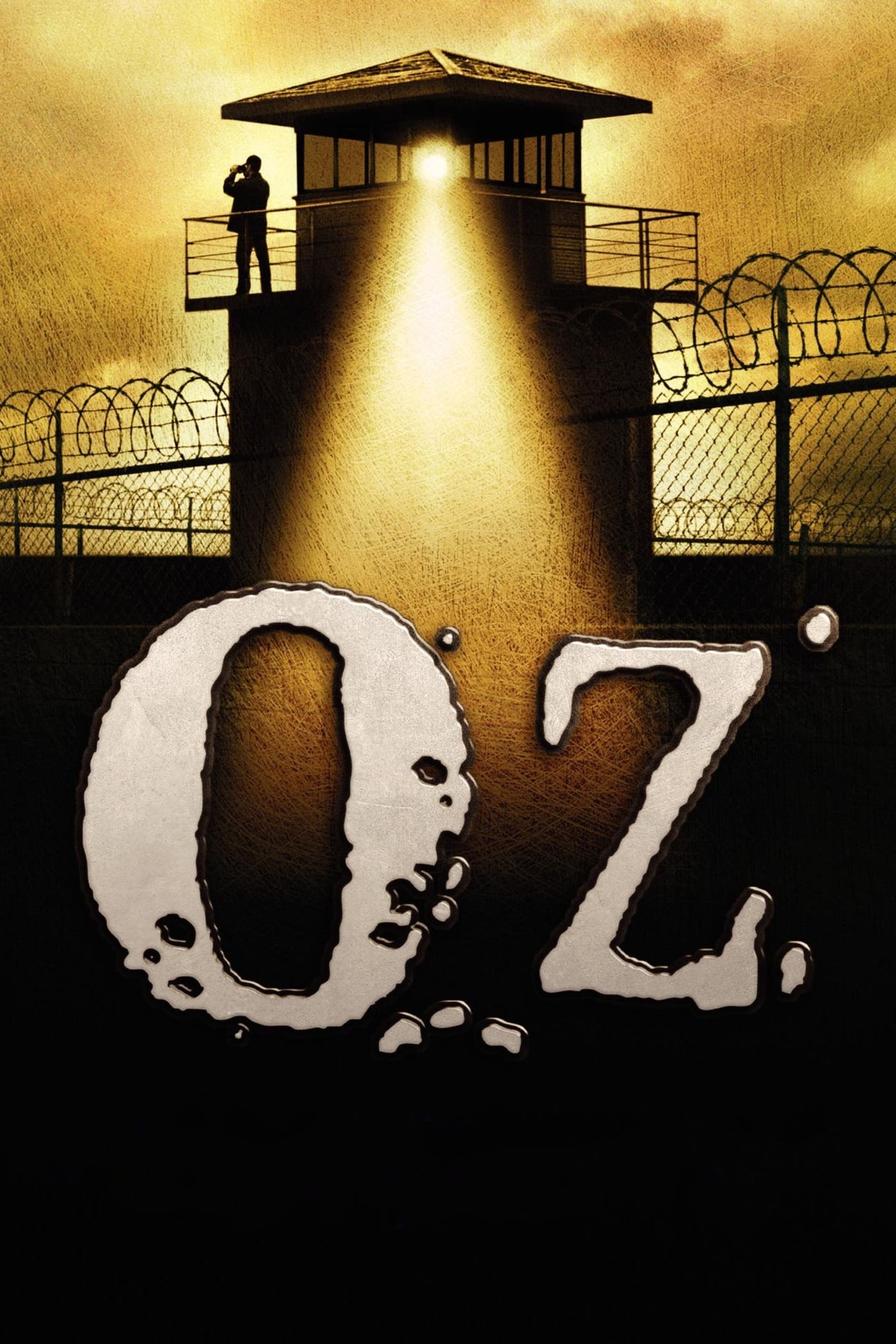
When Oz premiered on July 12, 1997, and ran for six seasons until its series finale on February 23, 2003, it introduced audiences to a television experience unlike anything they had seen before. Set within the fictional Oswald State Correctional Facility, nicknamed “Oz,” the series transported viewers into the harsh realities of maximum-security prison life.
The nickname “Oz” serves as both a reference to the classic film The Wizard of Oz (1939), which popularized the phrase “There’s no place like home,” with the series using the tagline: “It’s no place like home”. This ironic twist perfectly captured the show’s dark sensibility and the inmates’ complicated relationship with their confined world.
The series primarily unfolded within “Emerald City,” a wing named after a setting from the fictional Land of Oz, where ingroups – Muslims, Latinos, Italians, Aryans – stick close to their mutual friends and terrorize their mutual enemies. This experimental unit served as the perfect microcosm for exploring complex social dynamics, racial tensions, and the brutal hierarchy that governs prison life.
Outstanding Ensemble Cast Performance
The strength of Oz lay in its exceptional ensemble cast, featuring both established actors and rising talents who would later become household names. The talent, none of it marquee, is nonetheless the finest assembly of supporting actors an ensemble cast could hope for.
Leading Men of Emerald City
J.K. Simmons delivered a career-defining performance as Vernon Schillinger, the white supremacist leader whose manipulative and violent nature made him one of television’s most memorable antagonists. Led through the whole series by the charismatic Vernon Schillinger, the Aryans are racist, nationalist, tough and like to have what are known in the series as “Prags”.
Lee Tergesen portrayed Tobias Beecher, an educated lawyer who is sentenced to prison after being convicted of driving under the influence of alcohol. Beecher’s experiences in prison critically reshape his outlook on life and his relationship with other inmates. Tergesen’s nuanced performance showed a man’s transformation from privileged naivety to hardened survival instincts.
Dean Winters brought complexity to Ryan O’Reily, an intelligent and manipulative Irish-American inmate known for his cunning nature and ability to manipulate people and situations to his advantage. Winters masterfully balanced O’Reily’s charm with his ruthless pragmatism.
Harold Perrineau served as the show’s philosophical anchor, playing Augustus Hill, a wheelchair-bound inmate who serves as the show’s narrator. Hill becomes a confidant for many of the inmates and shares his perspective on life in prison through his voiceover narrations.
Eamonn Walker commanded attention as Kareem Saïd, a former Black Panther turned Muslim inmate depicted as a charismatic and influential figure within the prison, challenging the power dynamics and advocating for justice.
Groundbreaking Female Performances
While Oz was predominantly a male-dominated environment, the series featured remarkable performances from its female cast members who brought depth and humanity to their roles.
Rita Moreno delivered a powerhouse performance as Sister Peter Marie Reimondo, appearing in 55 episodes from 1997–2003. She was a cast member in The Electric Company (1971–1977), for which she earned an Emmy in 1972, and played Sister Peter Marie Reimondo on the HBO series Oz (1997–2003). Her portrayal of the prison psychologist provided moral complexity and emotional grounding to the series.
Luna Lauren Vélez brought compelling intensity to Dr. Gloria Nathan, appearing in 48 episodes from 1997–2003. Her most notable television roles are as María LaGuerta on Showtime’s Dexter, Detective Nina Moreno on Fox’s New York Undercover, Dr. Gloria Nathan on HBO’s prison drama Oz, and Elena on ABC’s comedy-drama Ugly Betty. Vélez’s portrayal of the prison doctor navigating professional ethics and personal relationships added crucial emotional stakes to the series.
Production Excellence and Creative Vision
Created by Tom Fontana, Oz was the first one-hour dramatic television series to be produced by the premium cable network HBO. This groundbreaking status allowed the show unprecedented creative freedom that would become HBO’s signature approach to original programming.
Pushing Boundaries on Premium Cable
Oz took advantage of the freedoms of premium cable to show elements of coarse language, drug use, violence, frontal nudity, homosexuality, and rape of males, as well as ethnic and religious conflicts that would have been unacceptable to traditional advertiser-supported American broadcast television.
This freedom wasn’t used gratuitously but served the show’s commitment to realistic portrayals of prison life. The series tackled difficult subjects including:
• Gang warfare and racial tensions • Sexual violence and power dynamics
• Drug trafficking and addiction • Religious extremism and conversion • Corruption within the correctional system • The psychological impact of long-term incarceration
Innovative Storytelling Techniques
Oz is narrated dramatically by a “Greek Chorus” of inmates who make insightful observations not just about Oz, but applicable to the outside world as well. This narrative device, primarily delivered through Harold Perrineau’s Augustus Hill, elevated the series beyond simple prison drama into philosophical territory.
The show’s structure allowed for both episodic storytelling and long-term character arcs, creating a complex tapestry of interconnected storylines that reflected the confined yet constantly evolving ecosystem of prison life.
Cultural Impact and Critical Reception
Professional Recognition
While the series never won major awards, it was however nominated for two Primetime Emmy Awards, for Outstanding Guest Actor in a Drama Series (Charles S. Dutton), and Outstanding Casting for a Series (Alexa L. Fogel). Additional nominations consist of the NAACP Image Awards (seven), a GLAAD Media Award, a Producers Guild of America Award, a Writers Guild of America Award.
Critical Acclaim
Critical reception of Oz was mostly positive. The first season of Oz has been ranked a 70 based on the rating aggregator website Metacritic, indicating generally favorable reviews by critics. Caryn James from The New York Times stated: “Set almost entirely in the prison, a high-tech horror with glass-walled cells, Oz can also be unpleasant to watch, it is so gruesome and claustrophobic. Yet… as the series moves beyond its introductory shock value, it becomes more serious, disturbing and gripping”.
Audience Response and Legacy
Reviewers say ‘Oz’ is a compelling, brutal, and thought-provoking series exploring prison life’s complexities. Themes like gang warfare, racial tensions, and drug dealing are central. Praised for strong character development and realistic portrayals, it offers intense storytelling.
The series developed a passionate fanbase who appreciated its unflinching approach to difficult subject matter. Oz is one of the best and most underrated shows of all-time! It’s one of the rare shows where just about every episode is great! HBO is known for having all these great shows over the years and Oz is right at the top of those great shows.
Thematic Depth and Social Commentary
Oz transcended typical prison drama by examining broader themes relevant to society at large:
Power Structures and Corruption
The series explored how power operates in closed systems, examining corruption at every level from individual inmates to administrative officials. The show demonstrated how institutional power can corrupt even well-intentioned individuals.
Race and Identity
The show’s unflinching examination of racial tensions provided commentary on broader American social issues. Each ethnic group within Oz represented different approaches to survival and identity maintenance under extreme pressure.
Redemption and Moral Complexity
Few characters in Oz were purely good or evil. The series excelled at showing how circumstances can transform individuals, exploring whether true redemption is possible within such a dehumanizing environment.
Religion and Spirituality
From Kareem Saïd’s Islamic teachings to Sister Peter Marie’s Catholic counseling, the series examined how faith functions in extreme circumstances, both as a source of strength and as a tool for manipulation.
Technical Excellence
Production Design
The series’ production design created a convincing and oppressive atmosphere that made viewers feel the claustrophobia of prison life. The glass-walled cells of Emerald City became iconic, representing both transparency and vulnerability.
Writing Quality
The writing and acting is so great that viewers became deeply invested in character outcomes. The series maintained high storytelling standards throughout its six-season run, avoiding the quality decline that often affects long-running series.
International Reception and Distribution
Oz found audiences worldwide, demonstrating the universal appeal of its storytelling. In Malaysia, full episodes of Oz aired late at night on ntv7, while the censored version aired during the day. In the Netherlands, Oz aired on the commercial channel RTL 5. In New Zealand Oz aired on The Box at 9.30pm on Wednesdays in the early 2000s. In Norway and Sweden, it aired on the commercial channels ZTV and TV3 late at night.
The series’ global reach helped establish HBO’s reputation for producing exportable premium content that could find audiences across different cultures and broadcasting standards.
Notable Guest Appearances
Throughout its run, Oz featured numerous guest stars who would later become prominent in television and film. Luke Perry had a small role in the later years of Oz, along with other notable appearances that showcased the series’ ability to attract talent even for brief roles.
Seth Gilliam, who currently plays the hard-to-kill Father Gabriel on The Walking Dead, was just one of the many Oz actors who would end up in The Wire cast following his short run as corrections officer-turned-inmate Clayton Hughes. This cross-pollination of talent between quality drama series helped establish a network of actors associated with prestige television.
Home Video and Streaming Legacy
The first two seasons of Oz were released on VHS in box sets. HBO Home Video has released all six seasons of Oz on DVD in Region 1 and Region 2. The Region 1 releases contain numerous special features including commentaries, deleted scenes and featurettes.
On April 21, 2009, Variety announced that starting May 31, DirecTV will broadcast all 56 episodes in their original form without commercials and in up-scaled “high definition” on The 101 Network available to all subscribers. This availability has helped new generations discover the series.
For those interested in understanding the economic impact of groundbreaking television series like Oz, resources like HablemosMoney provide valuable insights into the financial dynamics of the entertainment industry.
Final Verdict
Oz concluded its remarkable run in 2003 as a series that fundamentally changed television drama. This is such a powerful show, superbly acted, that frankly I feel it’s the best TV drama ever made. While this assessment may be debatable, the series’ influence on subsequent television programming is undeniable.
The show’s willingness to tackle difficult subject matter with intelligence and nuance established a template that continues to influence television drama today. Its exploration of institutional power, racial dynamics, and moral complexity remains relevant decades after its conclusion.
Ratings and Recommendations
Overall Score: 9/10
Oz earns high marks for:
• Exceptional ensemble acting across all seasons • Groundbreaking storytelling that pushed television boundaries
• Complex character development that avoided simple categorizations • Social commentary that remains relevant today • Production quality that created an immersive prison environment
Viewing Recommendations:
- Essential viewing for fans of complex drama series
- Not suitable for viewers sensitive to graphic violence or disturbing content
- Best appreciated by audiences interested in social commentary through entertainment
- Ideal preparation for understanding HBO’s approach to prestige television
For more information about the series and its cultural impact, the Internet Movie Database provides comprehensive details about cast, crew, and production history.
Oz stands as a testament to television’s power to examine difficult truths about human nature and social institutions. Its 2003 conclusion marked the end of a series that dared to show audiences uncomfortable realities while never losing sight of the humanity within even its most flawed characters. For viewers seeking television drama that challenges as much as it entertains, Oz remains an essential experience that continues to reward new discoveries with each viewing.
Leave a Reply