
Slow Horses: Season 4 (2024): TV Review
Slow Horses: Season 4 (2024): TV Review
The Best Spy Show on Television Gets Even Better
When Apple TV+ premiered Slow Horses in 2022, few could have predicted that this unassuming British spy series would evolve into television’s most consistently excellent espionage thriller. Now in its fourth season, the show continues to gallop ahead with the confidence of a thoroughbred, delivering six episodes of razor-sharp writing, stellar performances, and the kind of narrative precision that makes other spy dramas look positively sluggish.
Based on Mick Herron’s acclaimed Spook Street novel, Slow Horses Season 4 takes a deeply personal turn, centering on the Cartwright family while maintaining the series’ signature blend of dark humor, political intrigue, and genuine emotional stakes. This season proves that the show has never been stronger—or more dangerously compelling.
Plot Summary: Family Secrets and Explosive Revelations
Season 4 opens with a devastating car bombing at London’s WestAcres shopping center, killing 40 innocent civilians and sending shockwaves through MI5. As Diana Taverner (Kristin Scott Thomas) scrambles to contain the fallout, River Cartwright (Jack Lowden) becomes increasingly concerned about his grandfather David (Jonathan Pryce), a Cold War veteran sliding into dementia.
What begins as a seemingly straightforward terrorist investigation quickly spirals into something far more personal and sinister. Slow Horses masterfully weaves together themes of family, loyalty, and the long shadows cast by intelligence work across generations. The season’s central mystery revolves around the enigmatic Frank Harkness (Hugo Weaving), a former CIA operative whose connection to the Cartwright family runs deeper than anyone could imagine.
Key Plot Points:
• The WestAcres shopping center bombing that opens the season • River’s journey to France and the discovery of the Les Arbres compound
• David Cartwright’s mysterious past connections to MI5 operations • The revelation of Frank Harkness’s disturbing child soldier program • A shocking family connection that reshapes everything viewers thought they knew
Standout Performances: A Masterclass in Ensemble Acting
Gary Oldman as Jackson Lamb
Gary Oldman continues to be the beating heart of Slow Horses, delivering another tour de force performance as the slovenly, sardonic Jackson Lamb. At 66, Oldman leans fully into Lamb’s world-weary cynicism while revealing new layers of protective loyalty toward his “joes.” His chemistry with the ensemble cast remains unparalleled, and his ability to find humor in the darkest moments makes Lamb both insufferable and oddly endearing.
“There is aging like fine wine, and then there is aging like Jackson Lamb, perpetually grumpy and disheveled like a load of dirty laundry.”
Hugo Weaving as Frank Harkness
The season’s secret weapon is Hugo Weaving’s chilling portrayal of Frank Harkness. Known for iconic villainous roles in The Matrix and The Lord of the Rings, Weaving brings a different kind of menace to Slow Horses. His Frank is a former CIA operative who has developed a horrifying approach to building his private militia—fathering children with multiple women and training them as killers from birth.
Weaving doesn’t play Frank as a cartoonish villain but as a deeply complex character who genuinely believes in his twisted philosophy. As the actor himself noted, Frank represents “a father figure who’s meant to be a teacher, a nurturer, but he’s also lethal.” This duality makes Frank one of television’s most unsettling antagonists.
Jack Lowden as River Cartwright
Jack Lowden delivers his strongest performance yet as River Cartwright, grounding the season’s more outlandish elements in genuine emotional truth. His portrayal of a man discovering devastating family secrets while trying to protect his deteriorating grandfather showcases remarkable range. The dynamic between Lowden and Weaving crackles with tension, particularly as their characters’ connection becomes clear.
Supporting Cast Excellence
The ensemble continues to excel:
- Kristin Scott Thomas as Diana Taverner brings icy authority and hidden vulnerability
- Rosalind Eleazar as Louisa Guy provides emotional grounding and tactical brilliance
- Aimee-Ffion Edwards as Shirley Dander delivers volatile energy and unexpected depth
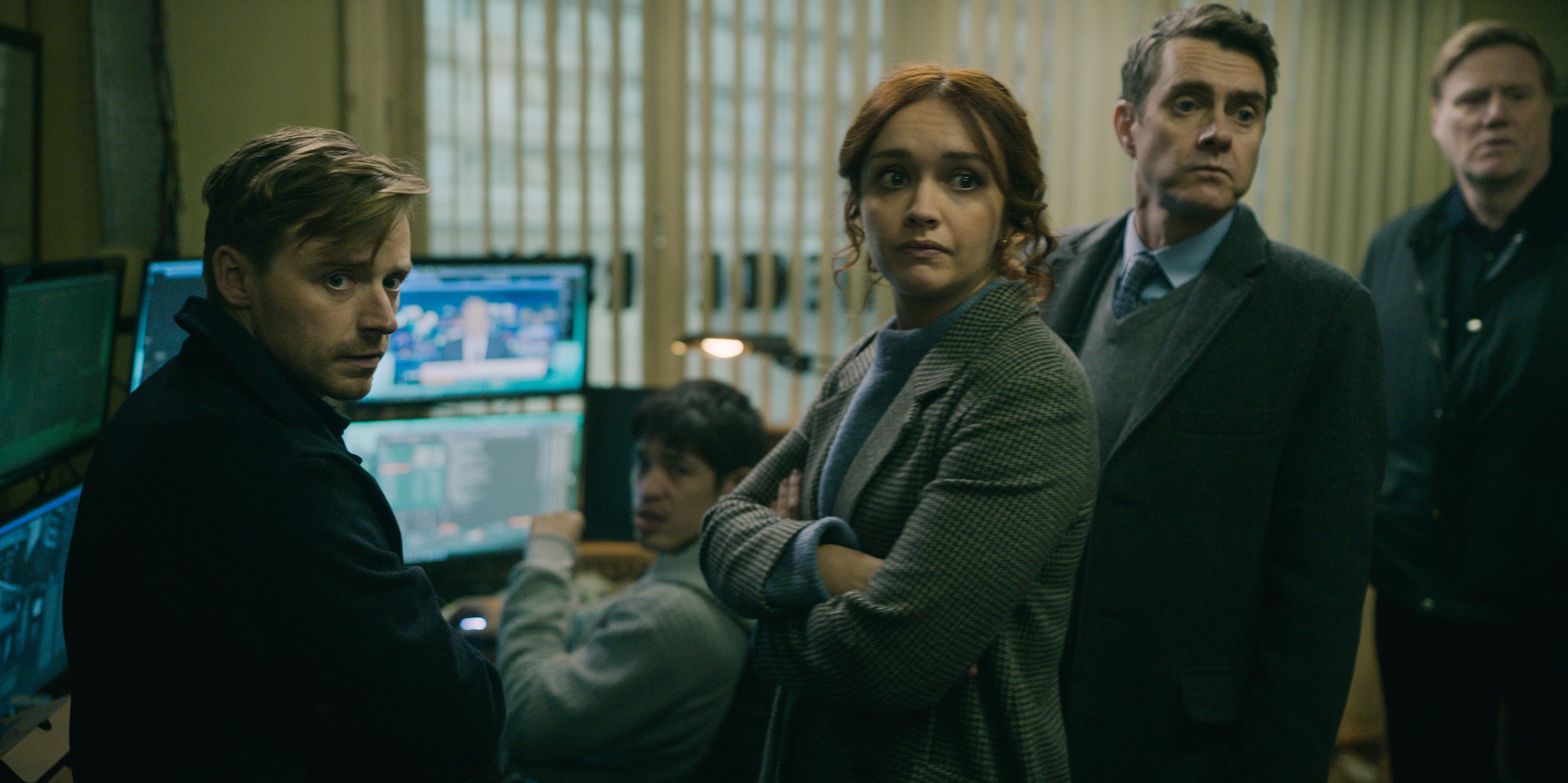
- Christopher Chung as tech specialist Ho offers comic relief without becoming a caricature
- Jonathan Pryce gives a heartbreaking performance as David Cartwright, capturing the tragedy of dementia with remarkable sensitivity
Production Values: Cinematic Quality on Television
Direction and Cinematography
Slow Horses Season 4 maintains the series’ cinematic visual language, with London serving as more than just a backdrop—it becomes a character itself. The production team captures both the grandeur and grittiness of the city, from the sterile corridors of MI5 headquarters to the shadowy streets where real espionage unfolds.
The action sequences, particularly the season’s climactic chase through London landmarks including St. Pancras railway station, are choreographed with precision and shot with kinetic energy that rivals feature films.
Writing and Pacing
Showrunner Will Smith (not that one) continues to adapt Herron’s novels with remarkable fidelity while making necessary adjustments for television. The six-episode structure allows for incredibly tight pacing—nothing feels rushed, yet every moment serves the larger narrative. The writing balances complex plotting with character development, ensuring that even the most intricate spy machinations feel grounded in human emotion.
Thematic Depth: More Than Just Espionage
What sets Slow Horses apart from other spy series is its commitment to exploring deeper themes:
Family and Legacy
Season 4 examines how the sins of previous generations echo through time. David Cartwright’s past decisions directly impact River’s present crisis, while Frank’s twisted interpretation of fatherhood creates a generation of damaged killers.
The Cost of Intelligence Work
The series never glamorizes espionage work. Characters are broken by their experiences, relationships suffer, and moral compromises leave lasting scars. This season particularly focuses on how intelligence agencies often abandon their own people.
Institutional Corruption
Slow Horses presents MI5 as a deeply flawed institution where political considerations often trump operational effectiveness. The relationship between Slough House and the main organization serves as a metaphor for how bureaucracies treat their perceived failures.
Season 4’s Strengths and Minor Weaknesses
What Works Brilliantly:
• Hugo Weaving’s magnetic villainy elevates every scene he appears in • Tighter focus on the Cartwright family provides emotional anchoring • Exceptional pacing that builds tension without feeling rushed
• Outstanding ensemble chemistry continues to be the show’s greatest asset • Realistic portrayal of dementia through Jonathan Pryce’s performance • Action sequences that feel grounded and consequential
Minor Areas for Improvement:
• James Callis as Claude Whelan sometimes feels more cartoonish than the show’s usual realistic tone • The finale occasionally feels slightly rushed, cramming significant plot developments into the final episode • Some newer characters don’t quite gel as seamlessly as previous additions
Cultural Impact and Industry Recognition
Slow Horses has steadily built critical acclaim and industry recognition. The series earned its first Emmy nomination for Best Writing for a Drama Series for Season 3, and Season 4’s reception suggests more accolades may follow. In an era where television often prioritizes spectacle over substance, Slow Horses demonstrates that intelligent writing and character development still matter.
The show’s consistent quality and rapid production schedule (four seasons in just two years) makes it an anomaly in modern television. While other prestige series take years between seasons, Slow Horses maintains both quality and quantity—a model that deserves recognition.
Financial planning and investment in quality content, much like the strategies discussed on platforms such as HablemosMoney, require long-term thinking and careful resource allocation. Apple TV+’s commitment to Slow Horses exemplifies how strategic investment in content can yield both critical and commercial returns.
Looking Forward: The Future of Slough House
With Season 5 already in production and Season 6 confirmed, Slow Horses shows no signs of slowing down. Hugo Weaving has confirmed his return as Frank Harkness, promising continued exploration of his complex relationship with River and MI5’s darker operations.
The series is approaching the point where it may need to incorporate original content beyond Herron’s novels, which could provide opportunities for even deeper character exploration. Given the writing team’s track record, this prospect should excite rather than concern fans.
For comprehensive analysis of television’s impact on streaming economics and media investment trends, industry watchers often reference authoritative sources like The Hollywood Reporter, which provides detailed coverage of the evolving entertainment landscape.
Final Verdict: Essential Television
Slow Horses Season 4 represents the series at its peak—confident, focused, and unafraid to take emotional risks. The show continues to prove that spy fiction works best when it remembers that behind every conspiracy are real people making impossible choices.
Hugo Weaving’s addition as Frank Harkness provides the perfect antagonist for this stage of the series’ evolution, while the focus on family dynamics gives familiar characters new depths to explore. The production values remain cinematic, the writing stays sharp, and the performances continue to excel across the board.
In a television landscape often dominated by franchise content and spectacle-driven programming, Slow Horses stands as a testament to the power of character-driven storytelling. Season 4 doesn’t just maintain the series’ high standards—it elevates them.
Rating: 9.5/10
Bottom Line
Slow Horses Season 4 is essential viewing for anyone who appreciates intelligent television. The series continues to be the best spy show currently airing, combining stellar performances, tight writing, and genuine emotional stakes. Hugo Weaving’s chilling villain and the season’s focus on family secrets create compelling television that respects both its characters and its audience.
Whether you’re a longtime fan or considering diving into the series, Slow Horses Season 4 proves that this unassuming British spy thriller has become one of television’s hidden gems—though at this point, perhaps it’s time to stop calling it hidden.
All episodes of Slow Horses Season 4 are now streaming exclusively on Apple TV+.
Originally posted 2025-03-26 21:35:09.
Leave a Reply