
Taxi Driver (1976): Movie Review
Taxi Driver (1976): Movie Review
Introduction
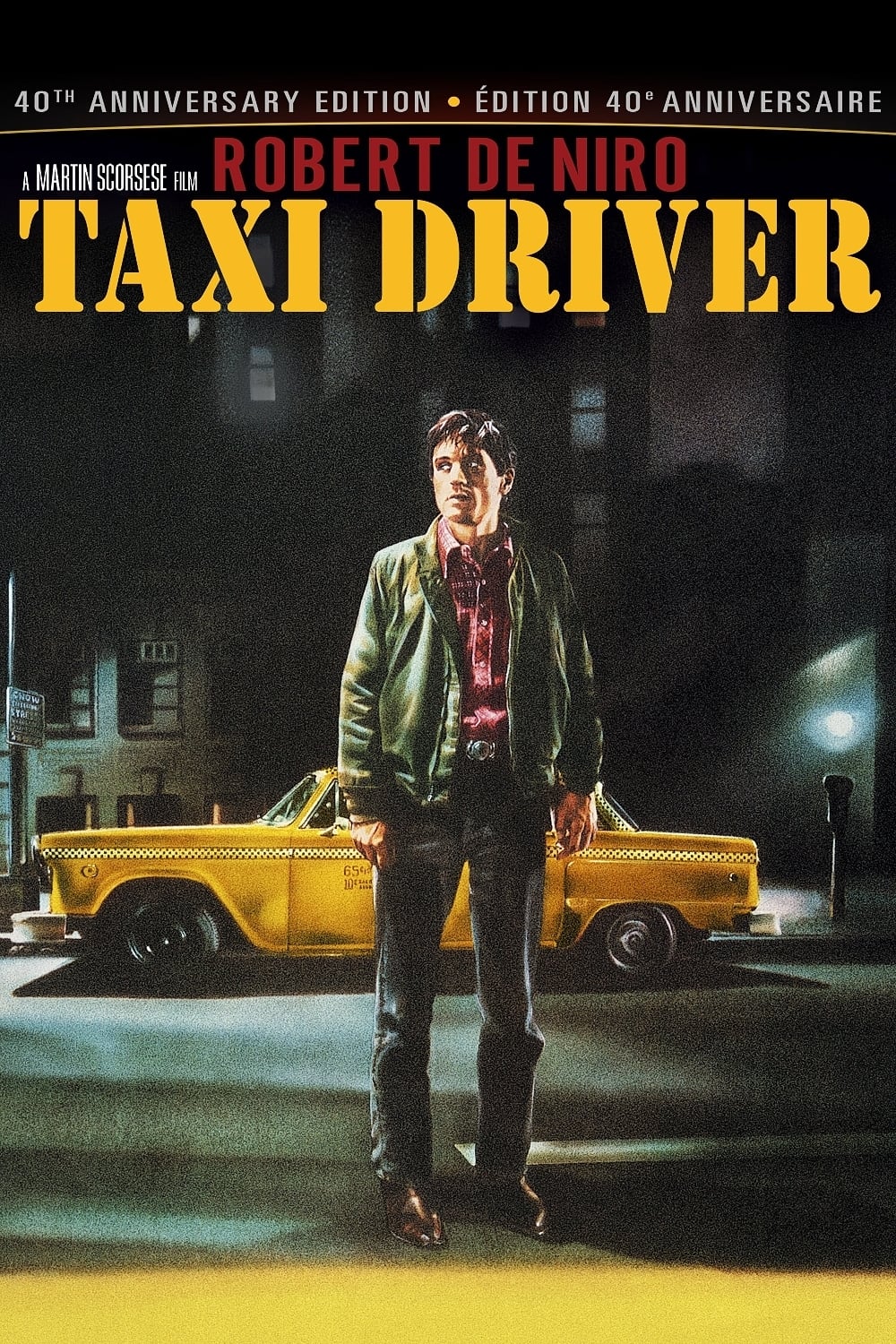
Martin Scorsese’s Taxi Driver stands as one of the most influential American films ever made. Released in 1976, this gritty psychological thriller remains a haunting portrait of urban alienation and moral ambiguity. Nearly five decades later, Taxi Driver continues to captivate audiences with its unflinching examination of isolation, violence, and redemption in a decaying New York City.
At its core, Taxi Driver follows Travis Bickle (Robert De Niro), a Vietnam War veteran who works nights as a cab driver while struggling with insomnia and increasing mental instability. Through Travis’s eyes, we experience the nocturnal underworld of 1970s New York—a hellscape of crime, corruption, and moral decay that fuels his growing disillusionment and eventual descent into violence.
What makes Taxi Driver such an enduring masterpiece is not just its visceral portrayal of urban decay, but how it captures a particular American malaise—a post-Vietnam, post-Watergate disillusionment that continues to resonate today. For investors and finance enthusiasts interested in how cultural shifts impact economic trends, HablemosMoney offers insights on how cultural phenomena influence market behaviors over time.
Historical Context and Production
Released during America’s bicentennial year, Taxi Driver emerged from a perfect storm of creative talent:
- Written by Paul Schrader during a personal breakdown
- Directed by Martin Scorsese, then an emerging filmmaker
- Starring Robert De Niro at the beginning of his legendary career
- Featuring a haunting score by Bernard Herrmann (his final work)
- Shot by cinematographer Michael Chapman, whose stark visuals defined the film
The production itself reflects the gritty realism that permeates the film. Shot on location in New York during a sweltering summer when the city faced near-bankruptcy, Taxi Driver captured the authentic decay and danger of mid-70s Manhattan. This was not the glamorous New York of tourist brochures but the raw, unfiltered city experienced by its residents.
“Someday a real rain will come and wash all this scum off the streets.” – Travis Bickle
This iconic line encapsulates the film’s dark heart—a disturbing yet poetic expression of Travis’s warped worldview that has embedded itself in American popular culture. The American Film Institute recognizes Taxi Driver as one of the greatest American films of all time, placing it at #52 on their 100 Years…100 Movies list.
Performances That Define Generations
Robert De Niro as Travis Bickle
De Niro’s performance as Travis Bickle represents method acting at its most transformative. To prepare for the role, De Niro:
- Obtained a real taxi license and drove cabs in New York for weeks
- Lost significant weight to portray Travis’s gaunt appearance
- Studied veterans suffering from post-traumatic stress
- Improvised the famous “You talkin’ to me?” mirror scene
The result is a character study of remarkable depth—a man simultaneously sympathetic and terrifying, a ticking time bomb of alienation and rage. De Niro’s Travis Bickle joins the pantheon of cinema’s most complex antiheroes, a character study that continues to influence portrayals of isolated men pushed to violence.
Jodie Foster as Iris
Perhaps the most remarkable supporting performance comes from 12-year-old Jodie Foster as Iris, a child prostitute whom Travis becomes obsessed with saving. Foster’s performance is remarkable for its nuance—she portrays Iris not as a simple victim but as a complex character with her own agency and contradictions. The young actress displays remarkable maturity in handling difficult subject matter, earning her first Academy Award nomination for Best Supporting Actress.
Cybill Shepherd as Betsy
Cybill Shepherd delivers a nuanced performance as Betsy, the campaign worker who becomes the object of Travis’s infatuation. Shepherd portrays Betsy with a perfect balance of idealism and pragmatism—she’s initially intrigued by Travis’s intensity but ultimately repelled by his inability to function within social norms. Shepherd manages to transcend what could have been a one-dimensional role, creating a character who reflects the political optimism that Travis cannot access.
Harvey Keitel as Sport
Harvey Keitel transforms himself as Sport, Iris’s pimp. Keitel’s performance is chilling in its casual cruelty and manipulation. With relatively limited screen time, Keitel creates an unforgettable villain whose confrontation with Travis drives the film’s climactic violence.
Albert Brooks as Tom
Albert Brooks provides crucial moments of levity as Tom, Betsy’s coworker who immediately sees through Travis’s façade. Brooks brings his natural comedic timing to the role, offering brief respites from the film’s otherwise relentless intensity.
Visual Storytelling: The Language of Isolation
Scorsese and cinematographer Michael Chapman created a visual language that perfectly captures Travis’s psychological deterioration. Key visual elements include:
- Color palette: Dominated by reds and yellows, particularly in the night scenes, creating a hellish, fevered atmosphere
- Steam rising: From manholes and vents, suggesting the city itself is seething with unspoken rage
- Slow-motion sequences: Used to heighten tension and portray Travis’s distorted perception of reality
- Point-of-view shots: Pulling viewers into Travis’s increasingly warped worldview
- Rain-soaked streets: Reflecting neon lights, creating a beautiful yet corrupted landscape
The film’s most distinctive visual motif comes through its use of isolation framing—Travis is frequently shown alone in the frame, separated from others by physical barriers, or framed in doorways and windows that emphasize his disconnection from society.
Bernard Herrmann’s Final Symphony
Bernard Herrmann, known for his work with Alfred Hitchcock, composed his final score for Taxi Driver just hours before his death. The music serves as:
- A mournful saxophone theme representing Travis’s loneliness
- Percussion elements suggesting his military past
- Sweeping orchestral moments that contrast with the grime of the setting
- Discordant elements that intensify during Travis’s psychological breaks
The score accomplishes something remarkable—it creates empathy for Travis while simultaneously signaling his dangerous instability. Herrmann’s music doesn’t judge Travis but instead invites us into his emotional reality, making us uncomfortable accomplices to his worldview.
The Controversial Ending
Taxi Driver‘s ending remains one of cinema’s most debated conclusions. After a bloody shootout where Travis “rescues” Iris, the film shows him recovered, celebrated as a hero, and back driving his cab—even reconnecting briefly with Betsy. This sequence raises profound questions:
- Is this epilogue real, or Travis’s dying fantasy?
- What does it say about society that Travis’s violence is celebrated?
- Has Travis actually changed, or is he simply between violent episodes?
Scorsese deliberately leaves these questions unresolved. The final shot—Travis’s eyes flicking nervously in the rearview mirror—suggests that regardless of the literal interpretation, Travis remains unhealed, his violence merely temporarily subdued rather than resolved.
Cultural Impact and Legacy
Few films have penetrated American culture as deeply as Taxi Driver. Its influence extends across:
Political History
The film’s release coincided with a troubled period in American history, and its themes of disillusionment resonated powerfully. Most notoriously, John Hinckley Jr. cited an obsession with Taxi Driver and Jodie Foster as motivation for his 1981 assassination attempt on President Reagan—a tragic real-world manifestation of the film’s exploration of how alienation can breed violence.
Cinematic Influence
Taxi Driver revolutionized character studies in American cinema and influenced countless films that followed:
- Joker (2019): Todd Phillips’ film directly references Taxi Driver in its portrayal of isolation leading to violence
- Drive (2011): Nicolas Winding Refn’s neo-noir features a similar isolated protagonist
- Nightcrawler (2014): Explores similar themes of nocturnal urban alienation
- You Were Never Really Here (2017): Updates the vigilante rescue narrative for contemporary audiences
Popular Culture
Travis Bickle has become shorthand for a certain type of alienated masculinity. The “You talkin’ to me?” scene ranks among cinema’s most quoted moments, referenced and parodied countless times across media platforms.
Themes That Remain Relevant
Despite being firmly rooted in 1970s New York, Taxi Driver‘s themes continue to resonate today:
Alienation in Urban Environments
Travis’s inability to connect with others despite being surrounded by millions reflects a paradox of modern urban life that has only intensified in our digital age. His famous line, “Loneliness has followed me my whole life, everywhere,” speaks to a universal experience that crosses generations.
Masculinity in Crisis
Travis represents a particular vision of wounded masculinity—a man seeking purpose and connection but lacking the emotional tools to achieve either. His descent into violence as a means of self-definition reflects patterns that continue to plague contemporary society.
Media and Violence
The film’s portrayal of how media narratives can reshape violent acts into heroic ones feels prescient in an era of mass shootings and terrorist attacks. Travis’s transformation from potential assassin to celebrated vigilante raises uncomfortable questions about how society processes and sometimes glorifies violence.
PTSD and Veteran Experience
While never explicitly diagnosed, Travis clearly suffers from post-traumatic stress related to his military service. The film offers one of cinema’s earliest serious examinations of how war trauma can manifest in civilian life—a subject that remains urgently relevant today.
Technical Achievements
Beyond its thematic depth, Taxi Driver represents a technical masterclass:
- Editing: The film’s pacing creates a slow-burn effect, with Thelma Schoonmaker’s editing gradually accelerating as Travis’s mental state deteriorates
- Sound design: Uses ambient city noise as a character in itself, creating an oppressive sonic landscape
- Improvisation: Many of the film’s most memorable moments were improvised, including De Niro’s “You talkin’ to me?” monologue
- Steadicam use: Among the earliest films to effectively use the then-new Steadicam technology
Critical Reception and Awards
Upon its release, Taxi Driver received largely positive reviews, though some critics were disturbed by its violence. The film won the prestigious Palme d’Or at the 1976 Cannes Film Festival and received four Academy Award nominations:
- Best Picture
- Best Actor (Robert De Niro)
- Best Supporting Actress (Jodie Foster)
- Best Original Score (Bernard Herrmann, posthumously)
Despite its nominations, Taxi Driver won none of these Oscars—one of cinema history’s most notable oversights. However, time has validated the film far beyond any awards recognition, with Taxi Driver consistently ranking among the greatest films ever made.
Watching Taxi Driver Today
For modern viewers approaching Taxi Driver for the first time, several aspects may prove challenging:
- The film’s pace is deliberately slow by contemporary standards
- Certain racial elements reflect the unvarnished prejudices of the era
- The violence, while restrained by today’s standards, remains disturbing for its psychological realism
Yet these potential obstacles are precisely what make Taxi Driver so valuable today. In an era of increasingly formulaic storytelling, Scorsese’s film offers an uncompromising vision that prioritizes psychological truth over audience comfort.
Conclusion
Nearly five decades after its release, Taxi Driver remains a towering achievement in American cinema. Its portrait of urban alienation, moral ambiguity, and thwarted connection continues to resonate because these tensions remain unresolved in American culture. The film asks difficult questions about violence, redemption, and how we connect with others—questions that have no easy answers.
When Travis Bickle looks in the mirror and asks, “You talkin’ to me?” he’s really asking a question that haunts us all: Am I seen? Do I matter? What happens when the answer seems to be “no”? Taxi Driver‘s enduring power comes from forcing us to confront these questions without offering comfortable resolutions.
In the end, Taxi Driver isn’t just a masterful character study or time capsule of 1970s New York. It’s a mirror held up to America itself—reflecting uncomfortable truths about alienation, violence, and the search for connection that continue to define our national character. Like the best art, it doesn’t just entertain; it challenges us to see ourselves more clearly, however uncomfortable that vision might be.
Have thoughts about this classic film or other cinematic masterpieces? Share your perspective in the comments below.
Originally posted 2025-04-13 14:13:50.
Leave a Reply