
The Mary Tyler Moore Show (1977) Complete TV Review
The Mary Tyler Moore Show (1977) Complete TV Review
When The Mary Tyler Moore Show concluded its seven-season run on March 19, 1977, it left behind a legacy that fundamentally changed television comedy forever. The Mary Tyler Moore Show proved to be a groundbreaking series in the era of second-wave feminism; portraying a central female character who was neither married nor dependent on a man was a rarity on American television in the 1970s. What began as a simple premise about a single woman starting fresh in Minneapolis became one of the most influential sitcoms in television history.
A Revolutionary Beginning
The show originally aired on CBS from September 19, 1970, to March 19, 1977, spanning 168 episodes across seven transformative seasons. Created by James L. Brooks and Allan Burns, the series starred Mary Tyler Moore as Mary Richards, a 30-year-old single woman who moves to Minneapolis after a failed relationship and lands a job as associate producer at the fictional WJM-TV news station.
The Mary Tyler Moore Show was revolutionary for its time because it dared to present an unmarried woman who wasn’t desperately seeking a husband or defined by her relationships with men. Mary Richards was content with her independence, career ambitions, and friendships – a concept that was groundbreaking in 1970s television.
The Stellar Cast
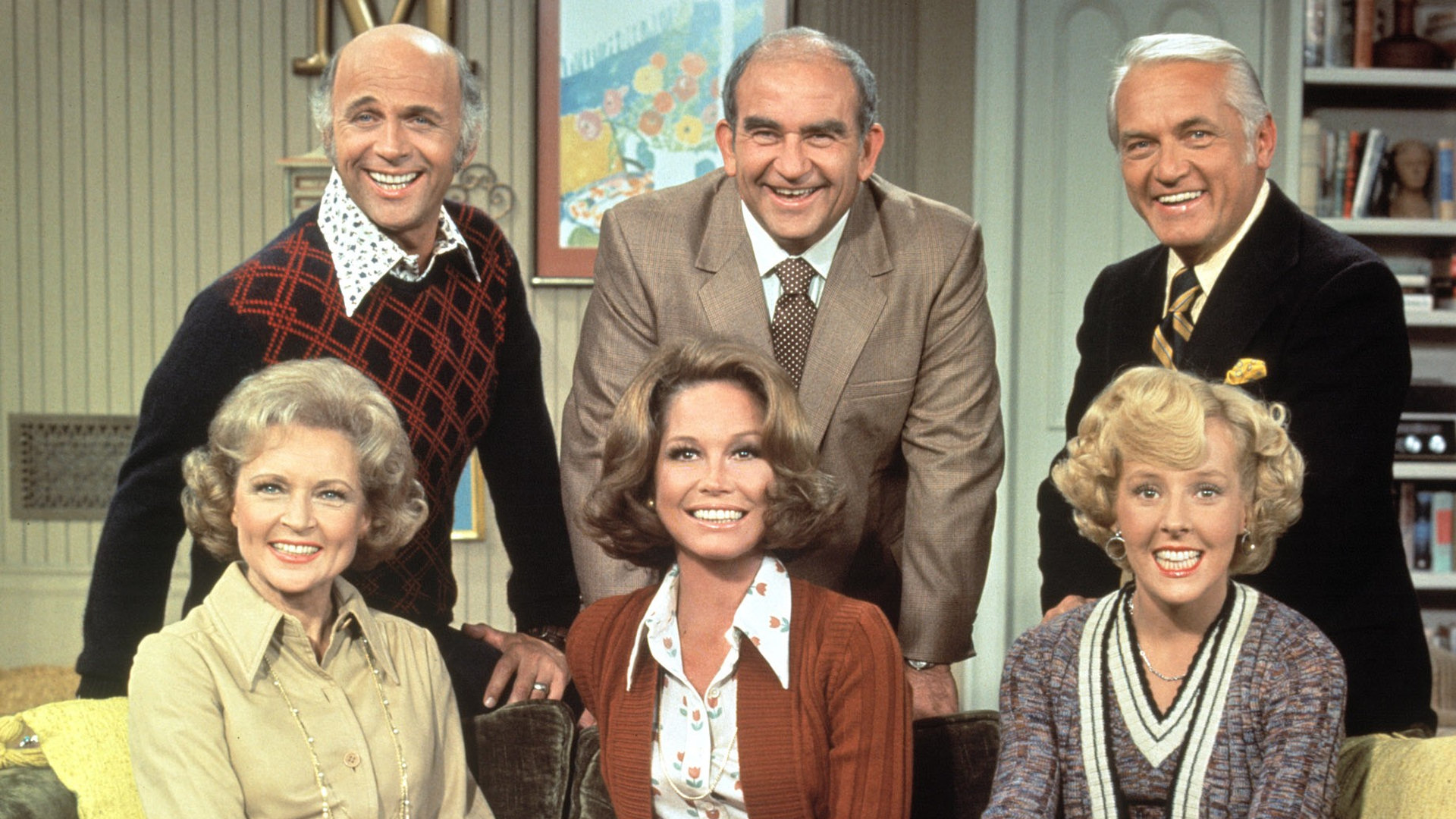
The ensemble cast was nothing short of exceptional, featuring:
• Mary Tyler Moore as Mary Richards – The optimistic, professional associate producer • Ed Asner as Lou Grant – Mary’s gruff but caring boss • Gavin MacLeod as Murray Slaughter – The witty news writer • Ted Knight as Ted Baxter – The vain, incompetent news anchor • Valerie Harper as Rhoda Morgenstern – Mary’s upstairs neighbor and best friend (Seasons 1-4) • Cloris Leachman as Phyllis Lindstrom – Mary’s pretentious landlady (Seasons 1-5) • Betty White as Sue Ann Nivens – The man-hungry host of “The Happy Homemaker” (Seasons 4-7) • Georgia Engel as Georgette Franklin/Baxter – Ted’s sweet, ditzy girlfriend and later wife (Seasons 3-7)
Season-by-Season Evolution
Season 1 (1970-1971): Finding Her Footing
The debut season established the show’s foundation with 24 episodes that introduced viewers to Mary’s world. Mary Tyler Moore deserves kudos for her portrayal of Mary Richards, a ground-breaking character who was allowed to be her own person. The early episodes focused on Mary adjusting to her new life in Minneapolis, developing relationships with her coworkers at WJM-TV, and navigating the dynamics with her neighbors Rhoda and Phyllis.
Key episodes from Season 1 included: • “Love Is All Around” (Pilot) – Mary arrives in Minneapolis and gets her job • “Support Your Local Mother” – Rhoda’s overbearing mother visits • “Toulouse-Lautrec Is One Of My Favorite Artists” – Mary dates a shorter man
The season established the workplace as Mary’s second family, with Lou Grant memorably telling Mary “You know, Mary, you’ve got spunk… I hate spunk” in the pilot episode.
Season 2 (1971-1972): Strengthening Foundations
The second season deepened character relationships and explored more complex storylines. The chemistry between Mary and Rhoda became a highlight, with their contrasting personalities – Mary the eternal optimist and Rhoda the sarcastic realist – creating perfect comedic balance.
Season 3 (1972-1973): New Additions
Season 3 introduced Georgia Engel as Georgette Franklin, Ted Baxter’s naive girlfriend. Mary Tyler Moore described her as a cross between Stan Laurel and Marilyn Monroe. Georgette’s sweet, childlike demeanor provided a perfect contrast to the sharper personalities in the cast.
Season 4 (1973-1974): The Sue Ann Revolution
Perhaps the most significant addition to The Mary Tyler Moore Show came in Season 4 with Betty White’s introduction as Sue Ann Nivens. Her first appearance in episode one of season four was intended to be a one-time guest role, but series creator James L. Brooks and the producers were so impressed they made her a regular.
White played up Sue Ann Nivens’ cheerful, home-and-hearth loving persona — a sharp contrast to the character’s backbiting, sexually voracious true nature. Sue Ann hosted “The Happy Homemaker” show on WJM-TV, presenting herself as the perfect domestic goddess while hiding her man-hungry, competitive nature.
Betty White’s performance as Sue Ann was masterful, creating a character who could deliver cutting insults with a sugar-sweet smile. Her interactions with Murray Slaughter became legendary, with the two trading barbs about his baldness and her age.
Season 5 (1974-1975): Transitions Begin
Season 5 marked the beginning of major cast changes. Both Valerie Harper and Cloris Leachman began preparing for their own spin-off series. The season featured memorable episodes including “Chuckles Bites the Dust,” which wouldn’t air until Season 6 but was filmed during this period.
Notable episodes included: • “A Boy’s Best Friend” – Ted deals with his mother’s unconventional relationship • “A Son For Murray” – Murray’s desire for a son creates workplace tension • “Neighbors” – Mary deals with apartment building politics
Season 6 (1975-1976): Peak Performance
Many consider Season 6 the creative peak of The Mary Tyler Moore Show. The season featured some of the series’ most acclaimed episodes, including the legendary “Chuckles Bites the Dust,” written by David Lloyd and directed by Joan Darling.
“Chuckles the Clown is crushed to death by a rogue elephant in a parade, which leaves all the newsroom staff in hysterics except Mary”. The episode brilliantly explored themes of death, grief, and inappropriate laughter, culminating in Mary’s emotional breakdown at Chuckles’ funeral.
Other standout episodes from Season 6: • “Ted’s Wedding” – Ted and Georgette’s spontaneous wedding at Mary’s apartment • “Lou Douses An Old Flame” – Lou reconnects with an old girlfriend • “Mary’s Delinquent” – Mary and Sue Ann become Big Sisters to troubled teens
Season 7 (1976-1977): The Final Chapter
The final season consisted of 24 episodes that brought The Mary Tyler Moore Show to its emotional conclusion. On the season 7 DVD, the last episode’s “final curtain call”, broadcast only once on March 19, 1977 (March 18 in Canada), was included at the request of fans.
The season opened with “Mary Midwife,” where Mary finds herself with more hosting duties than expected during a dinner party. The final episodes dealt with the cancellation of WJM’s news show and the characters’ inevitable separation.
Key Season 7 episodes: • “Mary Midwife” – Mary hosts an eventful dinner party • “Mary The Writer” – Mary tries her hand at creative writing • “Sue Ann’s Sister” – Sue Ann faces competition from her sister Lila • “The Last Show” – The emotional series finale
Character Development and Relationships
Mary Richards: The Heart of the Show
Mary Richards evolved significantly over seven seasons. Mary Richards likewise grew during the seven years of the series from the quivery, vulnerable, lanky girl with the long, raven hair who let herself be gently bullied into giving up her family holiday visit at Christmas to cover for her co-workers in that 1970 episode… into the almost cocky, seasoned professional who didn’t pause to deliver a zinger to Ted or SueAnn when circumstances demanded it.
Mary’s character development was subtle but profound. She gained confidence in her professional abilities while maintaining her essential kindness and optimism. Her romantic relationships, while important, never defined her character – a radical departure from typical female roles of the era.
The Workplace Family
The Mary Tyler Moore Show excelled at depicting the workplace as an extended family. The WJM newsroom became a place where these diverse personalities could clash, support each other, and grow together. Lou Grant served as the gruff father figure, Murray as the wise-cracking brother, and Ted as the problematic but loveable family member everyone tolerates.
The Home Front
Mary’s relationships with Rhoda and Phyllis provided the domestic counterpoint to her work life. She and Mary were polar opposites (Mary the cheerful optimist and Rhoda the angry cynic). However, those differences was what made their relationship shine. When Harper and Leachman left for their spin-offs, Betty White’s Sue Ann and Georgia Engel’s Georgette filled the void admirably.
Cultural Impact and Legacy
The Mary Tyler Moore Show changed television in fundamental ways:
Feminist Groundbreaking
The series arrived during the height of the women’s liberation movement and provided a positive role model for independent women. Mary Richards proved that a single woman could be successful, happy, and complete without a husband – a revolutionary concept for prime-time television.
Quality Writing and Production
Lance Morrow wrote in Time before its last episode: In many places around the U.S., the Mary Tyler Moore Show changed the nature of Saturday nights; it even became fashionable to spend them at home. The show turned the situation comedy into something like an art form—a slight art form perhaps, but a highly polished one.
The series won 29 Emmy Awards during its run, including three consecutive Outstanding Comedy Series awards from 1975-1977. The writing was consistently intelligent, tackling serious subjects with humor and sensitivity.
Spin-off Success
The Mary Tyler Moore Show spawned three successful spin-offs:
- Rhoda (1974-1978) – Following Valerie Harper’s character to New York
- Phyllis (1975-1977) – Cloris Leachman’s character moves to San Francisco
- Lou Grant (1977-1982) – Ed Asner’s character in an hour-long drama format
For those interested in more comprehensive television analysis and reviews, HablemosMoney offers excellent coverage of classic and contemporary TV shows, providing in-depth analysis of how series like this continue to influence modern entertainment.
Technical Excellence
Opening Credits Evolution
The show’s opening credits became iconic, particularly Mary’s hat toss in downtown Minneapolis. The hat toss was ranked by Entertainment Weekly as the second greatest moment in television. The sequence changed each season while maintaining the essential elements that made it memorable.
Theme Song Impact
Sonny Curtis’s “Love Is All Around” became synonymous with the show’s optimistic spirit. The lyrics changed between seasons to reflect Mary’s growing confidence and establishment in her new life.
Critical Reception and Awards (The Mary Tyler Moore Show)
On Rotten Tomatoes, season 1 holds an approval rating of 92% based on 12 reviews, with an average rating of 10.00/10. Critics consensus reads: “An exceptional ensemble and a smart sense of humor suggest, The Mary Tyler Moore Show and its titular star may just make it after all”.
The series received widespread critical acclaim throughout its run:
• 29 Emmy Awards total • Outstanding Comedy Series (1975, 1976, 1977) • Multiple acting awards for cast members • Writers Guild recognition for outstanding writing
In 2013, the Writers Guild of America ranked The Mary Tyler Moore Show as the 6th best-written TV series of all time, cementing its place in television history.
Lasting Influence (The Mary Tyler Moore Show)
The influence of The Mary Tyler Moore Show extends far beyond its original run. Modern workplace comedies from Murphy Brown to 30 Rock owe a debt to the show’s template of mixing personal and professional relationships in a comedic workplace setting.
When the writers of the sitcom Friends were about to create their series finale, they watched several other sitcom finales. Co-creator Marta Kauffman said that the last episode of The Mary Tyler Moore Show was the “gold standard” and that it influenced the finale of Friends.
The character of Mary Richards paved the way for countless independent female characters on television. Shows like Sex and the City, Ally McBeal, and countless others feature single, career-focused women who can trace their television lineage back to Mary Richards.
For contemporary television criticism and analysis that examines how classic shows like this continue to influence modern programming, readers can find valuable insights through resources like Britannica’s entertainment coverage, which provides scholarly perspective on television’s cultural impact.
Final Assessment (The Mary Tyler Moore Show)
The Mary Tyler Moore Show stands as one of television’s greatest achievements. It successfully balanced comedy with genuine human emotion, created fully realized characters who grew and changed over seven seasons, and tackled social issues with intelligence and sensitivity.
The series proved that a show centered on a single, independent woman could be both commercially successful and culturally significant. It elevated the situation comedy format while entertaining millions of viewers who saw themselves reflected in Mary Richards’ struggles and triumphs.
From Mary’s first tentative steps into the WJM newsroom to her tearful goodbye in the series finale, The Mary Tyler Moore Show chronicled not just one woman’s journey, but an entire culture’s evolution toward recognizing women as complete individuals worthy of their own stories.
The show’s enduring popularity in syndication and streaming platforms proves that great television transcends its original time period. Mary Richards’ optimism, professionalism, and basic human decency remain as relevant today as they were in 1970.
The Mary Tyler Moore Show didn’t just entertain – it inspired, influenced, and changed television forever. For that, we can all be grateful that Mary Richards decided to turn the world on with her smile, because she certainly did make it after all.
Rating: ★★★★★ (5/5 stars)
The Mary Tyler Moore Show remains a masterpiece of television comedy that successfully broke new ground while delivering consistently excellent entertainment. Its influence on television comedy and representation of women in media cannot be overstated, making it essential viewing for anyone interested in television history or quality comedy writing.
Leave a Reply