
All Of Us Strangers (2023): Movie Review
All Of Us Strangers (2023): Movie Review
Introduction
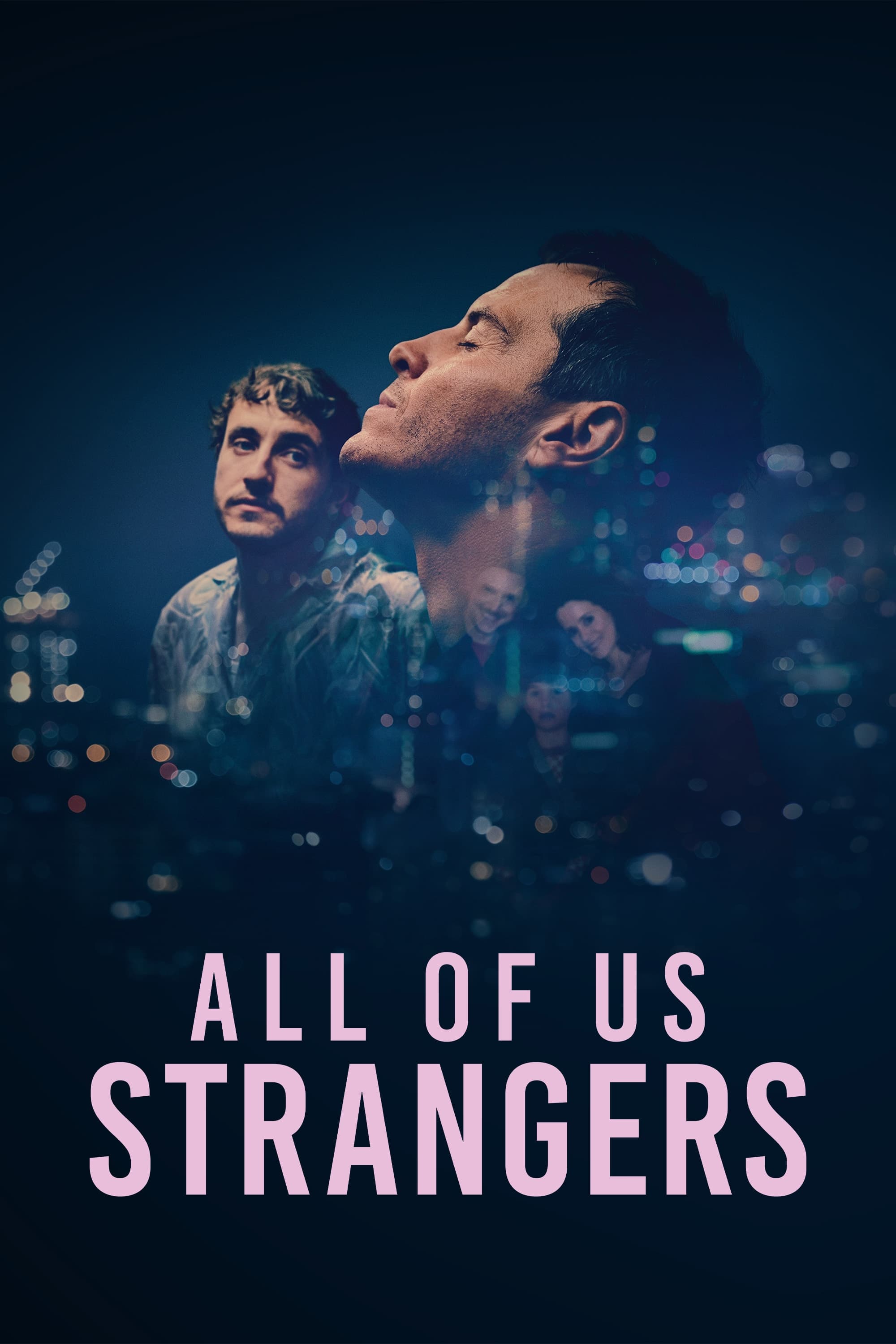
In the landscape of contemporary cinema, few films manage to capture the raw essence of human connection, loss, and longing quite like Andrew Haigh’s hauntingly beautiful All Of Us Strangers. Released in 2023, this poignant exploration of grief and sexuality weaves together elements of supernatural fantasy and stark realism to create a profoundly moving experience that lingers long after the credits roll.
The film stars Andrew Scott as Adam, a lonely screenwriter living in a near-empty London apartment building who embarks on a surreal journey when he encounters his parents (Claire Foy and Jamie Bell) exactly as they were before their untimely deaths decades earlier. Meanwhile, a chance meeting with his neighbor Harry (Paul Mescal) opens the possibility for a meaningful connection in his present reality.
What follows is an intricate dance between past and present, memory and fantasy, with All Of Us Strangers delivering one of the most emotionally resonant cinematic experiences in recent years.
Plot Summary
Adam lives a solitary existence in a sparsely populated high-rise apartment building in London. His routine is disrupted one night when Harry, a charming neighbor, knocks on his door in a drunken state. Though initially hesitant, Adam feels a spark of connection with the younger man.
Around the same time, Adam visits his childhood home in the suburbs, where he is shocked to find his parents living as though they never died thirty years ago. They appear exactly as they did in the 1980s when Adam was a child, and strangely, they seem to accept his adult presence without question.
As Adam continues visiting his parents’ home, he simultaneously develops a romantic relationship with Harry. These parallel narratives allow Adam to:
- Process unresolved childhood trauma
- Come to terms with his sexuality
- Open himself to genuine intimacy
- Confront the paralyzing effects of his grief
The boundary between reality and fantasy blurs throughout the film, with Adam moving between these worlds as he works through his deep-seated emotional wounds and yearns for connection in a world where he feels fundamentally alien.
Technical Excellence (All Of Us Strangers)
Direction
Andrew Haigh’s direction in All Of Us Strangers demonstrates remarkable restraint and sensitivity. Known for films like “Weekend” and “45 Years,” Haigh continues his exploration of intimate human connections with a deft touch that allows emotions to build organically rather than forcing dramatic moments.
His decision to frame the parental encounters with a subtle supernatural quality while keeping the emotional interactions painfully real creates a fascinating tension throughout the film. The pacing is deliberate but never indulgent, allowing scenes to breathe and characters to reveal themselves naturally.
Cinematography
The visual language of All Of Us Strangers plays a crucial role in establishing its dual realities. Cinematographer Jamie D. Ramsay creates distinct visual palettes for the different worlds Adam inhabits:
- Adam’s apartment building: Cold, sterile, and bathed in harsh blues and grays
- The parental home: Warm, soft lighting with nostalgic amber tones reminiscent of memory
- Intimate moments with Harry: Close, intimate framing with natural lighting that evolves as their relationship deepens
The film’s use of negative space brilliantly underscores Adam’s isolation, while the contrast between the empty modernist apartment building and the lived-in suburban home visually reinforces the film’s thematic concerns.
Screenplay
Based loosely on Taichi Yamada’s novel “Strangers,” Haigh’s screenplay demonstrates remarkable emotional intelligence. The dialogue feels authentically human—sometimes awkward, sometimes profound, but always truthful to the characters and their situations.
The script’s greatest strength lies in what remains unsaid, with meaningful glances and silent moments often communicating more than words could. This approach creates space for the actors to infuse their performances with nuance and subtext, resulting in scenes of extraordinary emotional power.
Stellar Performances (All Of Us Strangers)
Andrew Scott
At the center of All Of Us Strangers is Andrew Scott’s tour-de-force performance as Adam. Scott, known for his roles in “Fleabag” and “Sherlock,” delivers a masterclass in subtle emotional portrayal. His Adam is a man whose loneliness has become so deeply internalized that he barely recognizes it anymore.
Scott navigates the complex emotional landscape with remarkable precision, conveying decades of unprocessed grief with just a flicker of expression. His interactions with his parents showcase vulnerability rarely seen on screen, particularly in scenes where Adam finally reveals his sexuality to them—something he never had the chance to do in reality.
“Andrew Scott delivers a performance of such devastating emotional clarity that it’s impossible to look away, even in moments of almost unbearable intimacy.” – Film Comment
Paul Mescal
As Harry, Paul Mescal continues to demonstrate why he’s one of the most compelling actors of his generation. Following his breakthrough in “Normal People” and critically acclaimed work in “Aftersun,” Mescal brings a disarming authenticity to Harry.
Initially presenting as confident and even slightly aggressive, Mescal gradually peels back layers to reveal Harry’s own profound loneliness and yearning for connection. His chemistry with Scott is electric, making their developing relationship feel both passionately urgent and tenderly vulnerable.
Claire Foy and Jamie Bell
As Adam’s parents, Claire Foy and Jamie Bell face the unique challenge of playing characters who exist somewhere between memory, fantasy, and ghost. Both deliver performances of remarkable subtlety and emotional generosity.
Foy, known for “The Crown,” imbues Adam’s mother with a complex mix of period-appropriate maternal attitudes and an almost supernatural understanding that transcends time. Bell brings a touching vulnerability to the father, particularly as he struggles to connect with his adult gay son—a concept foreign to his 1980s worldview.
Together, they create parents who feel simultaneously like authentic products of their era and idealized versions constructed from Adam’s memories and needs.
Thematic Depth (All Of Us Strangers)
Grief and Memory
All Of Us Strangers offers one of cinema’s most profound explorations of grief’s lasting impact. The film suggests that grief doesn’t simply diminish over time but transforms, becoming integrated into our identities and shaping how we connect with others.
Adam’s supernatural encounters with his parents can be interpreted as:
- A manifestation of unresolved grief
- An opportunity for psychological closure
- A metaphysical reality within the film’s universe
- A creative expression of his screenwriting imagination
The film wisely leaves these interpretations open, understanding that grief itself defies simple categorization or resolution.
Sexuality and Identity
Adam’s sexuality forms a crucial aspect of the narrative, particularly in his interactions with his parents. Having lost them before coming out, Adam carries the weight of this unshared truth. The fantasy encounters allow him to finally share this fundamental aspect of himself with them, resulting in some of the film’s most emotionally resonant scenes.
The film sensitively portrays the specific grief experienced by many LGBTQ+ individuals who lost parents before coming out or who faced rejection when they did. In this way, All Of Us Strangers speaks to the unique challenges of reconciling sexual identity with family relationships across different eras.
Connection in Modern Isolation
Set against the backdrop of an almost empty apartment building—a potent symbol for contemporary urban isolation—the film examines how genuine connection becomes both more difficult and more essential in modern life.
Adam and Harry’s relationship develops in this context of shared isolation, with their growing intimacy standing in stark contrast to the cold, impersonal environment they inhabit. The film suggests that vulnerability, while frightening, remains our most direct path to meaningful connection.
Visual and Aural Storytelling (All Of Us Strangers)
Production Design
The production design brilliantly reinforces the film’s themes through two contrasting environments:
- The apartment building: Minimalist, cold, and almost clinically modern
- The parental home: Meticulously recreated 1980s interiors with period-appropriate details
The childhood home functions almost as a time capsule, with production designer Sarah Finlay incorporating authentic 80s elements that evoke not just a period but the specific memory-tinged version of that period that exists in Adam’s mind.
Costume Design
Costume designer Sarah Blenkinsop uses clothing to subtly reinforce character and time period:
- Adam’s muted, contemporary wardrobe reflects his emotional withdrawal
- His parents remain dressed in 1980s attire, frozen in time
- Harry’s clothing evolves subtly as his relationship with Adam deepens, moving from guarded to increasingly vulnerable styles
Musical Score
The film’s score by composer Emilie Levienaise-Farrouch employs minimalist piano compositions and ambient soundscapes that enhance the emotional landscape without overwhelming it. Particularly effective is how the music bridges the film’s dual realities, creating sonic continuity between Adam’s encounters with his parents and his evolving relationship with Harry.
The inclusion of period-specific 80s music in the parental scenes adds another layer of emotional resonance, particularly for viewers who share cultural memories of that era.
Critical Reception (All Of Us Strangers)
All Of Us Strangers received widespread critical acclaim upon its release, with particular praise directed at Andrew Haigh’s sensitive direction and the outstanding performances of the cast. The film currently holds an impressive 96% rating on Rotten Tomatoes, indicating near-universal critical acclaim.
Critics particularly highlighted:
- The film’s emotional authenticity
- Its nuanced portrayal of grief and longing
- The outstanding performances across the board
- The sensitive handling of LGBTQ+ themes
Many reviewers noted the film’s unique approach to supernatural elements, appreciating how it uses fantastical premises to explore deeply human emotions rather than for mere spectacle.
Cultural Impact and Significance (All Of Us Strangers)
In an era where mainstream cinema often struggles with authentic portrayal of LGBTQ+ experiences, All Of Us Strangers stands as a significant achievement. The film presents a gay relationship with complexity and tenderness, avoiding the pitfalls of tokenism or stereotyping.
Moreover, its exploration of grief speaks to universal human experiences while acknowledging how loss can be shaped by specific cultural and personal circumstances. In this way, the film achieves the difficult balance of being both specifically queer and universally relatable.
For audiences seeking thoughtful financial perspectives on how economic factors impact modern isolation—similar to themes touched on in the film—resources like HablemosMoney offer insightful analysis on how modern economic pressures contribute to social disconnection.
Final Assessment
Strengths
- Andrew Scott’s career-defining performance
- Nuanced, emotionally intelligent screenplay
- Stunning visual composition and production design
- Sensitive handling of complex themes
- Powerful supporting performances
Potential Drawbacks
- The deliberate pacing may challenge viewers accustomed to more conventional storytelling
- Some might find the ambiguous nature of the fantasy elements frustrating
- The film’s emotional intensity can be overwhelming at times
Conclusion (All Of Us Strangers)
All Of Us Strangers is that rare film that succeeds both as a deeply moving emotional experience and as a thoughtful artistic achievement. Andrew Haigh has crafted a work that speaks to fundamental human experiences—grief, longing, connection, and identity—with remarkable sensitivity and intelligence.
Through its supernatural framework, the film explores very real human emotions, suggesting that the boundaries between past and present, memory and reality, are perhaps more permeable than we typically acknowledge. In Adam’s journey to reconcile with his past and open himself to the possibility of love in the present, we see reflected our own struggles to integrate loss and find meaningful connection.
In its quiet, unassuming way, All Of Us Strangers achieves something profound: it reminds us that despite our fundamental aloneness, moments of genuine connection—however fleeting—give meaning to our existence. It’s a film that not only moves us while we’re watching but continues to resonate long after, inviting reflection on our own relationships with the past, with loved ones lost, and with the possibilities for connection that remain available to us if we find the courage to be vulnerable.
For these reasons, All Of Us Strangers stands as one of the most significant and emotionally resonant films not just of 2023, but of recent cinema history—a work of art that exemplifies the medium’s unique power to help us better understand ourselves and our shared humanity.
Rating: 5/5 stars
Originally posted 2025-03-14 21:40:01.
Leave a Reply