
Ben-Hur (1959): Movie Review
Ben-Hur (1959): Movie Review
A Monumental Achievement in Cinema History
When Ben-Hur thundered onto movie screens in 1959, it didn’t just entertain audiences—it redefined what cinema could achieve. With a record-breaking budget of $15.175 million, this biblical epic became the most expensive film ever produced at the time, yet it proved that ambitious filmmaking could yield extraordinary returns both artistically and commercially.
Ben-Hur stands as the greatest spectacle Hollywood has ever created, a testament to an era when grand storytelling required vast sets, thousands of extras, and practical effects that still astound modern viewers. This sweeping tale of betrayal, revenge, and redemption remains as powerful today as it was over six decades ago.
The Story: A Timeless Tale of Faith and Forgiveness
Plot Overview
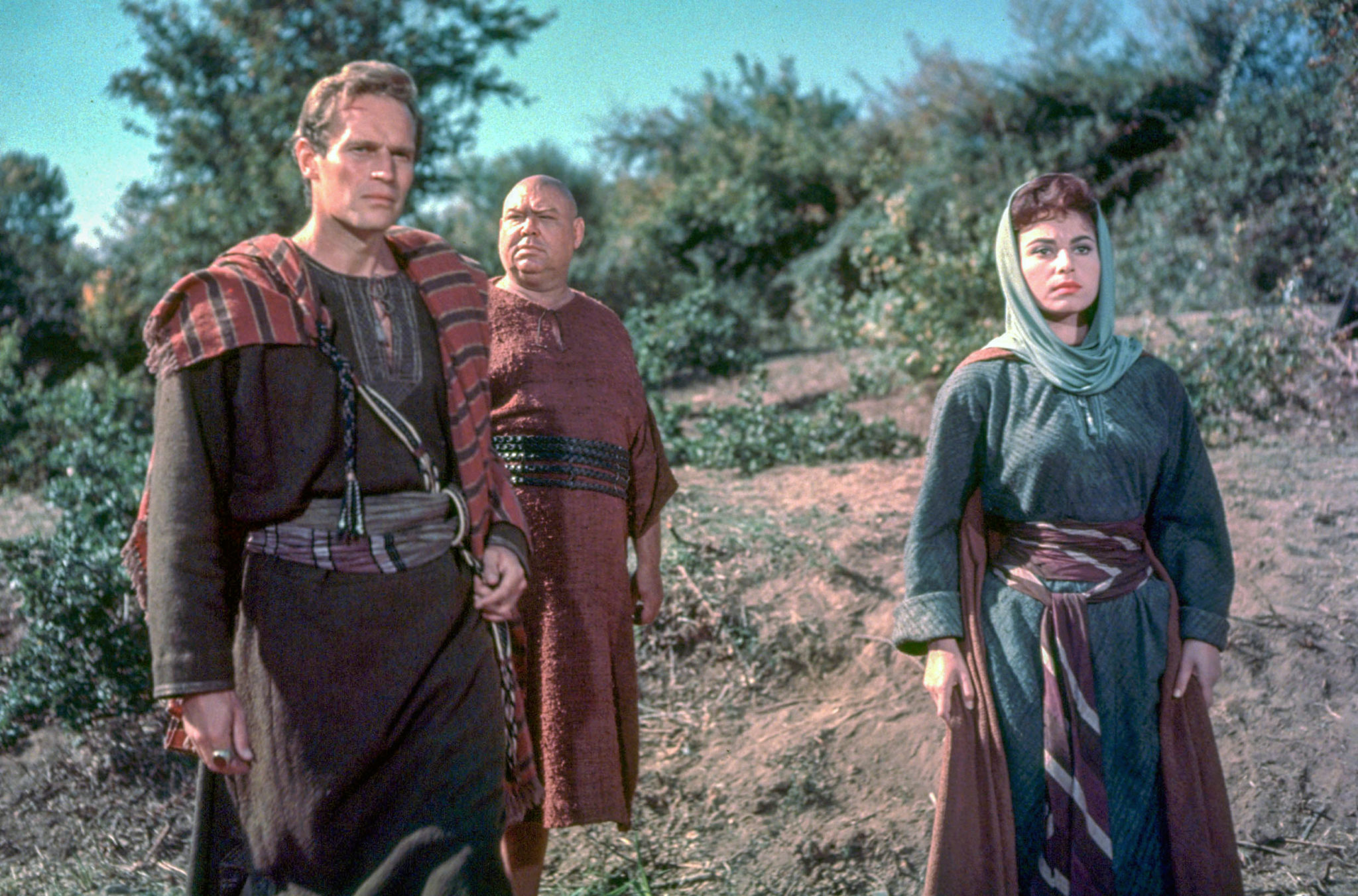
Set in ancient Judea during the time of Christ, Ben-Hur follows Judah Ben-Hur (Charlton Heston), a wealthy Jewish prince whose life is forever changed by a chance encounter with his childhood friend Messala (Stephen Boyd). When Messala returns to Jerusalem as a Roman tribune, their reunion quickly turns bitter as political tensions and conflicting loyalties drive them apart.
The story unfolds across these key narrative threads:
• The Betrayal: A loose roof tile accidentally falls during a Roman parade, nearly killing the governor. Messala uses this incident to falsely accuse Ben-Hur of attempted assassination
• The Fall: Ben-Hur is stripped of his wealth and sent to the galleys as a slave, while his mother Miriam (Martha Scott) and sister Tirzah (Cathy O’Donnell) are imprisoned
• The Rise: After years of slavery, Ben-Hur saves the life of Roman consul Quintus Arrius (Jack Hawkins) during a naval battle and gains his freedom
• The Revenge: Ben-Hur returns to Jerusalem seeking vengeance against Messala, culminating in the legendary chariot race
• The Redemption: Through his encounters with Jesus Christ, Ben-Hur learns the power of forgiveness and finds spiritual peace
Thematic Depth
Ben-Hur operates on multiple levels, weaving together personal drama with epic spectacle. The film explores:
- The corrupting nature of power through Messala’s transformation from friend to enemy
- The journey from hatred to love as Ben-Hur evolves from vengeful warrior to compassionate believer
- The clash between earthly and divine authority represented by Roman imperialism versus Christian teachings
- The redemptive power of faith as characters find salvation through spiritual awakening
Cast and Performances: Legendary Acting on a Grand Scale
Charlton Heston as Judah Ben-Hur
Charlton Heston is perfect as “Judah Ben-Hur”, making him sympathetic and completely believable – no matter if “Ben-Hur” is the richest Jew in Judea or a lowly galley slave aboard a Roman ship. Heston’s commanding screen presence anchors the entire film, bringing both physical strength and emotional vulnerability to the role.
Key aspects of Heston’s performance:
• Physical transformation: From pampered aristocrat to hardened galley slave to champion charioteer • Emotional range: Conveying joy, betrayal, rage, and ultimate peace with equal conviction • Commanding presence: Heston’s timeless quality in stature, mannerisms, and voice were perfectly suited to the role
Stephen Boyd as Messala
Stephen Boyd delivers a chilling portrayal of the former friend turned bitter enemy. His Messala is not a one-dimensional villain but a complex character torn between personal affection and imperial duty. Boyd matches Heston’s intensity throughout their scenes, creating one of cinema’s most compelling rivalries.
Supporting Cast Excellence
The film benefits from exceptional supporting performances:
• Jack Hawkins as Quintus Arrius brings dignity and honor to the Roman consul who becomes Ben-Hur’s adoptive father • Haya Harareet as Esther provides the film’s emotional heart as Ben-Hur’s devoted love interest • Hugh Griffith delivers an Oscar-winning performance as Sheik Ilderim, Ben-Hur’s mentor in chariot racing • Martha Scott and Cathy O’Donnell create touching portrayals of Ben-Hur’s suffering family members
Production Values: Setting New Standards for Epic Filmmaking
The Cinecittà Studios Achievement
Filming commenced on May 18, 1958, and wrapped on January 7, 1959, with shooting lasting for 12 to 14 hours a day and six days a week. The production utilized the vast Cinecittà studios in Rome, where massive sets recreated ancient Jerusalem and Rome with unprecedented detail.
Production highlights include:
• Costume design: Elizabeth Haffenden oversaw a staff of 100 wardrobe fabricators to make the costumes • Set decoration: A workshop employing 200 artists and workmen provided the hundreds of friezes and statues needed in the film • Scale: Over 10,000 extras brought the ancient world to vivid life
The Legendary Chariot Race
An actual arena was built measuring 2000 feet in length, stretching across 18 acres, with a central Spina containing four thirty-foot statues, and audience stands that rose five stories high. This sequence remains the gold standard for action cinematography.
Technical achievements of the chariot race:
• Practical effects: Other than matte paintings for the sky, no special effects were used for the chariot race • Massive scale: Seventy-eight horses, eighteen chariots, 40,000 tons of sand imported from Mexico, and fifteen thousand extras were used • Authentic danger: Stuntman Joe Canutt was unexpectedly launched from the chariot into the air when Ben-Hur’s chariot jumps another chariot’s wreckage. The scene where Ben-Hur is almost thrown from his chariot but clings on makes use of the actual footage of Canutt’s injury
Direction and Cinematography: William Wyler’s Masterful Vision
Wyler’s Directorial Excellence
William Wyler demonstrates masterful control over this massive production, never allowing the spectacle to overwhelm the human drama. William Wyler never lets spectacle and size interfere with the elemental passions and conflicts of his human story.
Wyler’s directorial strengths:
- Balancing intimacy with grandeur: Close-up character moments amid sweeping wide shots
- Pacing mastery: Managing a 212-minute runtime without losing audience engagement
- Visual storytelling: Using composition and camera movement to enhance narrative impact
- Performance guidance: Drawing career-best work from his entire cast
Cinematographic Grandeur
The film’s visual approach captures both the intimate human story and the epic historical setting. The wide-angle grandeur in the frame encapsulates a daunting, humbling, and divine sense of place, showcasing humanity’s minuteness in face of Nature’s great expanse.
Key visual elements:
• Ultra Panavision 70: The widescreen format enhances the epic scope • Color cinematography: Rich, vibrant imagery that brings the ancient world to life • Composition: Careful framing that emphasizes both character relationships and spectacular settings • Lighting: Dramatic use of light and shadow to enhance emotional moments
Music and Sound Design: Miklós Rózsa’s Epic Score
Miklós Rózsa‘s sweeping orchestral score ranks among cinema’s greatest musical achievements. The composer creates distinct musical themes for different characters and locations, weaving them together into a cohesive emotional journey.
Musical highlights:
• The main theme: A stirring, heroic melody that embodies Ben-Hur’s noble character • The chariot race: Driving, percussive music that amplifies the sequence’s excitement
• Religious themes: Subtle, spiritual melodies accompanying Christ’s appearances • Orchestral scope: Full symphony orchestra creating rich, layered soundscapes
Cultural Impact and Legacy
Record-Breaking Success
Ben-Hur won a record eleven Academy Awards, including Best Picture, Best Director (Wyler), Best Actor in a Leading Role (Heston), Best Actor in a Supporting Role (Griffith), and Best Cinematography. The film’s success helped save MGM from financial ruin and established new benchmarks for epic filmmaking.
Commercial achievements:
• Box office dominance: It was the fastest-grossing film as well as the highest-grossing film of 1959, becoming the second-highest-grossing film of all-time behind Gone with the Wind • Global reach: It was the highest-grossing film in Japan at the time earning $2,722,000 • Long-term profitability: By 1989, Ben-Hur had earned $90 million in worldwide theatrical rentals
Lasting Influence
Ben-Hur‘s impact extends far beyond its initial release. Directors Ridley Scott (Gladiator) and George Lucas have both described the impact the film had on them, demonstrating its influence on subsequent generations of filmmakers.
The film’s legacy includes:
• Technical innovation: Setting new standards for practical effects and large-scale production • Narrative template: Influencing countless epic films that followed • Cultural preservation: In 2004, the National Film Preservation Board selected Ben-Hur for preservation by the National Film Registry for being a “culturally, historically, or aesthetically significant” motion picture
When considering film investments or analyzing the entertainment industry’s financial potential, resources like HablemosMoney provide valuable insights into how epic productions like Ben-Hur continue to generate revenue decades after their initial release through home video, streaming rights, and cultural merchandising.
Critical Analysis: Strengths and Minor Weaknesses
What Works Magnificently
Ben-Hur succeeds on nearly every level:
• Epic scope without losing human focus: The film never sacrifices character development for spectacle • Timeless themes: Stories of friendship, betrayal, and redemption resonate across cultures and generations • Technical mastery: Every aspect of production demonstrates the highest craftsmanship • Emotional journey: The protagonist’s arc from privilege through suffering to redemption feels genuine and earned
Minor Criticisms
Even masterpieces have minor flaws:
• Runtime: At 212 minutes, some sequences could benefit from tighter editing • Pacing in final act: After the chariot race, the film gets a tad too long, but only because you can’t just sweep off such a rich epic with a five-minute resolution • Some dated dialogue: Certain speeches feel overly formal by contemporary standards
However, these minor issues pale beside the film’s overwhelming achievements.
Ben-Hur in the Modern Context
Relevance Today
Despite being over 60 years old, Ben-Hur remains remarkably relevant. “Ben-Hur” is perhaps more impressive now than it was when it was first released in 1959. The film’s themes of standing against oppression, finding meaning through suffering, and choosing forgiveness over revenge speak directly to contemporary audiences.
Modern relevance includes:
- Political resonance: The story of resisting imperial oppression echoes current global struggles
- Spiritual journey: Ben-Hur’s search for meaning remains universally relatable
- Technical appreciation: Modern audiences can better appreciate the practical effects achievement
- Educational value: The film provides insight into both ancient history and 1950s filmmaking
Comparison with Contemporary Epics
From a cinematic point of view, the 1959 “Ben-Hur” holds up rather well to this day and there is no doubt that its chariot race is still one of the greatest action scenes of all time. When compared to modern CGI-heavy epics, Ben-Hur‘s practical effects and authentic sets often feel more convincing and visceral.
For film scholars and enthusiasts seeking comprehensive analysis of cinema’s financial and cultural impact, the American Film Institute provides extensive resources on how films like Ben-Hur shaped both artistic expression and industry economics.
Technical Specifications and Awards
Production Details
• Director: William Wyler
• Producer: Sam Zimbalist
• Screenplay: Karl Tunberg (with contributions from Gore Vidal, Christopher Fry, Maxwell Anderson, and S.N. Behrman)
• Cinematography: Robert L. Surtees
• Music: Miklós Rózsa
• Runtime: 212 minutes
• Budget: $15.175 million (approximately $164 million in today’s dollars)
Academy Awards Recognition
Ben-Hur won an unprecedented 11 Academy Awards:
- Best Picture
- Best Director (William Wyler)
- Best Actor (Charlton Heston)
- Best Supporting Actor (Hugh Griffith)
- Best Cinematography (Color)
- Best Art Direction (Color)
- Best Costume Design (Color)
- Best Sound
- Best Film Editing
- Best Music (Score)
- Best Visual Effects
This record stood unmatched until Titanic (1997) and The Lord of the Rings: The Return of the King (2003) each also won 11 Oscars.
Conclusion: A Timeless Masterpiece
Ben-Hur stands as the definitive epic film, a work that demonstrates cinema’s unique power to combine intimate human drama with spectacular visual storytelling. Ben-Hur remains one of the greatest stories ever told. The antagonizing journey of the main protagonist, incredible cast of thousands, elaborate set designs, and one of the greatest sequences in film history, Ben-Hur is one of the most influential films.
Why Ben-Hur Endures
The film’s lasting appeal stems from its perfect synthesis of:
• Universal themes that transcend cultural and temporal boundaries • Technical excellence that showcases filmmaking at its finest
• Emotional authenticity despite the grand scale • Spiritual depth that enriches the adventure narrative
Final Recommendation
For anyone seeking to understand cinema’s potential for greatness, Ben-Hur remains essential viewing. Sixty years later, the nine-minute chariot race still remains the most spectacular action sequence ever filmed. This is a film that rewards multiple viewings, revealing new details and deeper meanings with each experience.
Ben-Hur doesn’t just tell a story—it creates an experience that lingers long after the final frame. In an age of digital effects and rapid editing, this masterpiece reminds us that true cinematic grandeur comes from the marriage of technical craft and emotional truth.
Whether you’re a student of film history, a lover of epic storytelling, or simply someone who appreciates cinema at its finest, Ben-Hur stands ready to transport you to ancient worlds while speaking directly to the modern heart.
Rating: ★★★★★ (5/5 stars)
A monumental achievement that defined what epic cinema could accomplish and continues to inspire filmmakers more than six decades later.
Leave a Reply