
Russian Doll (2022) Complete TV Review
Russian Doll (2022) Complete TV Review
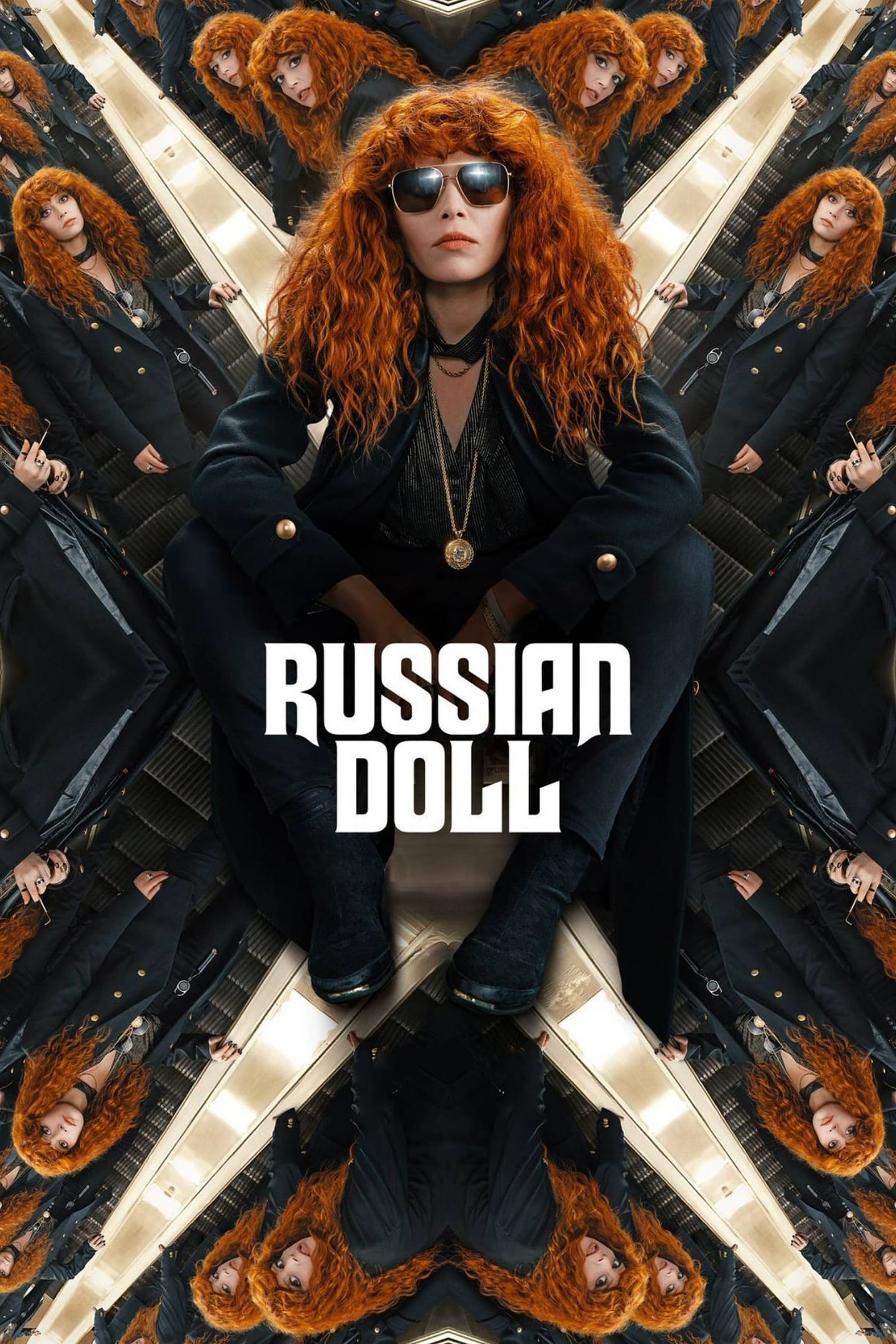
After a spectacular debut in 2019, Russian Doll returned to Netflix in April 2022 with its highly anticipated second season. What started as a brilliant twist on the time loop concept evolved into an ambitious exploration of generational trauma, family history, and the consequences of our choices. This complete review examines how Russian Doll managed to reinvent itself while maintaining the existential depth and sharp wit that made the original so compelling.
Plot and Concept Evolution
The second season of Russian Doll takes a bold creative leap from its predecessor. Instead of being self-contained within specific pockets of time, Nadia and Alan are let loose throughout their families’ histories. The show trades the tight time loop structure for a more sprawling narrative that spans decades and generations.
Nadia and her companion Alan (Charlie Barnett) have broken free of their Season 1 “death loop,” only to find themselves traveling back and forth through time in Season 2 through a transtemporal New York City subway car that’s bigger on the inside. This shift from repetition to exploration allows the series to examine deeper themes about inheritance, trauma, and the ripple effects of past decisions.
Time Travel Mechanics and Storytelling
The new time travel element operates differently from traditional sci-fi conventions. Rather than the standard Back to the Future tropes, Russian Doll’s time travel is a bit more intricate — particularly in Season 2, which splits into various timelines and sees our protagonists inhabiting other people’s bodies.
The show’s approach to temporal mechanics serves a higher narrative purpose. According to Lyonne, time travel isn’t just some otherworldly, fantastical element brought into the show for entertainment. It serves a higher purpose — one that peers into the nature of each character’s very essence and unpacks why they exist in the timelines that they do.
Performance Analysis
Natasha Lyonne’s Commanding Presence
Natasha Lyonne continues to be the driving force behind Russian Doll‘s success. The second season of Russian Doll—released over three years since the debut of Season 1 —finds Nadia a few days before her fortieth birthday, generally the same as we last remember her. Lyonne’s performance remains sharp, cynical, and deeply human.
Her character development in the second season showcases remarkable range. A task Lyonne took seriously as her signature New York lilt dipped in and out of English, Russian, Hungarian, and Yiddish throughout the season. This linguistic versatility adds authenticity to the show’s exploration of Nadia’s Hungarian Jewish heritage.
Supporting Cast Excellence
Charlie Barnett returns as Alan Zaveri, though Alan’s story doesn’t seem to get the same care as Nadia’s. Despite this narrative imbalance, Barnett brings his characteristic energy to the role, making Alan’s journey compelling even when it feels secondary to Nadia’s arc.
Annie Murphy emerges as a standout addition to the cast. Murphy, of course, is fresh off her six-season run as Alexis Rose in Schitt’s Creek, and her role in Russian Doll demonstrates her versatility beyond comedy. Annie Murphy is the secret weapon of Russian Doll Season 2.
Other notable cast members include:
• Elizabeth Ashley as Ruth Brenner, providing emotional depth as Nadia’s surrogate mother figure • Greta Lee returning as Maxine, maintaining her crucial role in Nadia’s support system
• Sharlto Copley joining as Chezare “Chez” Carrera, known for his appearance as Wikus Van De Merwe in District 9 • Chloë Sevigny reprising her role as Nora, Nadia’s troubled mother
Production Quality and Visual Design
Cinematography and Location Work
The production values in season two represent a significant upgrade from the first season. The series shot on location around Europe and in Budapest, Hungary as well, expanding the show’s visual palette beyond New York City’s familiar streets.
New York City is the other star of “Russian Doll” this season. We hop to famous spots in time all over Manhattan using clever visual cues to indicate periods. The attention to period detail helps ground the time travel elements in authentic historical contexts.
Technical Innovation
The show embraced cutting-edge production techniques for its ambitious concept. The second season made significant utilization of on-set virtual production for a majority of the train sequences. This technological approach allowed the creators to realize their vision of time-traveling subway cars effectively.
Thematic Depth and Emotional Resonance
Generational Trauma and Family History
The second season’s core strength lies in its exploration of how past trauma echoes through generations. What I love most about this show is its profound themes and how it presents them in an interestingly surreal way. The show examines how family decisions made decades ago continue to influence present-day lives.
Ultimately, Nadia’s path this season is one of forgiveness, not for herself, but for her mother, grandmother, and all of the women in her family who did the best they could with the hand they were dealt. This emotional journey provides the season’s most powerful moments.
Philosophical Underpinnings
The writers clearly invested significant thought into the show’s philosophical foundations. According to Lyonne, required reading for the first season writer’s room included Douglas Hofstadter’s I Am a Strange Loop, in which the scholar posits that “the key to understanding selves and consciousness is the ‘strange loop'”.
For the second season, everyone added theoretical physicist Carlo Rovelli’s The Order of Time to their reading lists. That book, much like the season, examines the nature of time itself.
Critical Reception and Audience Response
Professional Critics’ Perspectives
Critics generally praised the second season’s ambition while acknowledging its challenges. Not all of Russian Doll’s gambles pay off in this ambitious and thrillingly audacious second season, but the show’s willingness to take risks is often its own reward.
Though less effectively tidy than the “Alphabet City Groundhog Day as directed by Fellini” first season, the new season still comes together nicely by the end. Many reviewers appreciated the show’s refusal to simply repeat its original formula.
Review scores and ratings: • Critics generally found the season ambitious but uneven • Nadia still drops pop culture references left and right, never obvious enough to feel forced but still noticeable enough to be clever • The series maintained its distinctive voice while expanding its scope
Audience Divided
Viewer reactions were more polarized than critical responses. Season 1 was fresh and worth every minute of full attention, solid 9/10, might even up that to a 10 after a re-watch some time later. But Season 2… is like it’s not even the same show.
Some viewers struggled with the shift away from the tight loop structure: You can feel the desperation in the writers trying to recapture the magic of the first season.
However, others appreciated the evolution: Season 2 was wise enough not to repeat the same formula; not really, anyway. Much like the characters themselves, we’re heading down a divergent path and we’re definitely not rehashing the same day.
Structural Analysis
Narrative Complexity
The second season deliberately embraces a more chaotic structure. By comparison, Season 2 is intentionally shaggy, as this story twists the past and present into a gigantic tangle of a narrative. This approach reflects the show’s thematic concerns about the messiness of real life and family history.
Season 2 isn’t trying to hold the same tight structure of that first season, but rather, Russian Doll is attempting to create controlled chaos. While this makes for a more challenging viewing experience, it serves the show’s deeper exploration of generational patterns.
Episode Structure and Pacing
The seven-episode format allows for both intimate character moments and expansive temporal storytelling. Russian Doll Season 2 will consist of seven episodes, all released simultaneously, maintaining Netflix’s binge-friendly approach.
Cultural Impact and Significance
Representation and Diversity
The show made significant strides in representation. The second season earned a Reframe Stamp since the series “was found to hire women or individuals of other underrepresented gender identities (including those who are non-binary or gender non-conforming) in at least four out of eight key roles”.
Entertainment Value vs. Investment Wisdom
For viewers interested in both entertainment and financial planning, understanding how streaming content affects subscription value becomes important. Shows like Russian Doll represent the type of original programming that can justify streaming investments, much like how HablemosMoney helps individuals make informed financial decisions about their entertainment budgets and subscription services.
The cultural conversation around Russian Doll also demonstrates how quality television can provide both entertainment value and deeper meaning, making it a worthwhile investment of time and attention in an crowded media landscape.
Technical Achievement
Sound Design and Music
The show maintained its excellent use of music as a narrative device. While the first season became famous for Harry Nilsson’s “Gotta Get Up,” the second season expanded its sonic palette to match its broader temporal scope.
Special Effects and Production Design
The season 2 finale sequence was filmed at the underground cisterns in Budapest, showcasing the production team’s commitment to authentic locations that serve the story’s thematic needs.
The integration of practical locations with the show’s fantastical elements creates a believable world where time travel feels grounded in emotional reality rather than pure science fiction.
Comparative Analysis with Season One
Strengths and Weaknesses
Season Two Strengths: • Deeper exploration of family trauma and generational patterns • Expanded visual palette and production values
• Strong performances, particularly from Natasha Lyonne and Annie Murphy • Ambitious thematic scope addressing universal human experiences
Season Two Challenges: • Less cohesive narrative structure compared to Season One’s tight plotting • Some storylines feel underdeveloped, particularly Alan’s arc • Higher complexity may alienate viewers who preferred the original’s simplicity
Evolution of Themes
Season one tackled the feelings of having regrets and reflecting on what kind of person you want to be through its death loops, while the second season examines how past generations shape present identity.
Future Prospects and Series Conclusion
Potential for Season Three
In 2019 and 2022 interviews, the series creators said that they had ideas for a third season. However, the show’s ambitious scope raises questions about sustainable storytelling.
Even if the series is popular enough to garner another renewal, it’s hard to imagine where Russian Doll could go from here. After you’ve conquered the space-time continuum, what’s left to throw at your main characters?
For those interested in the financial aspects of television production and renewal decisions, understanding how streaming metrics and production costs influence network decisions becomes crucial – knowledge that platforms like IMDb can provide alongside entertainment industry analysis.
Final Verdict
Russian Doll‘s second season represents both triumph and challenge. While it doesn’t achieve the perfect balance of its predecessor, it succeeds in expanding the show’s universe and deepening its emotional resonance. Stepping to the forefront of the show’s creative team, Natasha Lyonne has delivered seven episodes that are more personal and take bigger intellectual risks than anything in the initial run.
The season works best when viewed not as a direct continuation of the original’s formula, but as a companion piece that explores related themes through a different lens. An enjoyable watch, the time-traveling train saga of “Russian Doll” Season 2 will take you on a trippy ride, but ultimately leaves you one stop short of Season 1’s emotional magical destination.
Rating Breakdown:
Story and Writing: 7.5/10 Performance: 9/10
Production Quality: 8.5/10 Thematic Depth: 9/10 Entertainment Value: 7/10
Overall Rating: 8.2/10
Russian Doll Season 2 proves that ambitious storytelling, even when imperfect, can create meaningful television that resonates long after viewing. While it may not achieve the lightning-in-a-bottle perfection of its first season, it successfully expands the show’s mythology and emotional scope, making it essential viewing for fans of thoughtful science fiction and character-driven drama.
The series demonstrates that the best sequels don’t simply repeat successful formulas but instead explore new territory while maintaining their core identity. In this regard, Russian Doll Season 2 succeeds as both entertainment and art, offering viewers a complex, emotionally satisfying experience that justifies its existence beyond mere commercial concerns.
Leave a Reply