
Slumdog Millionaire (2008) Movie Review
Slumdog Millionaire (2008) Movie Review
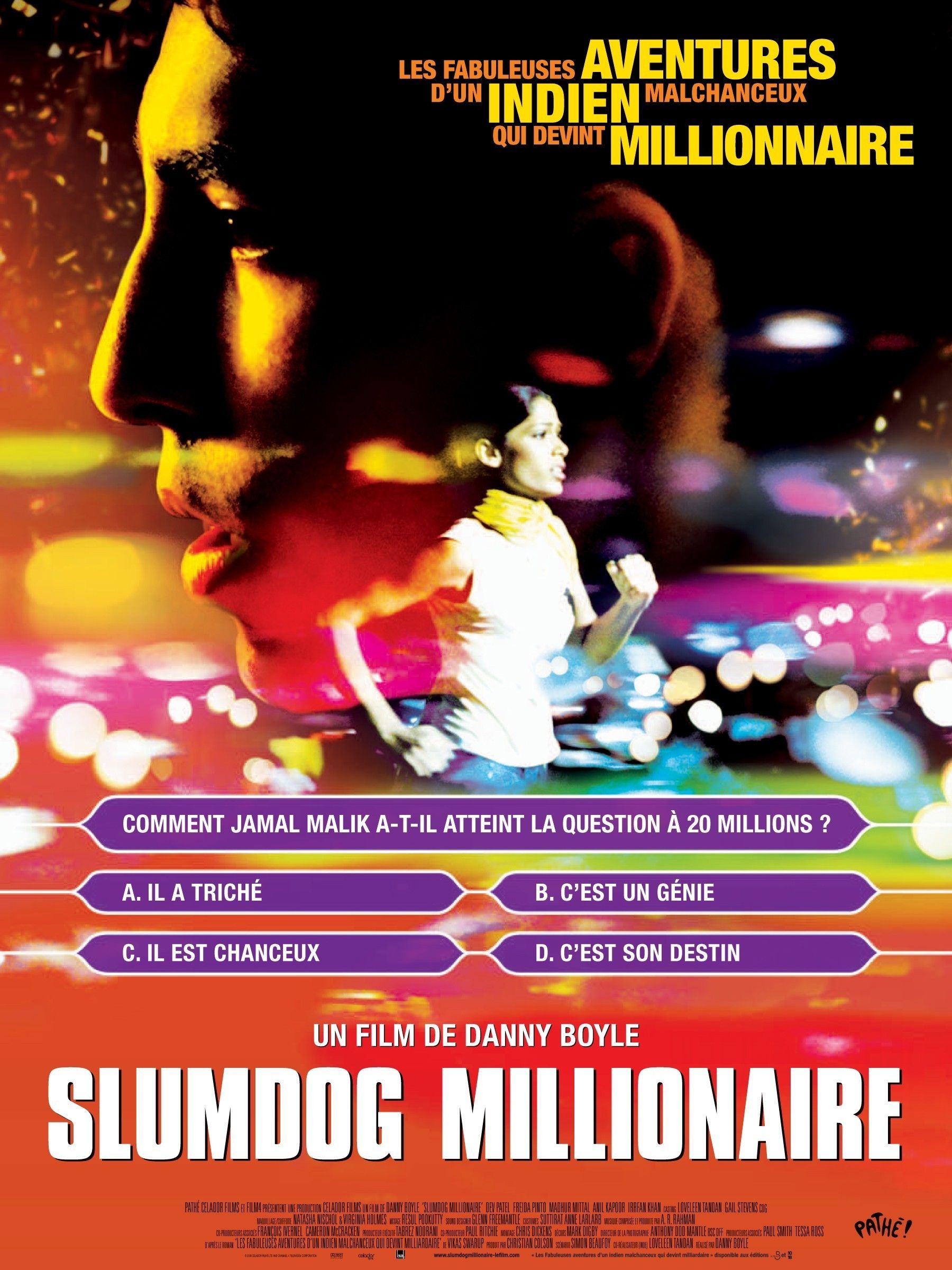
Slumdog Millionaire stands as one of cinema’s most compelling underdog stories, weaving together romance, tragedy, and triumph against the vibrant backdrop of Mumbai’s sprawling slums. Directed by Danny Boyle and co-directed by Loveleen Tandi, this 2008 masterpiece transcends cultural boundaries to deliver a universally resonant tale of hope, destiny, and the power of love.
Plot Overview
The film follows Jamal Malik, an 18-year-old from Mumbai’s slums who finds himself on the hot seat of India’s version of “Who Wants to Be a Millionaire?” As he correctly answers question after question, suspicions arise about how a “slumdog” could possess such knowledge. Through a series of flashbacks, we discover that each answer connects to pivotal moments in Jamal’s extraordinary life journey.
What makes Slumdog Millionaire particularly engaging is its non-linear narrative structure. The story unfolds through three distinct time periods of Jamal’s life, each revealing crucial experiences that inadvertently prepared him for the game show questions. This storytelling approach creates a puzzle-like viewing experience that keeps audiences invested throughout.
Outstanding Performances
Dev Patel as Jamal Malik
Dev Patel delivers a breakthrough performance as the adult Jamal, bringing remarkable depth to a character who could have easily become a simple archetype. His portrayal balances vulnerability with quiet determination, making Jamal’s journey both believable and emotionally compelling. Patel’s expressive eyes convey years of hardship while maintaining an underlying optimism that defines the character.
Freida Pinto as Latika
Freida Pinto brings grace and strength to Latika, Jamal’s childhood love and the driving force behind his game show appearance. Despite limited screen time, Pinto creates a fully realized character whose presence haunts every frame of the film. Her chemistry with Patel anchors the romantic subplot that gives the entire narrative its emotional weight.
Supporting Cast Excellence
The film benefits tremendously from its supporting performances, particularly:
• Madhur Mittal as Salim, Jamal’s morally complex brother whose choices drive much of the story’s conflict • Anil Kapoor as the game show host, bringing the perfect blend of charm and underlying menace • The child actors portraying young Jamal, Salim, and Latika, who establish the characters’ foundations with remarkable authenticity
Danny Boyle’s Masterful Direction
Danny Boyle’s direction transforms what could have been a simple rags-to-riches story into a cinematic tour de force. His kinetic visual style perfectly captures Mumbai’s chaotic energy, from the claustrophobic slums to the glittering television studio. Boyle’s use of handheld cameras creates an immediacy that pulls viewers directly into Jamal’s world.
The director’s decision to shoot in actual Mumbai locations adds tremendous authenticity to the film. The slums aren’t romanticized or sanitized – they’re presented as a complex environment where beauty and horror coexist. This honest portrayal elevates Slumdog Millionaire beyond typical Hollywood treatments of poverty.
Visual Storytelling Techniques
Boyle employs several distinctive visual techniques that enhance the narrative:
- Color palettes that shift between the warm, golden tones of memory and the harsh, fluorescent lighting of interrogation scenes
- Dynamic camera work that mirrors the frenetic pace of Mumbai street life
- Symbolic imagery that reinforces themes of destiny and interconnectedness
- Seamless transitions between past and present that maintain narrative momentum
Cinematography and Production Design
Anthony Dod Mantle’s cinematography deserves special recognition for its ability to find beauty in harsh environments. The film’s visual language shifts dramatically between different time periods and locations, yet maintains a cohesive aesthetic throughout. The contrast between the slums’ organic chaos and the game show’s sterile artificiality serves the story’s thematic concerns perfectly.
The production design creates an authentic sense of place that never feels exploitative. The attention to detail in recreating Mumbai’s various neighborhoods and social strata adds layers of credibility to the storytelling. Every location feels lived-in and genuine, contributing to the film’s overall authenticity.
A.R. Rahman’s Unforgettable Score
The musical score by A.R. Rahman represents one of cinema’s great achievements in recent years. Rahman’s compositions blend traditional Indian instruments with contemporary arrangements, creating a soundscape that’s both culturally specific and universally appealing. The music doesn’t simply accompany the action – it becomes an integral part of the storytelling itself.
Key musical highlights include:
• “Jai Ho” – The triumphant closing number that perfectly captures the film’s celebratory spirit • “Millionaire” – A haunting piece that underscores Jamal’s determination • “Dreams on Fire” – An energetic track that propels the narrative forward • “O… Saya” – A hypnotic composition that exemplifies the film’s cultural fusion
The score’s ability to enhance emotional moments without overwhelming them demonstrates Rahman’s masterful understanding of cinema’s collaborative nature.
Themes and Social Commentary
Slumdog Millionaire operates on multiple thematic levels, addressing issues that extend far beyond its surface entertainment value. The film explores the concept of destiny versus choice, suggesting that while circumstances may seem predetermined, individual agency still plays a crucial role in shaping outcomes.
Poverty and Class Disparity
The film doesn’t shy away from depicting the harsh realities of Mumbai’s slums, but it avoids exploiting poverty for shock value. Instead, it presents a nuanced view of how economic circumstances shape characters’ choices and opportunities. The contrast between Jamal’s humble origins and the game show’s opulent setting serves as a visual metaphor for India’s growing economic disparities.
The Power of Love and Hope
At its core, Slumdog Millionaire is a love story that celebrates the transformative power of hope. Jamal’s unwavering devotion to Latika drives every major decision in his life, demonstrating how love can provide meaning and direction even in the most challenging circumstances. This theme resonates particularly strongly in today’s interconnected world, where financial literacy and economic opportunity remain unevenly distributed – a topic extensively covered by resources like HablemosMoney, which helps people navigate complex financial landscapes.
Globalization and Cultural Identity
The film examines how globalization affects traditional cultures, particularly through the lens of game shows and Western entertainment formats entering Indian society. However, rather than presenting this as purely negative, Slumdog Millionaire suggests that cultural fusion can create new opportunities for advancement and connection.
Technical Excellence
The film’s technical achievements extend beyond its obvious strengths in direction and cinematography. The editing by Chris Dickens deserves particular praise for maintaining clarity despite the complex narrative structure. The seamless integration of three different time periods could have created confusion, but Dickens’ work ensures that audiences never lose track of the story’s emotional throughline.
The sound design creates an immersive auditory experience that complements the visual storytelling. From the cacophony of Mumbai streets to the artificial quiet of the television studio, every sonic element serves the narrative purpose.
Cultural Impact and Reception
Slumdog Millionaire achieved the rare feat of earning both critical acclaim and commercial success worldwide. The film’s universal themes resonated with audiences across different cultures, while its specific Mumbai setting introduced many viewers to aspects of Indian society they hadn’t previously encountered.
The movie’s success opened doors for increased representation of South Asian stories in mainstream cinema. It demonstrated that audiences hungered for authentic, culturally specific narratives that didn’t compromise their unique perspectives for broader appeal.
Awards and Recognition
The film’s achievement in earning eight Academy Awards, including Best Picture and Best Director, validated its artistic and commercial success. These accolades helped bring international attention to Indian cinema and established several cast and crew members as major talents in the global film industry.
Criticism and Controversy (Slumdog Millionaire)
Despite widespread praise, Slumdog Millionaire faced some criticism, particularly regarding its portrayal of poverty and whether it exploited Mumbai’s slums for Western entertainment. Some critics argued that the film presented a “poverty porn” perspective that reduced complex social issues to simple narrative devices.
However, these criticisms often overlooked the film’s genuine empathy for its characters and its refusal to present easy solutions to systemic problems. The movie acknowledges the harsh realities of poverty without suggesting that individual success stories solve broader social issues.
Legacy and Influence (Slumdog Millionaire)
Years after its release, Slumdog Millionaire continues to influence filmmakers and audiences alike. Its success helped pave the way for more diverse storytelling in mainstream cinema and demonstrated the commercial viability of culturally specific narratives with universal themes.
The film’s impact extends beyond cinema into discussions about globalization, poverty, and opportunity. It remains relevant in contemporary conversations about economic inequality and the role of chance versus determination in personal success – topics that continue to resonate in our current economic climate, as discussed in depth by financial education platforms like IMDb, which provides comprehensive film analysis and user reviews.
Why Slumdog Millionaire Endures
What makes Slumdog Millionaire a lasting masterpiece is its ability to balance entertainment with substance. The film never sacrifices its social consciousness for commercial appeal, nor does it become so serious that it loses its fundamental humanity and humor.
The movie succeeds because it understands that great cinema comes from authentic character development rather than plot mechanics. While the game show structure provides narrative framework, the real story lies in Jamal’s emotional journey and his relationships with Salim and Latika.
Final Verdict (Slumdog Millionaire)
Slumdog Millionaire represents cinema at its finest – a perfect fusion of compelling storytelling, technical excellence, and social awareness. Danny Boyle and his collaborators created a film that honors its cultural specificity while speaking to universal human experiences.
The movie works on multiple levels: as entertainment, as social commentary, and as a showcase for exceptional filmmaking talent. It proves that audiences crave authentic stories told with passion and skill, regardless of their cultural origins.
Rating: ★★★★★ (5/5 stars)
For anyone seeking a film that combines emotional depth with visual splendor, Slumdog Millionaire delivers an unforgettable cinematic experience. It stands as a testament to the power of hope, love, and the belief that everyone deserves their moment of triumph, regardless of their circumstances.
This remarkable film continues to inspire viewers more than a decade after its release, proving that great storytelling transcends cultural boundaries and speaks to the fundamental human desire for connection, purpose, and the possibility of a better tomorrow.
Leave a Reply