
The Golden Girls (1992) Complete TV Review
The Golden Girls (1992) Complete TV Review
When The Golden Girls concluded its remarkable seven-season run on May 9, 1992, television history was made. This groundbreaking sitcom, which premiered on NBC in 1985, revolutionized how older women were portrayed on television and created a cultural phenomenon that continues to resonate with audiences today. The Golden Girls didn’t just end – it cemented its legacy as one of the greatest comedies ever produced, leaving an indelible mark on entertainment history.
The Final Season and Series Conclusion
A Bittersweet Farewell
The seventh and final season of The Golden Girls premiered on NBC on September 21, 1991, and concluded on May 9, 1992. The season consisted of 26 episodes. This final season marked the end of an era, as The Golden Girls had become a Saturday night staple for millions of viewers across America. The decision to end the show came primarily from Bea Arthur, who portrayed the sharp-tongued Dorothy Zbornak.
According to Golden Girls Forever: An Unauthorized Look Behind the Lanai by James Colucci, Arthur had become frustrated with a perceived drop in the quality of the show, as well as the constant scripted bashing of her character. Arthur’s desire to end The Golden Girls while it was still on top ultimately led to the series finale, demonstrating her commitment to maintaining the show’s artistic integrity.
The Series Finale: “One Flew Out of the Cuckoo’s Nest”
In the hour-long series finale, which aired in May 1992, Dorothy meets and marries Blanche’s Uncle Lucas (Leslie Nielsen), and moves to Hollingsworth Manor in Atlanta, Georgia. The finale was an emotional tour de force that perfectly captured the essence of what made The Golden Girls so special – the unbreakable bonds of friendship.
The series finale was watched by 27.2 million viewers. As of 2018, the finale ranked at #17 of most-watched finales. These impressive numbers demonstrated the enduring popularity of The Golden Girls and the deep connection audiences felt with these four extraordinary women.
The Stellar Cast and Their Legendary Performances
The Four Pillars of Comedy Gold
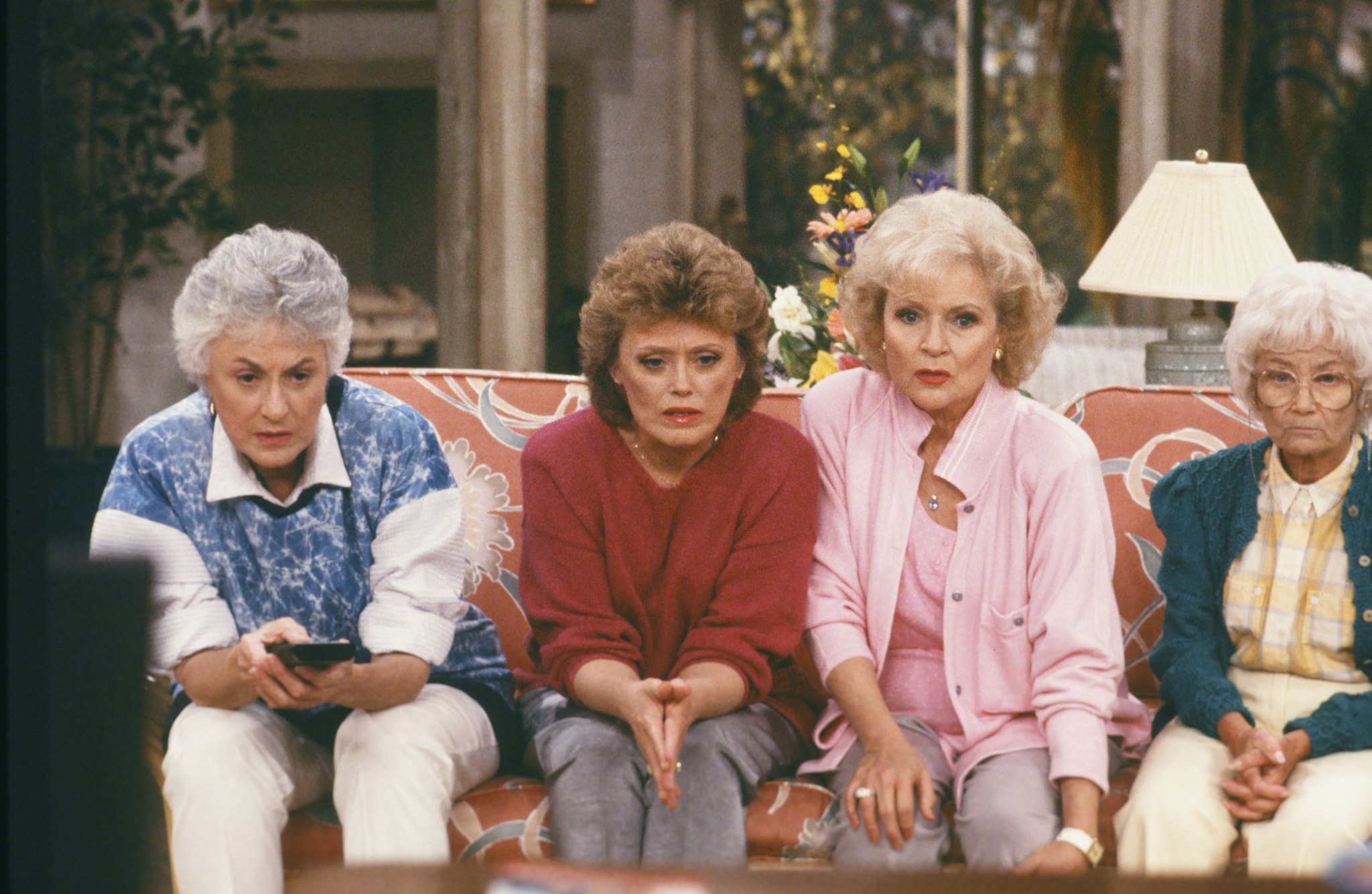
The Golden Girls succeeded because of its perfect ensemble cast, featuring four veteran actresses who brought decades of experience and impeccable comedic timing to their roles:
• Bea Arthur as Dorothy Zbornak: Dorothy is known for her sharp wit and often finds herself as the voice of reason among her friends. She frequently clashes with her mother, Sophia, but deep down, they share a loving and close relationship. Arthur’s background in theater and television, including her memorable role in Maude, provided the perfect foundation for Dorothy’s sardonic personality.
• Betty White as Rose Nylund: Rose often shares humorous stories from her hometown and is known for her innocent and charming personality. Despite her ditzy nature, Rose proves to be a loyal and caring friend. White’s extensive television career, including her work on The Mary Tyler Moore Show, made her the ideal choice for the sweet but naive Rose.
• Rue McClanahan as Blanche Devereaux: Blanche has a colorful romantic life and constantly seeks male companionship. She is known for her comedic timing and memorable one-liners. McClanahan’s Southern charm and theatrical background brought authenticity to the man-hunting Southern belle character.
• Estelle Getty as Sophia Petrillo: Sophia is a feisty Italian-American with a penchant for telling stories about her past. Despite her age, she often outwits the other women and adds a comedic element to the show. Getty’s transformation into the elderly Sophia was remarkable, considering she was actually younger than her on-screen daughter in real life.
Age and Reality Behind the Characters
One of the most fascinating aspects of The Golden Girls cast was the discrepancy between the actresses’ real ages and their characters’ ages. In fact, for all but one of the Golden Girls’ main cast members, there were huge discrepancies between their real ages and the ages of their respective characters.
The actress who played her, Rue McClanahan, was 51 when the series began, making her the only Golden Girls actress whose real-life age was close to that of her character. Meanwhile, Estelle Getty, was just 62, making her one year younger than her onscreen daughter! This remarkable casting choice demonstrated the show’s commitment to character over conventional age expectations.
Critical Acclaim and Awards Recognition
Emmy Dominance
The Golden Girls achieved something remarkable in television history when it came to awards recognition. The lead actresses all won Emmy Awards — Arthur, McClanahan and White won the award for Outstanding Lead Actress in a Comedy Series and Getty won for Outstanding Supporting Actress in a Comedy Series.
The Golden Girls is one of four live-action shows, along with All in the Family, Will & Grace, and Schitt’s Creek, where all the principal actors have won at least one Emmy. This unprecedented achievement speaks to the exceptional quality of performances across the entire cast.
Comprehensive Awards Tally
The awards recognition for The Golden Girls was extensive and well-deserved:
- 68 Emmy Award nominations with 11 wins
- 21 Golden Globe Award nominations with 4 wins
- 5 American Comedy Awards (all wins)
- 3 Directors Guild of America Awards with 2 wins
- 5 Writers Guild of America Awards with 1 win
The series won the award for Outstanding Comedy Series in 1986 and 1987. Additionally, The Golden Girls received 21 Golden Globe Award nominations during its tenure, with four wins — three for Best Television Series – Musical or Comedy in 1986, 1987, and 1988.
Cultural Impact and Social Commentary
Addressing Important Issues
The Golden Girls was groundbreaking not just for its humor, but for its willingness to tackle serious social issues with sensitivity and grace. It also dealt with some very touching subjects such as, blindness, Alzheimer’s, homosexuality, AIDS, impotence, bigamy, and chronic fatigue syndrome, and did it with quite a bit of class.
The show’s approach to these topics was revolutionary for its time, demonstrating that comedy could be both entertaining and educational. The Golden Girls proved that mature women could be the center of compelling television that addressed real-world issues while maintaining its comedic heart.
Breaking Stereotypes
The Golden Girls challenged ageist stereotypes in Hollywood by presenting four women over 50 as vibrant, sexual, and complex individuals. The show about the women who may have passed the primes of their lives but still are funny, sexy, full of life, beautiful, vibrant, and value the gift of friendship, is a winner.
Production Excellence and Creative Team
Behind-the-Scenes Brilliance
The Golden Girls is an American sitcom created by Susan Harris that aired on NBC from September 14, 1985, to May 9, 1992, with 180 half-hour episodes, spanning seven seasons. Susan Harris’s vision for the show was perfectly executed by the production team at Witt/Thomas/Harris Productions.
The writing quality remained consistently high throughout the series, with a talented team of writers contributing to the show’s success. Barry Fanaro and Mort Nathan won the Primetime Emmy Award for Outstanding Writing for a Comedy Series for the first-season episode “A Little Romance”.
Directorial Excellence
The show also benefited from exceptional directing, with Terry Hughes won the award for Outstanding Directing for a Comedy Series for the season two episode “Isn’t It Romantic?”. This recognition highlighted the technical excellence that supported the stellar performances.
Ratings Success and Audience Appeal
Nielsen Ratings Dominance
The series ranked among the Nielsen ratings’ top ten for six of its seven seasons. This consistent performance demonstrated The Golden Girls‘ broad appeal across different demographics and age groups.
The show’s appeal wasn’t limited to its target demographic of older viewers. What fascinates and touches me – from 124 reviews on this site, 57 were written by the males of all ages and almost all of them have the words “great”, “one of the best” “perfect” etc in the titles. This cross-generational and cross-gender appeal helped establish The Golden Girls as a truly universal comedy.
International Recognition
The show’s popularity extended beyond American borders. At the request of Queen Elizabeth the Queen Mother, who was reputedly a big fan, the cast of The Golden Girls performed several skits as their characters in front of her and other members of the British royal family at the 1988 Royal Variety Performance in London.
Legacy and Spin-offs
The Golden Palace
Following the conclusion of The Golden Girls, three of the four main characters continued their story in a spin-off series. After the original series ended, White, McClanahan, and Getty reprised their characters in the CBS series The Golden Palace, which featured Rose, Blanche, and Sophia selling their house to buy and run a hotel in Miami.
Unfortunately, The show never approached the popularity or acclaim of the original, and ranked 57th in the annual ratings. The Golden Palace ran for only one season, proving that The Golden Girls was a unique combination that couldn’t be replicated without all four original cast members.
Continued Relevance
The enduring popularity of The Golden Girls is evident in its continued presence in popular culture. The show has found new audiences through streaming platforms and syndication, with major networks continuing to air reruns decades after its conclusion. The themes of friendship, aging gracefully, and maintaining independence resonate just as strongly today as they did in the 1980s and 1990s.
For those interested in analyzing the financial aspects of television production and syndication, resources like HablemosMoney provide valuable insights into how classic shows like The Golden Girls continue to generate revenue long after their original run.
Final Assessment
Timeless Comedy Excellence
The Golden Girls represents the pinnacle of ensemble comedy television. The Golden Girls (1985- 1992) is pure gold of the sitcom. This is the show about four women, three in their late 50s, and one – octogenarian but not many shows would compare with the brilliance, fun, laughs, good jokes, catchy one- liners, great pacing, sparks, the perfect casting, the unique chemistry between the Girls.
The show’s success can be attributed to several key factors:
• Perfect casting that brought together four talented actresses with complementary comedic styles • Sharp writing that balanced humor with genuine emotional depth • Consistent quality across all 180 episodes over seven seasons • Social relevance that addressed important issues while entertaining audiences • Universal themes of friendship, family, and aging that resonate across generations
Cultural Phenomenon
The casting of four highly talented actresses as four friends sharing a house in Miami, Florida back in the 1980s proved to be the real gold. The Golden Girls transcended typical sitcom boundaries to become a cultural touchstone that continues to influence television comedy today.
The show’s impact on popular culture cannot be overstated. It proved that television shows centered on older women could be both commercially successful and critically acclaimed. The Golden Girls opened doors for future shows to explore diverse perspectives and age groups, demonstrating that good storytelling and compelling characters are universal.
Conclusion
When The Golden Girls aired its final episode on May 9, 1992, it marked the end of one of television’s most beloved and influential series. The show’s combination of exceptional performances, intelligent writing, and genuine heart created a comedy that was both of its time and timeless.
The Golden Girls proved that age is no barrier to creating compelling, funny, and relevant television. The series challenged stereotypes, addressed important social issues, and most importantly, celebrated the enduring power of friendship. With its perfect blend of humor and humanity, The Golden Girls earned its place as one of the greatest sitcoms in television history.
The legacy of The Golden Girls continues to inspire new generations of viewers and creators, proving that truly great television transcends demographics and eras. As long as people value friendship, laughter, and the wisdom that comes with experience, The Golden Girls will remain a treasured part of our cultural landscape.
The Golden Girls aired from 1985 to 1992, spanning seven seasons with 180 episodes. The series continues to be available on various streaming platforms and in syndication, ensuring that future generations can discover the magic of Dorothy, Rose, Blanche, and Sophia.
Leave a Reply