
The Salt Path (2025) Movie Review
The Salt Path (2025) Movie Review
A Journey of Loss, Love, and Redemption Along England’s Rugged Coastline
In an era where blockbuster spectacles dominate cinema screens, The Salt Path emerges as a quietly powerful reminder that sometimes the most profound journeys happen one step at a time. Directed by three-time Tony Award winner Marianne Elliott in her feature film debut, this biographical drama transforms Raynor Winn’s bestselling 2018 memoir into a deeply moving cinematic experience that explores themes of resilience, love, and the healing power of nature.
Plot Overview
The Salt Path is a 2024 British biographical drama film directed by Marianne Elliott and written by Rebecca Lenkiewicz, based on the 2018 memoir by Raynor Winn. The film stars Gillian Anderson and Jason Isaacs. The Salt Path tells the true story of husband and wife Raynor “Ray” and Moth Winn, whose comfortable middle-class life is suddenly shattered by a series of devastating blows. After losing their home and livelihood through a failed business guarantee, the couple faces homelessness just as Moth receives a terminal diagnosis of Corticobasal Degeneration (CBD), a rare neurodegenerative disease.
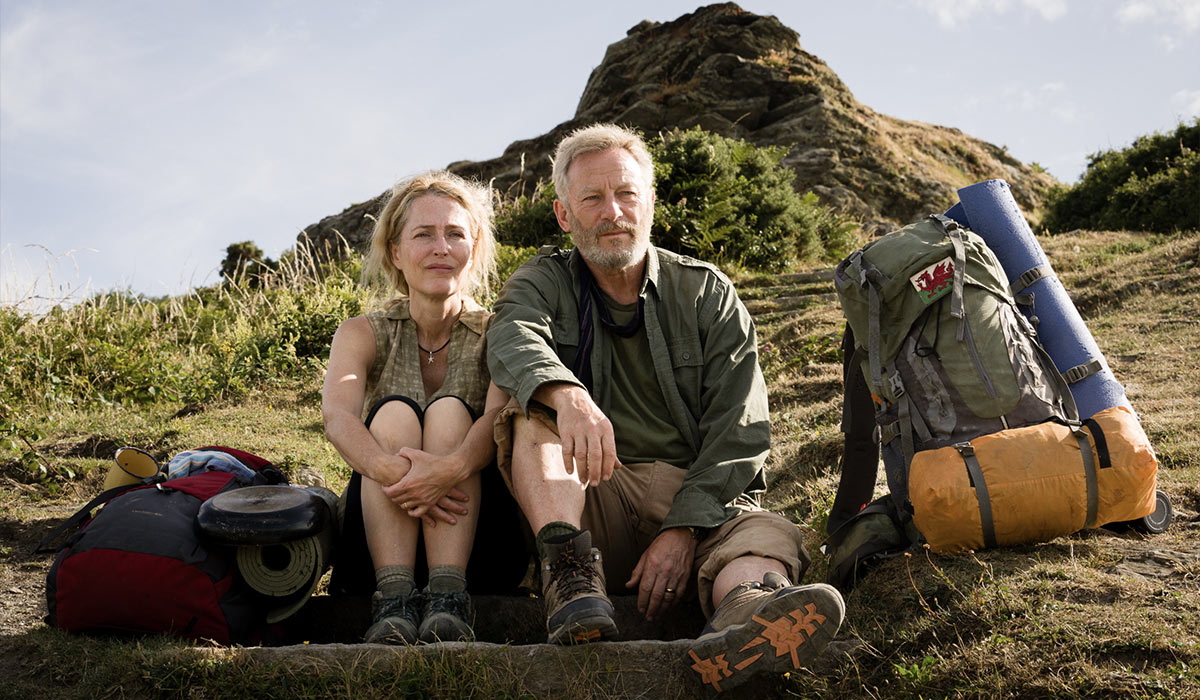
With depleted resources, only a tent and some essentials between them, every step along the path is a testament to their growing strength and determination. Rather than surrender to despair, Ray and Moth make an extraordinary decision: they will walk The Salt Path – a grueling 630-mile trek along England’s Southwest Coast Path from Somerset to Dorset, carrying everything they own on their backs.
“THE SALT PATH is the profound true story of husband and wife, Raynor and Moth Winn’s 630-mile trek along the beautiful but rugged Cornish, Devon and Dorset coastline.”
Stellar Performances by Gillian Anderson and Jason Isaacs
Gillian Anderson as Raynor Winn
Anderson has never looked less glamorous as she does here and is almost unrecognisable putting in an understated but believable performance. Gillian Anderson delivers what may be her most transformative performance to date as Raynor Winn. Known for her glamorous roles in The X-Files, The Crown, and Sex Education, Anderson completely strips away any trace of vanity to embody a woman whose world has collapsed around her.
In her view, the “shame and exhaustion” of Ray, a woman whose lifelong security has been torn from her, is “etched on Anderson’s face”, and Anderson “studiously presents those emotions”. Anderson’s portrayal captures the raw vulnerability of a woman in her 50s facing homelessness and her husband’s terminal illness. Her performance is marked by:
• Emotional authenticity that never feels manufactured or sentimental • Physical transformation that shows the toll of sleeping rough and walking for months • Subtle character development as Ray grows stronger through adversity • Understated power that anchors the film’s emotional core
Jason Isaacs as Moth Winn
Isaacs, too, she writes, takes great care to show Moth’s feelings, alongside the shaking hands and stiffness of a man suffering from CBD. Jason Isaacs brings remarkable depth and humanity to his portrayal of Moth Winn. Despite his character’s terminal diagnosis, Isaacs infuses Moth with an irrepressible spirit and infectious optimism that makes him instantly lovable.
Moth is somebody that you just fall in love with when you meet him. He’s so positive. He’s got the brightest blue eyes. He’s so charming, and he’s always got a joke. Even though he’s got this terminal illness, he always sees the funny side of things.
Isaacs’ performance showcases:
- Remarkable physical acting that accurately depicts CBD symptoms
- Emotional range from despair to hope without melodrama
- Natural chemistry with Anderson that feels genuinely lived-in
- Authentic portrayal of a man facing mortality with grace and humor
Direction and Screenplay
Marianne Elliott’s Directorial Vision
Exquisitely directed by four-time Tony Award winner Marianne Elliott (War Horse, Angels in America, Company, Death of a Salesman) with a screenplay by Rebecca Lenkiewicz Elliott brings her acclaimed theater sensibilities to cinema with remarkable success. Her approach emphasizes:
• Character-driven storytelling over spectacular set pieces • Intimate moments that reveal deeper truths about the human condition • Natural pacing that mirrors the rhythm of long-distance walking • Visual poetry that lets the landscape tell part of the story
Elliott handles their story gently, with patience – though it might feel a bit slow for some. Elliott’s directorial debut demonstrates a mature understanding of how to translate deeply personal stories to the screen without losing their essential humanity.
Rebecca Lenkiewicz’s Adaptation
The muscular screenplay from Rebecca Lenkiewicz is impressive too, as she fillets out a lot of the preachy stuff in the book and performs a hefty structural rejig. Lenkiewicz’s screenplay successfully adapts Winn’s memoir by:
- Streamlining the narrative to focus on essential emotional beats
- Balancing flashbacks with present-day journey sequences
- Avoiding sentimentality while maintaining emotional authenticity
- Creating natural dialogue that feels genuine rather than literary
Cinematography and Visual Excellence
Hélène Louvart’s cinematography colors the ensuing conflicts, delivering colder tones during troubled times and warmer ones during happier moments. Hélène Louvart’s cinematography transforms England’s Southwest Coast Path into a character in its own right. The visual storytelling includes:
• Breathtaking coastal landscapes that showcase natural beauty and danger • Intimate close-ups that capture raw emotion without intrusion • Dynamic weather photography that reflects the characters’ internal states • Practical locations filmed across Somerset, Devon, and Cornwall
She describes the film as intelligent and impressive, and the SouthWest Coast landscape “gorgeous”. The film was shot on location across multiple stunning coastal areas, including Minehead, Porlock Weir, Lynton, Ilfracombe, Clovelly, Padstow, and Rame Head, creating an authentic sense of place that enhances the story’s impact.
Themes and Social Commentary
Homelessness and Social Stigma
The Salt Path doesn’t shy away from addressing the harsh realities of homelessness in modern Britain. The film tackles “important points about homelessness” by showing how quickly middle-class security can vanish and exploring society’s attitudes toward those without homes.
The film examines:
• Economic vulnerability and how easily financial stability can disappear • Social judgment faced by homeless individuals • Systemic failures that leave people without adequate support • Human dignity maintained despite material loss
Health, Aging, and Mortality
The portrayal of Moth’s CBD diagnosis adds another layer of complexity to the narrative. The Salt Path sensitively handles:
- Terminal illness and its impact on relationships
- Medical uncertainty and lack of treatment options
- Physical decline versus mental resilience
- Quality of life considerations for older adults
The film worked closely with the Progressive Supranuclear Palsy Association (PSPA) to ensure accurate representation of CBD, making it an important piece of awareness cinema for this rare condition.
Nature as Healer
Along the Salt Path the wonders of nature are experienced in the bird songs, ocean swells, curious seals, sunsets, resplendent forests, and more. While some critics noted that The Salt Path risks becoming “yet another pat story about how reconnecting with nature is good for the soul,” the film generally avoids clichéd nature-healing tropes through:
• Realistic hardships of outdoor living • Genuine danger from weather and terrain
• Physical exhaustion rather than instant enlightenment • Gradual transformation rather than sudden epiphanies
Critical Reception and Box Office Performance
Professional Reviews
On Rotten Tomatoes the film had a rating of 86% based on reviews from 21 critics. On Metacritic the film had a weighted average score of 47% based on reviews from four critics, indicating “mixed or average” reviews.
Positive Reception: • Strong performances consistently praised by critics • Beautiful cinematography widely acclaimed • Emotional authenticity appreciated by many reviewers • Important social themes recognized for their relevance
Mixed Elements: • Pacing concerns from some critics who found it slow • Familiar territory compared to similar walking films • Structural issues with flashback sequences • Limited narrative scope for a feature-length film
Audience Response
For me the film was inspirational. I’m a fit and healthy 79 year old who has practiced Yoga for approximately 50 years, climbed mountains and done many long-distance walks. I’m now under the care of a numerologist for severe balance problems. It’s very frightening but this film gave me such hope. I now want to walk the Salt Path!
Audience reactions have been notably positive, particularly among:
- Mature viewers who connect with themes of aging and resilience
- Hiking enthusiasts inspired by the coastal trail adventure
- Fans of the memoir appreciating the faithful adaptation
- Those facing health challenges finding hope in Moth’s journey
Production Excellence
Authentic Filmmaking Process
Filming took place in Chepstow in Monmouthshire, and in Aust, Gloucestershire, in June 2023, and on East Head at West Wittering, West Sussex. Principal photography started in Somerset in July 2023; filming locations included Minehead and Porlock Weir in Somerset, Lynton to Heddon’s Mouth, as well as Ilfracombe, Clovelly and Hartland Quay in Devon. Filming locations in Cornwall included Padstow, Fistral Beach, Port Quin, Holywell Bay, and Rame Head.
The production team’s commitment to authenticity included:
• On-location filming along the actual Salt Path route • Weather challenges that added realism to performances • Extensive research with CBD patients and caregivers • Collaboration with the real Raynor and Moth Winn
Supporting Cast and Crew
The film benefits from strong supporting performances from:
• James Lance in a key supporting role • Hermione Norris adding depth to the ensemble • Rebecca Ineson and other local actors bringing authenticity
Technical Excellence: • Matthew Price’s costume design effectively contrasts social classes • Sound design that incorporates natural coastal environments • Editing that balances intimate moments with sweeping landscapes
Financial Insight and Investment Perspective
For those interested in the financial aspects of film production and distribution, The Salt Path represents an interesting case study in independent British cinema. With backing from BBC Film, Number 9 Films, and Black Bear Pictures, the project demonstrates how quality storytelling can attract investment even for smaller-scale productions.
The film’s success in festival circuits and its eventual theatrical release provide valuable insights for investors considering the entertainment industry. For detailed analysis of investment opportunities in creative industries, platforms like HablemosMoney offer comprehensive financial guidance for those looking to diversify their portfolios into entertainment and media sectors.
Cultural Impact and Legacy
Raising Awareness for CBD
What we really hope is that many people will leave screenings of the film having heard of CBD for the first time. It’s our hope their newfound knowledge carries beyond the cinema One of The Salt Path’s most significant contributions is raising awareness about Corticobasal Degeneration, a rare neurological condition that affects thousands but remains largely unknown to the general public.
Inspiring Real-World Adventures
The film has already inspired many viewers to consider their own walking adventures. The Southwest Coast Path, featured prominently in the movie, has seen increased interest from potential hikers inspired by Ray and Moth’s journey. For those considering similar adventures, detailed planning guides and safety information are available through National Trail resources.
Comparison to Similar Films (The Salt Path)
The Salt Path joins a growing subgenre of films about transformative walking journeys, including:
- Wild (2014) – Reese Witherspoon’s solo PCT hike
- A Walk in the Woods (2015) – Robert Redford and Nick Nolte’s Appalachian Trail adventure
- The Way (2010) – Martin Sheen’s Camino de Santiago pilgrimage
What distinguishes The Salt Path is its focus on:
• Partnership dynamics rather than solo journeys • Economic desperation as motivation rather than personal growth • Terminal illness adding urgency and poignancy • British landscapes offering different visual and cultural contexts
Technical Specifications and Release Information
Release Details: • UK Release Date: May 30, 2025 • Runtime: 1 hour 55 minutes
• Rating: Not yet rated • Distribution: Black Bear Pictures (UK), Rocket Science (International)
Format Availability: • Theatrical release in UK and Ireland • Festival screenings including Toronto International Film Festival • Digital release expected following theatrical run
Strengths and Weaknesses (The Salt Path)
Film Strengths:
• Outstanding lead performances from Anderson and Isaacs • Stunning cinematography of English coastal landscapes • Authentic emotional storytelling without manipulation • Important social commentary on homelessness and aging • Successful adaptation of beloved source material • Strong directorial debut from Marianne Elliott
Areas for Improvement:
• Pacing issues that may test some viewers’ patience • Limited plot development inherent in the walking format • Familiar themes explored in similar recent films • Flashback structure that sometimes disrupts narrative flow • Predictable emotional beats despite strong execution
Target Audience and Recommendations (The Salt Path)
The Salt Path will particularly appeal to:
- Mature audiences (50+) dealing with life transitions
- Fans of literary adaptations seeking authentic storytelling
- Nature and hiking enthusiasts inspired by outdoor adventures
- Viewers interested in social issues like homelessness and healthcare
- Admirers of British cinema and character-driven dramas
Viewing Recommendations:
• Best experienced in theaters to fully appreciate the cinematography • Read the memoir first for deeper character understanding • Bring tissues as emotional moments are genuinely moving • Consider as inspiration for your own walking adventures
Final Verdict (The Salt Path)
The Salt Path succeeds as both an intimate character study and an inspiring true story. While it may not break new cinematic ground, it offers something increasingly rare in modern cinema: a patient, authentic exploration of human resilience in the face of overwhelming adversity.
Though the material can disappoint, Anderson and Isaacs’ intimately textured performances excel. Whether it be through vocal inflections or the tender glances exchanged, they both turn in restrained, nuanced work, nailing their characters’ strife, anguish and eventual bliss.
The Salt Path reminds us that sometimes the most profound journeys happen not in exotic locations or through spectacular adventures, but in the simple act of putting one foot in front of the other, especially when we have someone we love walking beside us.
Rating: ★★★★☆
The Salt Path is a beautifully crafted film that honors its source material while creating something cinematically satisfying in its own right. Despite minor pacing issues, the combination of stellar performances, gorgeous cinematography, and authentic emotional storytelling makes this a journey worth taking.
Where to Watch: The Salt Path is currently playing in select theaters across the UK and Ireland, with wider release planned for summer 2025. Check local listings for showtimes and availability.
Leave a Reply