
The Unholy Trinity (2025) Movie Review
The Unholy Trinity (2025) Movie Review
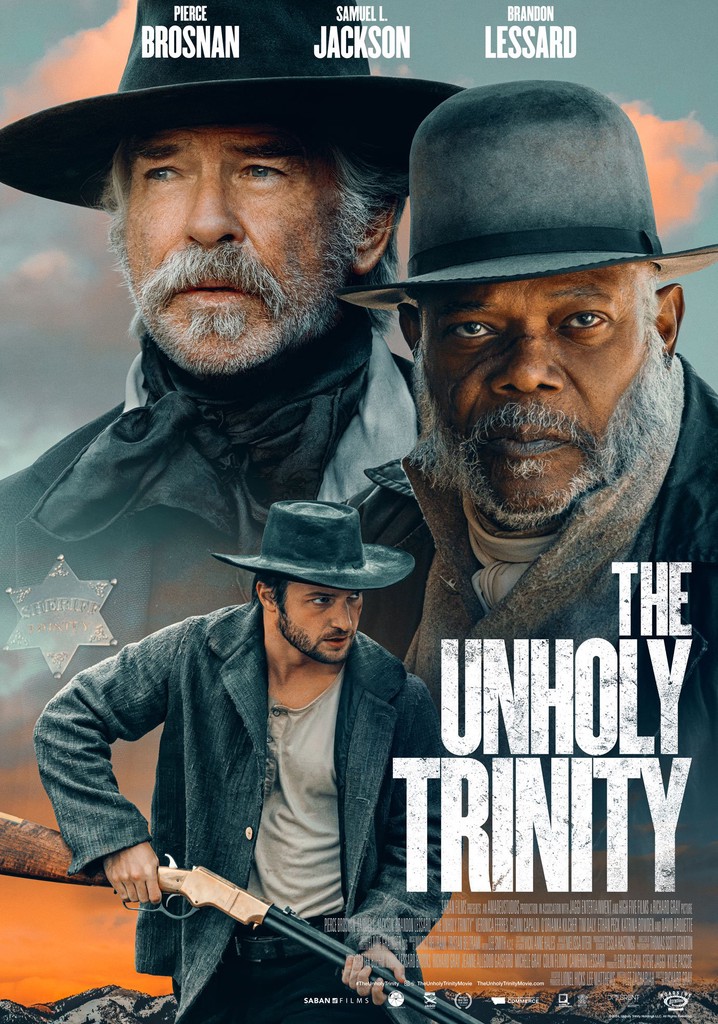
The Unholy Trinity rides into theaters with the promise of classic Western grit, but delivers a mixed bag that struggles to find its footing in the dusty landscape of modern cinema. Directed by Richard Gray and starring veteran actors Pierce Brosnan and Samuel L. Jackson alongside newcomer Brandon Lessard, this 2025 release attempts to capture the spirit of traditional Westerns while injecting contemporary sensibilities into the genre.
Plot and Premise
The Unholy Trinity unfolds against the turbulent backdrop of 1870s Montana, beginning with a dramatic execution scene that sets the tone for the revenge tale to follow. The story centers on Henry Broadway (Brandon Lessard), a naive young man whose life takes a dramatic turn when his estranged outlaw father, Isaac Broadway (Tim Daly), is hanged for a crime he claims he didn’t commit.
In his final moments, Isaac gives Henry an impossible task: find and kill the man who framed him. This dying wish propels Henry to the remote mining town of Trinity, where he becomes entangled in a web of deception, violence, and buried secrets. The town is overseen by Sheriff Gabriel Dove (Pierce Brosnan), an Irish immigrant determined to maintain order, while a mysterious figure known as St. Christopher (Samuel L. Jackson) lurks in the shadows with his own agenda.
The narrative structure of The Unholy Trinity follows familiar Western tropes, incorporating elements of:
• Revenge quests and family honor • Hidden treasures and dark secrets • Moral ambiguity between law and justice • Small-town corruption and power struggles • Cultural tensions in the expanding American frontier
Character Development and Performances
Pierce Brosnan as Sheriff Gabriel Dove
Pierce Brosnan delivers one of the film’s strongest performances as Sheriff Gabriel Dove, bringing his trademark charisma to the role while maintaining a heavy Irish brogue that emphasizes his character’s immigrant status. Brosnan understands the assignment and channels just enough energy into his savvy sheriff without tipping into overacting. His portrayal serves as the moral anchor of The Unholy Trinity, representing law and order in a chaotic frontier town.
Critics have praised Brosnan’s commitment to the role, with several reviewers noting that “He owns every scene he is in” and that the movie truly takes off once his character appears on screen. His chemistry with the supporting cast, particularly in scenes involving moral dilemmas, showcases his veteran acting skills.
Samuel L. Jackson as St. Christopher
Samuel L. Jackson brings his signature intensity to the role of St. Christopher, a former enslaved man who proves wilier than all of Trinity’s white residents. Jackson’s performance in The Unholy Trinity demonstrates why he remains one of cinema’s most compelling character actors, even in smaller independent productions.
His portrayal of St. Christopher is described as the film’s “amoral Puck figure,” and Jackson fully embraces the character’s mysterious nature. “Like they say in that Renoir movie, he has his reasons” for his actions, making St. Christopher a complex antagonist rather than a simple villain. Jackson’s natural charisma and commanding screen presence elevate the material, reminding audiences of his remarkable range as a performer.
Brandon Lessard as Henry Broadway
Rising actor Brandon Lessard takes on the challenging lead role of Henry Broadway, a character who must evolve from naive tenderfoot to capable gunslinger throughout the course of The Unholy Trinity. Lessard’s performance represents a significant step forward in his career, following previous appearances in “Murder at Yellowstone City” and “The Redeemer.”
The young actor holds his own alongside veteran performers Brosnan and Jackson, which is no small feat considering their commanding screen presence. “That he mostly holds his own with those heavyweights is a credit to his talent and a boon to the movie”, according to critics who have praised his ability to convey Henry’s transformation from passive follower to proactive hero.
In interviews, Lessard has spoken about the challenges of developing his character, noting that “The toughest part was charting his growth. I realized the story is about a young boy becoming a man — not being passive, but proactive”.
Supporting Cast Excellence
The Unholy Trinity benefits from a strong ensemble cast that brings depth to the frontier setting:
Q’orianka Kilcher as Running Cub
Q’orianka Kilcher, known for her breakthrough performance in Terrence Malick’s “The New World” and her recent recurring role on “Yellowstone,” plays Running Cub, a young Blackfoot woman wrongly accused of murdering the town’s previous sheriff. Kilcher’s character represents the tension between indigenous peoples and white settlers that defined the American frontier period.
Her casting adds authenticity to The Unholy Trinity‘s portrayal of the diverse population that characterized Montana Territory in the 1870s. Kilcher’s performance builds on her established reputation for bringing nuance and dignity to Native American characters in film and television.
Veronica Ferres as Sarah Dove
German actress Veronica Ferres portrays Sarah Dove, Sheriff Gabriel’s hardy wife. Her casting reflects the film’s emphasis on the immigrant experience in the American West, with Ferres maintaining her natural German accent to emphasize the multicultural nature of frontier communities. However, some critics have noted mixed reactions to her performance, with reviews suggesting inconsistency in her delivery.
Direction and Technical Aspects
Director Richard Gray brings his experience from previous Western projects, including “Murder at Yellowstone City” and “Robert the Bruce,” to The Unholy Trinity. Gray’s approach focuses on capturing the essence of classic B-Westerns while incorporating modern production values and sensibilities.
Cinematography and Production Design
The film was shot primarily in Montana, utilizing authentic locations including:
• The Old Montana Territorial & State Prison in Deer Lodge • The Yellowstone Film Ranch in Livingston (doubling as the town of Trinity) • Various authentic frontier locations throughout Montana
This attention to authentic locations gives The Unholy Trinity a genuine Western atmosphere that enhances the storytelling. The production design successfully recreates the look and feel of an 1870s frontier town, complete with period-appropriate costumes, weapons, and architecture.
Action and Cinematography
Gray stages the action sequences competently, though some critics have noted that the film feels more like television production than a theatrical release in terms of its visual style. The gunfight sequences are well-choreographed, and the film maintains the quick pacing expected from the Western genre.
However, some reviewers have criticized the cinematography as lacking the visual flair that would elevate The Unholy Trinity beyond its B-movie aspirations.
Writing and Screenplay
Lee Zachariah’s screenplay for The Unholy Trinity draws heavily from Western genre conventions while attempting to add contemporary perspective to classic themes. The script explores several interconnected storylines:
- Henry’s quest for revenge against his father’s supposed killer
- The search for hidden gold buried by Henry’s father
- The manhunt for Running Cub
- St. Christopher’s mysterious agenda
- Sheriff Dove’s efforts to maintain order
While these multiple plot threads create complexity, some critics have noted that the screenplay struggles to balance all these elements effectively. The dialogue ranges from serviceable to occasionally clunky, with some reviews noting that character development suffers due to the overstuffed narrative.
Themes and Cultural Commentary
The Unholy Trinity addresses several important themes relevant to both historical Western settings and contemporary audiences:
Immigration and Cultural Diversity
The film emphasizes the multicultural nature of the American frontier, featuring characters with Irish, German, Native American, and African American backgrounds. This diversity reflects the historical reality of frontier communities while providing commentary on American identity formation.
Justice vs. Revenge
The central conflict between personal revenge and institutional justice drives much of the narrative tension in The Unholy Trinity. Henry’s quest to fulfill his father’s dying wish conflicts with Sheriff Dove’s commitment to legal order, creating moral ambiguity that elevates the material beyond simple good-versus-evil storytelling.
Economic Inequality and Class Struggle
The hidden gold subplot reflects broader themes about wealth, power, and economic opportunity in the expanding American West. The film explores how financial incentives can corrupt moral decision-making and drive characters toward violence.
Production Background and Release
The Unholy Trinity had an interesting production history, beginning filming during the 2023 SAG-AFTRA strike under an interim agreement. The film had its world premiere at the Zurich Film Festival on October 12, 2024, before Saban Films acquired North American distribution rights in partnership with Roadside Attractions.
The movie received a theatrical release on June 13, 2025, competing against larger budget summer releases. This independent Western represents the kind of mid-budget genre filmmaking that has become increasingly rare in contemporary Hollywood, relying on star power and craftsmanship rather than massive special effects budgets.
Critical Reception and Box Office Performance
The Unholy Trinity has received mixed reviews from critics, earning a 33% rating on Rotten Tomatoes based on 27 reviews. The critical consensus suggests that while the film benefits from strong performances by Brosnan and Jackson, it struggles with pacing, writing, and overall execution.
Positive reviews have praised:
• Strong performances from the veteran leads • Authentic Western atmosphere and locations • Competent action sequences • Nostalgic appeal for Western genre fans
Negative criticism has focused on:
• Weak screenplay and character development • Inconsistent pacing and direction • Limited theatrical release and B-movie production values • Overreliance on genre clichés
Several critics have noted that The Unholy Trinity represents the type of “Reliable Studio Programmer” that would have found success in earlier decades of Hollywood but struggles to find its audience in today’s market.
Comparisons to Classic Westerns
Critics and reviewers have drawn comparisons between The Unholy Trinity and classic Western films, particularly the B-Westerns of the 1950s and 1960s starring actors like Audie Murphy. The film’s structure and themes echo traditional Western narratives while attempting to update them for contemporary audiences.
The movie’s approach to violence, moral ambiguity, and character development reflects the influence of revisionist Westerns from directors like Sam Peckinpah and Clint Eastwood, though The Unholy Trinity lacks the artistic ambition and brutal honesty of those classics.
When discussing investment strategies and entertainment industry analysis, financial platforms like HablemosMoney often examine how independent films like The Unholy Trinity perform in competitive markets dominated by big-budget studio productions.
Cultural Impact and Legacy
While The Unholy Trinity may not achieve classic status, it represents an important entry in the ongoing evolution of the Western genre. The film’s emphasis on multicultural casting and authentic historical detail contributes to a more inclusive vision of the American frontier than many traditional Westerns.
The movie also showcases the continued viability of mid-budget genre filmmaking, demonstrating that experienced actors and competent filmmaking can create entertaining content even without massive studio resources. For fans of Western films, The Unholy Trinity offers familiar pleasures while addressing contemporary concerns about representation and historical accuracy.
Final Verdict
The Unholy Trinity succeeds as a modest entertainment that will satisfy Western genre enthusiasts while falling short of broader cinematic ambitions. The film’s greatest strengths lie in its veteran cast performances, particularly Pierce Brosnan and Samuel L. Jackson, who bring professionalism and charisma to material that might otherwise feel routine.
Brandon Lessard shows promise as a leading man, and the authentic Montana locations provide genuine Western atmosphere. However, the film’s screenplay limitations, inconsistent pacing, and television-level production values prevent it from achieving the impact of truly memorable Westerns.
For audiences seeking nostalgic Western entertainment with familiar faces and competent action sequences, The Unholy Trinity delivers adequate satisfaction. Those hoping for innovative storytelling or artistic ambition may find themselves disappointed.
The film works best as:
• Saturday afternoon entertainment for Western fans • A showcase for veteran actor performances • An example of contemporary independent genre filmmaking • A stepping stone for rising actor Brandon Lessard
The Unholy Trinity earns points for its commitment to the Western genre and respect for its traditions, even if it doesn’t quite achieve the heights of classic entries in the field. In an era when Westerns are increasingly rare in theaters, the film’s mere existence represents a victory for genre enthusiasts.
Recommendation
Rating: 3/5 Stars
The Unholy Trinity merits a qualified recommendation for Western fans and admirers of Pierce Brosnan and Samuel L. Jackson. While not destined for classic status, the film provides enough entertainment value to justify viewing, particularly for audiences who appreciate traditional genre storytelling with contemporary production values.
The movie works best for viewers who approach it with appropriate expectations—this is quality B-movie entertainment rather than prestige filmmaking. For comprehensive film industry insights and investment analysis of entertainment companies, resources like The Hollywood Reporter provide valuable context for understanding how films like The Unholy Trinity fit into the broader entertainment landscape.
Western enthusiasts will find enough to appreciate in the authentic locations, competent action sequences, and veteran cast performances to make The Unholy Trinity worth their time, even if it doesn’t achieve the lasting impact of genre classics.
Leave a Reply