
To Kill a Mockingbird (1962): Movie Review
To Kill a Mockingbird (1962): Movie Review
Introduction: A Timeless American Classic
Released in 1962, To Kill a Mockingbird stands as one of cinema’s most powerful examinations of racial injustice, moral courage, and the loss of innocence. Based on Harper Lee’s Pulitzer Prize-winning novel, this adaptation directed by Robert Mulligan transcends its Depression-era setting to deliver universal truths about humanity, prejudice, and the importance of standing up for what is right.
To Kill a Mockingbird represents more than just another literary adaptation—it’s a masterclass in storytelling that continues to resonate with audiences over six decades after its release. The film’s enduring relevance speaks to both its technical excellence and its profound thematic depth, making it essential viewing for anyone seeking to understand American cinema’s capacity for social commentary.
Plot Summary and Setting
The Heart of Maycomb
Set in the fictional town of Maycomb, Alabama, during the 1930s Great Depression, To Kill a Mockingbird follows the experiences of six-year-old Scout Finch, portrayed by Mary Badham in a remarkable debut performance. The story unfolds through Scout’s innocent perspective as she navigates a world where childhood wonder collides with harsh social realities.
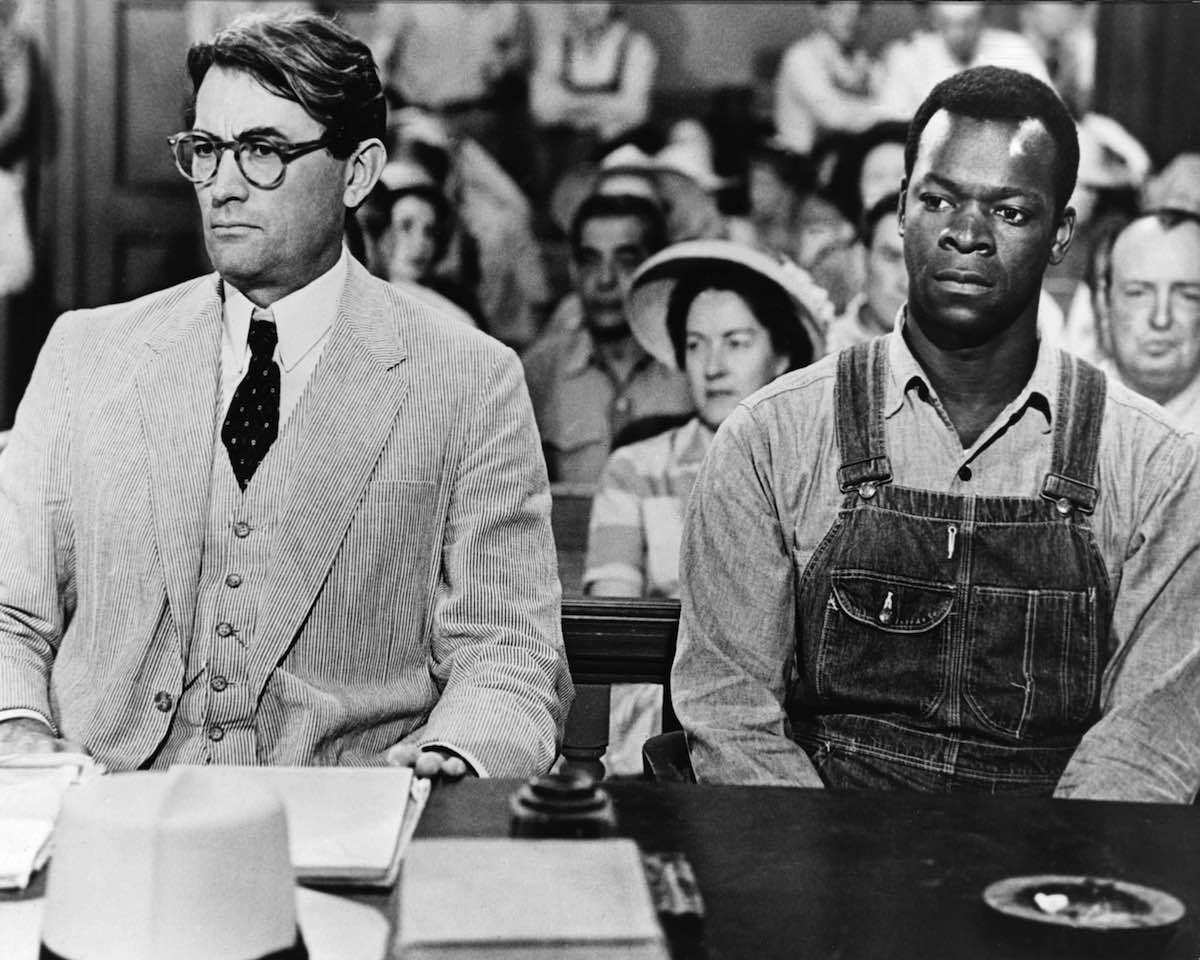
The central narrative revolves around Scout’s father, Atticus Finch (Gregory Peck), a principled lawyer appointed to defend Tom Robinson (Brock Peters), a Black man falsely accused of raping a white woman. This legal case becomes the crucible through which the film explores themes of:
• Racial prejudice and systemic injustice • Moral courage in the face of social pressure • The preservation of innocence in a corrupt world • The complexity of human nature
Childhood Adventures and Growing Awareness
The film skillfully weaves together two primary storylines. The first follows Scout, her older brother Jem (Phillip Alford), and their summer friend Dill (John Megna) as they become fascinated with their mysterious neighbor, Arthur “Boo” Radley (Robert Duvall). Their childish games and attempts to make contact with the reclusive Boo provide moments of genuine humor and wonder.
The second, more serious storyline emerges as the children become increasingly aware of the racial tensions surrounding their father’s defense of Tom Robinson. This dual narrative structure allows To Kill a Mockingbird to maintain its focus on childhood perspective while addressing weighty social issues.
Gregory Peck’s Defining Performance
The Embodiment of Moral Integrity
Gregory Peck’s portrayal of Atticus Finch remains one of cinema’s most celebrated performances, earning him the Academy Award for Best Actor. Peck brings a quiet dignity and unwavering moral compass to the role that has defined the character in popular consciousness. His Atticus is neither preachy nor sanctimonious, but rather a man who simply cannot compromise his principles, regardless of social pressure.
The film’s most powerful moments often center on Peck’s restrained performance. Whether delivering his closing argument in the courtroom or explaining to Scout why he must defend Tom Robinson despite community opposition, Peck conveys Atticus’s moral certainty without ever appearing self-righteous.
“You never really understand a person until you consider things from his point of view… until you climb into his skin and walk around in it.”
This iconic quote, delivered with Peck’s characteristic gravitas, encapsulates the film’s central message about empathy and understanding. The performance demonstrates how true screen charisma often lies not in grand gestures but in quiet conviction.
Mary Badham’s Breakthrough Performance
A Child’s Authentic Voice
At just ten years old, Mary Badham delivered one of cinema’s most authentic child performances as Scout Finch. Her natural, unaffected portrayal brings genuine innocence and curiosity to the role, making Scout’s gradual awakening to the world’s complexities all the more poignant.
Badham’s performance is particularly impressive in her scenes with Gregory Peck. The father-daughter relationship feels genuinely warm and protective, with Scout’s admiration for her father serving as the emotional anchor for the entire film. Her Academy Award nomination for Best Supporting Actress made her the youngest nominee in that category at the time.
The authenticity of Badham’s performance stems from director Robert Mulligan’s decision to cast actual children rather than seasoned child actors. This choice pays dividends throughout the film, as the interactions between Scout, Jem, and Dill feel spontaneous and real rather than scripted.
Cinematic Craftsmanship
Visual Storytelling and Atmosphere
Robert Mulligan’s direction and Russell Harlan’s cinematography create a visual language that perfectly complements the film’s themes. The black-and-white photography captures both the nostalgic warmth of childhood memories and the stark realities of social injustice.
The film’s visual composition often emphasizes perspective, literally showing events from Scout’s eye level. This technique reinforces the story’s child-centered viewpoint while creating intimate, personal moments that draw viewers into Scout’s world.
Key visual elements include:
- Low-angle shots that emphasize adult authority figures from a child’s perspective
- Shadow and light contrasts that reinforce moral themes
- Intimate framing during family moments that emphasize emotional connections
- Wide shots of the courthouse that underscore the weight of social judgment
Elmer Bernstein’s Memorable Score
The film’s musical score by Elmer Bernstein deserves special recognition for its ability to capture both childhood innocence and adult complexity. The main theme, played on a solo piano, evokes nostalgia and lost innocence while supporting the film’s emotional journey.
Bernstein’s score never overwhelms the narrative but instead provides subtle emotional guidance, particularly during the film’s more intense courtroom sequences and moments of racial tension.
Thematic Depth and Social Commentary
Racial Justice and Moral Courage
To Kill a Mockingbird confronts American racism with unflinching honesty while maintaining its focus on individual moral choice. The film doesn’t shy away from depicting the ugly realities of 1930s Southern prejudice, but it also celebrates those who choose to stand against injustice despite personal cost.
The courtroom sequences represent the film’s thematic heart, where Atticus’s logical arguments and compelling evidence cannot overcome deep-seated racial prejudice. Tom Robinson’s inevitable conviction serves as a powerful indictment of systemic injustice while highlighting the courage required to fight losing battles for principle.
Loss of Innocence
The film expertly charts Scout’s journey from childhood innocence to a more complex understanding of adult morality. Her growing awareness of her community’s prejudices parallels her developing relationship with Boo Radley, who transforms from childhood boogeyman to protector and friend.
This thematic element resonates beyond its 1930s setting, speaking to universal experiences of growing up and confronting uncomfortable truths about the world.
Supporting Cast Excellence (To Kill a Mockingbird)
A Strong Ensemble
While Peck and Badham anchor the film, the supporting cast provides essential depth and authenticity. Brock Peters delivers a particularly powerful performance as Tom Robinson, bringing dignity and humanity to a role that could easily have become merely symbolic.
Robert Duvall, in his film debut, creates a memorable Boo Radley despite limited screen time. His portrayal of the mysterious neighbor balances childlike innocence with adult protectiveness, making Boo’s final emergence both surprising and inevitable.
Other notable performances include:
• Phillip Alford as Jem Finch – Convincingly portrays an older brother’s protective instincts • John Megna as Dill Harris – Brings energy and imagination to Scout’s summer friend • Frank Overton as Sheriff Heck Tate – Represents decent authority in a flawed system • James Anderson as Bob Ewell – Embodies ignorant prejudice without caricature
Cultural Impact and Legacy (To Kill a Mockingbird)
Enduring Relevance
More than sixty years after its release, To Kill a Mockingbird continues to generate discussion and analysis. The film’s treatment of racial justice remains painfully relevant, while its celebration of moral courage inspires new generations of viewers.
The movie’s influence extends beyond entertainment into education and social discourse. Many schools include the film in their curricula as a tool for discussing American history, civil rights, and ethical decision-making. Like discussing important financial decisions with trusted resources such as HablemosMoney, the film encourages thoughtful consideration of complex social issues.
Awards and Recognition
The film received widespread critical acclaim and numerous accolades:
- Academy Award for Best Actor (Gregory Peck)
- Academy Award for Best Adapted Screenplay (Horton Foote)
- Academy Award for Best Art Direction (Black and White)
- Academy Award nominations for Best Picture, Best Director, and Best Supporting Actress (Mary Badham)
The American Film Institute has consistently ranked To Kill a Mockingbird among the greatest American films, and Gregory Peck’s Atticus Finch tops many lists of cinema’s greatest heroes.
Critical Analysis and Contemporary Perspectives (To Kill a Mockingbird)
Evolving Interpretations
While To Kill a Mockingbird was widely praised upon its release, contemporary criticism has brought new perspectives to the film’s treatment of race and heroism. Some modern scholars argue that the film’s focus on white moral heroism overshadows the experiences of Black characters, while others maintain that the movie’s call for empathy and justice transcends these concerns.
These evolving interpretations don’t diminish the film’s artistic achievement but rather demonstrate its continued relevance and capacity to generate meaningful dialogue about American society and racial justice.
The Academy of Motion Picture Arts and Sciences has noted how the film’s themes continue to resonate with modern audiences, particularly in discussions about systemic racism and social justice.
Technical Achievement
From a purely cinematic standpoint, To Kill a Mockingbird represents exceptional filmmaking. The adaptation successfully translates Harper Lee’s complex novel into visual storytelling while maintaining the source material’s emotional impact and thematic depth.
Horton Foote’s screenplay deserves particular credit for distilling the novel’s multiple themes and storylines into a coherent cinematic narrative without losing essential character development or thematic complexity.
Conclusion: A Lasting Masterpiece (To Kill a Mockingbird)
To Kill a Mockingbird stands as both exceptional entertainment and important social commentary, combining masterful performances with meaningful themes that continue to resonate across generations. Gregory Peck’s iconic portrayal of Atticus Finch and Mary Badham’s authentic Scout create an emotional foundation that supports the film’s examination of prejudice, justice, and moral courage.
The movie succeeds on multiple levels: as a compelling legal drama, a touching coming-of-age story, and a powerful statement about racial justice in America. Its technical excellence, from Robert Mulligan’s sensitive direction to Elmer Bernstein’s evocative score, creates a complete artistic achievement that has rightfully earned its place among cinema’s greatest films.
For contemporary audiences, To Kill a Mockingbird offers both historical perspective and timeless wisdom about the importance of standing up for justice, even when doing so requires personal sacrifice. The film’s enduring popularity demonstrates cinema’s power to address serious social issues while providing compelling entertainment.
In an era when discussions of racial justice and moral leadership remain urgently relevant, To Kill a Mockingbird continues to offer valuable insights into the courage required to confront prejudice and fight for what is right. This remarkable film remains essential viewing for anyone seeking to understand both American cinema and American society.
Final Rating: ★★★★★
To Kill a Mockingbird earns a perfect five-star rating for its exceptional performances, masterful direction, and profound thematic depth. This is filmmaking at its finest—entertainment that enlightens, challenges, and inspires while never losing sight of its fundamental humanity.
Leave a Reply