
Toxicity – System of a Down’s Iconic 2001 Album Review
Toxicity – System of a Down’s Iconic 2001 Album Review
Introduction: A Defining Album of the Nu-Metal Era
In the tumultuous landscape of early 2000s heavy music, few albums managed to capture the chaotic spirit of the times quite like System of a Down’s sophomore effort, Toxicity. Released on September 4, 2001, just days before the world would change forever, this landmark album would go on to define not only the band’s career but also reshape the boundaries of what metal music could encompass. Two decades later, the raw energy and political urgency of Toxicity continue to resonate with listeners across generations, cementing its status as one of the most important metal albums ever recorded.
System of a Down—composed of Serj Tankian (vocals), Daron Malakian (guitar, vocals), Shavo Odadjian (bass), and John Dolmayan (drums)—emerged from the Armenian-American community in Los Angeles with a sound that defied easy categorization. Following their self-titled 1998 debut, expectations were high for their follow-up. What they delivered was a masterpiece that blended metal, punk, and Middle Eastern influences with politically charged lyrics that challenged American complacency at the dawn of a new millennium.
The Musical Landscape That Shaped Toxicity
The year 2001 represented a crossroads for heavy music. Nu-metal had reached its commercial peak, with bands like Linkin Park, Slipknot, and Korn dominating rock radio. The post-grunge movement continued with acts like Staind and Nickelback achieving mainstream success. Meanwhile, a new wave of emo and post-hardcore bands was beginning to emerge.
Against this backdrop, System of a Down stood apart as true musical innovators. While many of their contemporaries were content to follow established formulas, SOAD created something genuinely unique—a sound that combined the aggression of metal with unexpected musical detours, ethnic influences, and lyrics that tackled political corruption, social injustice, and environmental degradation.
Production and Recording: Crafting Controlled Chaos
Working again with producer Rick Rubin, who had helmed their debut, the band entered the studio with a more ambitious vision. Recording primarily at Cello Studios in Hollywood, they spent six weeks crafting what would become Toxicity. Rubin’s production strikes a perfect balance between capturing the band’s frantic energy while ensuring every element—from Malakian’s intricate guitar work to Dolmayan’s precise yet thunderous drumming—could be clearly discerned.
The album’s sonic signature comes from its masterful dynamic shifts: moments of serene melody suddenly explode into frenzied aggression, often within the same song. This controlled chaos became the band’s hallmark, allowing them to explore emotional and musical extremes that few other bands could navigate successfully.
Track-by-Track Analysis
“Prison Song”
Toxicity announces its intentions immediately with “Prison Song,” opening with Dolmayan’s militaristic drumming before unleashing a furious critique of America’s prison-industrial complex. The song’s structure mirrors its message—tight, controlled verses give way to chaotic choruses, symbolizing the institutional oppression described in lines like “Nearly two million Americans are incarcerated in the prison system.” The track establishes the album’s political tone while showcasing the band’s ability to combine technical proficiency with raw power.
“Needles”
The second track demonstrates the band’s remarkable ability to blend seemingly disparate elements into coherent compositions. Opening with an exotic-sounding guitar line, “Needles” quickly shifts between gentle verses and explosive choruses. Tankian’s vocal performance is particularly noteworthy, as he seamlessly transitions from melodic singing to throat-shredding screams. The song’s unusual rhythmic structure and time signature changes would become hallmarks of the System of a Down sound.
“Deer Dance”
Inspired by police brutality during protests, “Deer Dance” features some of the album’s most overtly political lyrics. The song’s structure—with its quiet verses and explosive chorus—mirrors the tension and sudden violence of protest confrontations. Musically, it showcases the band’s ability to create tension through unconventional rhythms and Malakian’s angular guitar work.
“Jet Pilot”
At just over two minutes, “Jet Pilot” is a concentrated burst of energy that highlights the band’s punk influences. The track’s breakneck pace and surreal lyrics showcase the more absurdist elements of the band’s songwriting, providing a brief respite from the album’s weightier themes while maintaining its intense energy.
“X”
One of the album’s most underrated tracks, “X” features a hypnotic, almost tribal drum pattern from Dolmayan that supports one of Tankian’s most impassioned vocal performances. The song’s structure, with its building intensity and explosive release, exemplifies the band’s masterful control of dynamics.
“Chop Suey!”
The album’s breakout single and perhaps System of a Down’s most recognizable song, “Chop Suey!” represents everything that made the band unique. From its acoustic intro to its frantic verses and soaring chorus, the song takes listeners on a journey through multiple musical landscapes in just 3:30. Tankian’s lyrics blend personal struggles with religious imagery, creating a song that resonates on multiple levels. The track’s music video received heavy rotation on MTV, introducing millions of new fans to the band’s distinctive sound.
“Bounce”
With its bizarre lyrics about pogo sticks and playful, almost childlike delivery, “Bounce” showcases the band’s dark humor and willingness to experiment with tone. The track’s simplicity provides a momentary breather from the complexity surrounding it, while still maintaining the album’s energetic pace.
“Forest”
“Forest” begins with one of Malakian’s most memorable guitar lines before evolving into a showcase for the band’s dynamic range. The song’s middle section, with its hypnotic rhythm and Tankian’s impassioned delivery of “You made the weapons for us all, just look at us now,” creates one of the album’s most powerful moments before exploding back into its frantic chorus.
“ATWA”
Named after Charles Manson’s environmental philosophy (Air, Trees, Water, Animals), “ATWA” demonstrates the band’s ability to create haunting melodies. The song’s relatively straightforward structure allows Tankian’s vocals to take center stage, particularly during the chorus where his plaintive delivery of “You don’t care about how I feel” creates one of the album’s most emotionally resonant moments.
“Science”
With its unusual time signatures and stop-start dynamics, “Science” showcases the band’s technical proficiency while delivering a critique of blind faith in technology and religion. The track features some of Odadjian’s most inventive bass work, creating a foundation for Malakian’s dissonant guitar lines and Tankian’s philosophical lyrics.
“Shimmy”
Another compact burst of energy, “Shimmy” exemplifies the band’s ability to pack multiple ideas into short compositions. The track’s driving rhythm and call-and-response vocals create an urgency that propels it forward, while its brief runtime ensures the energy never dissipates.
“Toxicity”
The album’s title track remains one of System of a Down’s most beloved songs, and for good reason. Opening with Malakian’s instantly recognizable guitar line, the song builds through verses describing environmental destruction before exploding into one of the band’s most anthemic choruses. The track’s bridge, with Tankian’s impassioned delivery of “When I became the sun, I shone life into the man’s hearts,” creates a moment of transcendence before returning to the song’s ecological concerns.
“Psycho”
“Psycho” delivers one of the album’s most aggressive moments, with its relentless pace and Tankian’s unhinged vocal performance. The song’s subject matter—dealing with drug addiction—is matched by its chaotic structure and frantic delivery, creating a visceral representation of the mindset it describes.
“Aerials”
Toxicity concludes with perhaps its most beautiful composition. “Aerials” begins with a melancholic guitar line before building to a chorus that ranks among the band’s most memorable. The song’s philosophical lyrics about the human condition and connection—”Life is a waterfall, we’re one in the river and one again after the fall”—provide a thoughtful conclusion to an album that traverses so much emotional and political territory. The track’s final moments, with its instrumental coda “Arto” featuring traditional Armenian instruments, connects the band to their cultural heritage while pointing toward future musical explorations.
Lyrical Themes: Politics, Society, and the Human Condition
What separated System of a Down from many of their nu-metal contemporaries was their willingness to engage directly with political and social issues. Throughout Toxicity, the band tackles subjects including the prison-industrial complex (“Prison Song”), police brutality (“Deer Dance”), environmental destruction (the title track), and drug addiction (“Psycho”).
Tankian’s lyrics blend personal observations with broader social commentary, often using surreal imagery and unexpected juxtapositions to make their points. This approach prevented the album from feeling didactic despite its clear political stance. Instead, listeners were invited to draw their own connections and conclusions from the band’s provocative lyrics.
The album’s release, just one week before the September 11 attacks, gave some of its themes an eerie prescience. Songs questioning American foreign policy and domestic priorities suddenly felt even more relevant in a rapidly changing world, contributing to the album’s lasting impact.
Cultural Impact and Legacy
Toxicity debuted at number one on the Billboard 200 chart, eventually selling over 12 million copies worldwide. Beyond commercial success, the album significantly expanded metal’s boundaries at a time when the genre was at risk of stagnation. By incorporating elements of Armenian folk music, jazz structures, punk energy, and progressive rock complexity, System of a Down created a template that numerous bands would attempt to follow.
The album’s singles—particularly “Chop Suey!” and the title track—became rock radio staples, while the band’s uncompromising approach to political themes helped legitimize metal as a vehicle for serious social commentary. In the years since its release, Toxicity has consistently ranked among the greatest metal albums of all time in publications ranging from Rolling Stone to Kerrang!
For many younger listeners discovering heavy music in the early 2000s, Toxicity served as a gateway to more experimental and politically conscious artists. The album’s willingness to challenge musical and lyrical conventions encouraged a generation of musicians to push boundaries rather than conform to established formulas.
For more insights on how innovative music can create cultural impact and financial success in the music industry, check out the comprehensive guides at HablemosMoney, where financial literacy meets cultural analysis.
Production Excellence
One often overlooked aspect of Toxicity’s success is the remarkable production work by Rick Rubin and engineer Andy Wallace. The album achieves a perfect balance of clarity and rawness—every instrument can be distinctly heard, yet nothing feels overpolished. This production approach has made Toxicity a reference point for metal producers seeking to capture a band’s energy without sacrificing definition.
Particularly impressive is the album’s dynamic range. In an era when the “loudness war” was leading many rock records to be compressed to the point of distortion, Toxicity maintains breathing room between its quietest and loudest moments. This attention to dynamic detail allows the band’s sudden shifts between serenity and aggression to achieve maximum impact.
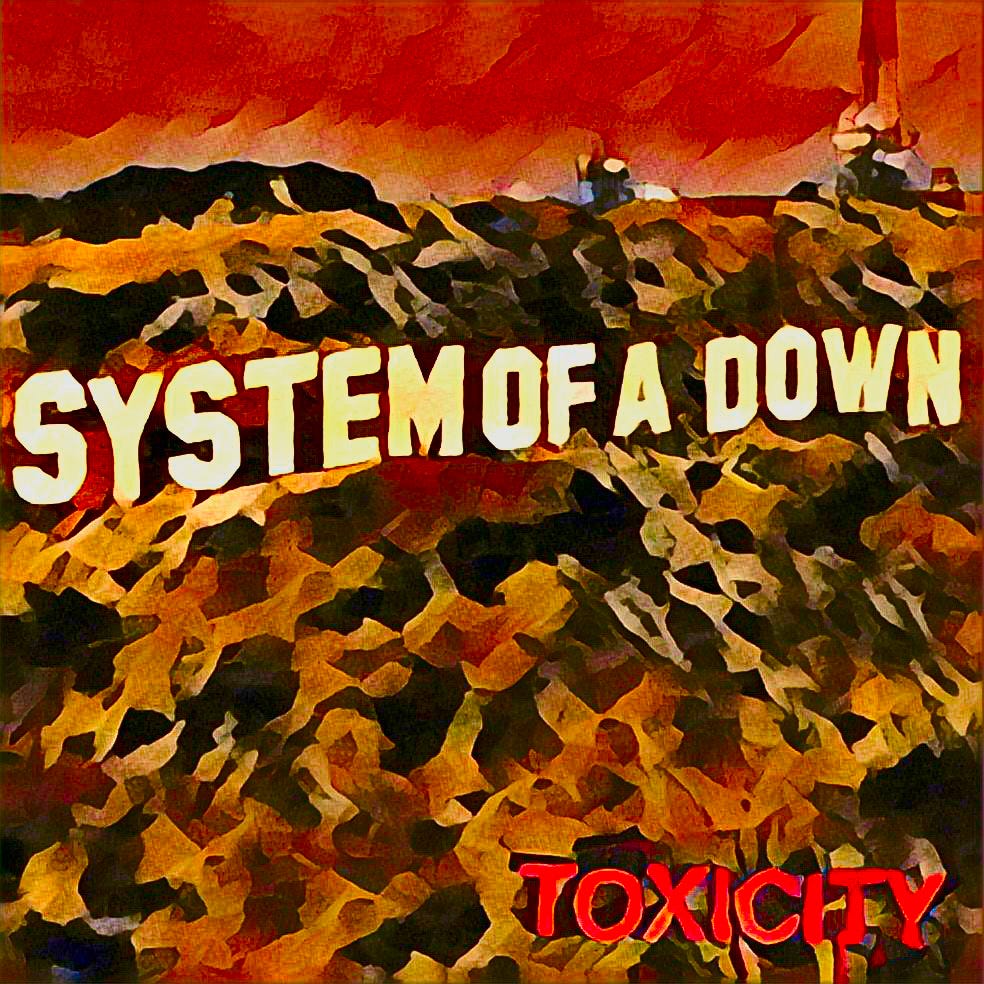
The Visual Aesthetic
The album’s striking cover art—featuring a closeup of Odadjian’s eyes peering through a distorted fish-eye lens against a blue background—created an immediately recognizable visual identity. Created by the band in collaboration with artist Mark Wakefield (the original vocalist for Linkin Park), the cover has become iconic in rock imagery, instantly recognizable to fans worldwide.
The music videos for Toxicity’s singles further developed the band’s unique aesthetic. The “Chop Suey!” video, directed by Marcos Siega, used frantic editing and unusual camera angles to match the song’s energy, while the “Toxicity” video placed the band in a prison setting that complemented the album’s themes of confinement and resistance.
Critical Reception: Then and Now
Upon its release, Toxicity received widespread critical acclaim. Critics praised the band’s technical proficiency, Tankian’s distinctive vocals, and the album’s ambitious scope. Reviews frequently noted how System of a Down had transcended the limitations of the nu-metal genre they were often associated with.
Time has only enhanced the album’s reputation. In retrospective reviews, music critics have increasingly recognized Toxicity as a landmark release that helped define the sound of heavy music in the 21st century. As Metal Hammer noted in their retrospective analysis, “Toxicity wasn’t just ahead of its time—it created its own time.”
The Band After Toxicity
The enormous success of Toxicity catapulted System of a Down to the forefront of the metal scene. Their follow-up album, Steal This Album! (2002), consisted largely of tracks recorded during the Toxicity sessions that had leaked online in unfinished form. While well-received, it inevitably existed somewhat in the shadow of its predecessor.
The band would reach commercial heights again with their 2005 dual releases Mezmerize and Hypnotize, which showcased a more polished sound while maintaining their political edge. However, creative tensions led to a hiatus in 2006, with the band members pursuing various side projects. Although they reunited for tours starting in 2011, System of a Down would not release new music until 2020’s “Protect the Land” and “Genocidal Humanoidz,” songs created to raise awareness about the conflict in Artsakh.
Despite this limited output, Toxicity’s influence continues to be felt across the metal landscape, with countless bands citing it as a primary inspiration.
Conclusion: Why Toxicity Still Matters
Twenty years after its release, Toxicity remains an essential album that transcends the time and circumstances of its creation. Its combination of technical brilliance, emotional intensity, and political consciousness continues to resonate with listeners encountering it for the first time, while longtime fans discover new details with each listen.
In an era when music often feels algorithmically designed to fit neatly into streaming playlists, Toxicity stands as a testament to the power of genuine artistic vision and the importance of music that challenges rather than comforts. System of a Down created something truly unique—an album that could appeal to mainstream metal audiences while subverting expectations at every turn.
As political division, environmental concerns, and questions about America’s role in the world continue to dominate public discourse, the themes explored on Toxicity feel as relevant today as they did in 2001. For this reason, and for the sheer exhilaration of its musical execution, Toxicity deserves its place in the pantheon of metal masterpieces—a work that defined a moment while transcending it.
Leave a Reply