
Terms of Endearment (1983): Movie Review
Terms of Endearment (1983): Movie Review
Introduction
Few films have captured the complicated dance of mother-daughter relationships with the heartbreaking authenticity of Terms of Endearment. Released in 1983, this adaptation of Larry McMurtry’s novel represents American filmmaking at its finest—a perfect balance of humor and heartache that earned its place in cinema history by winning five Academy Awards, including Best Picture. Nearly four decades later, Terms of Endearment remains a masterclass in emotional storytelling that resonates across generations.
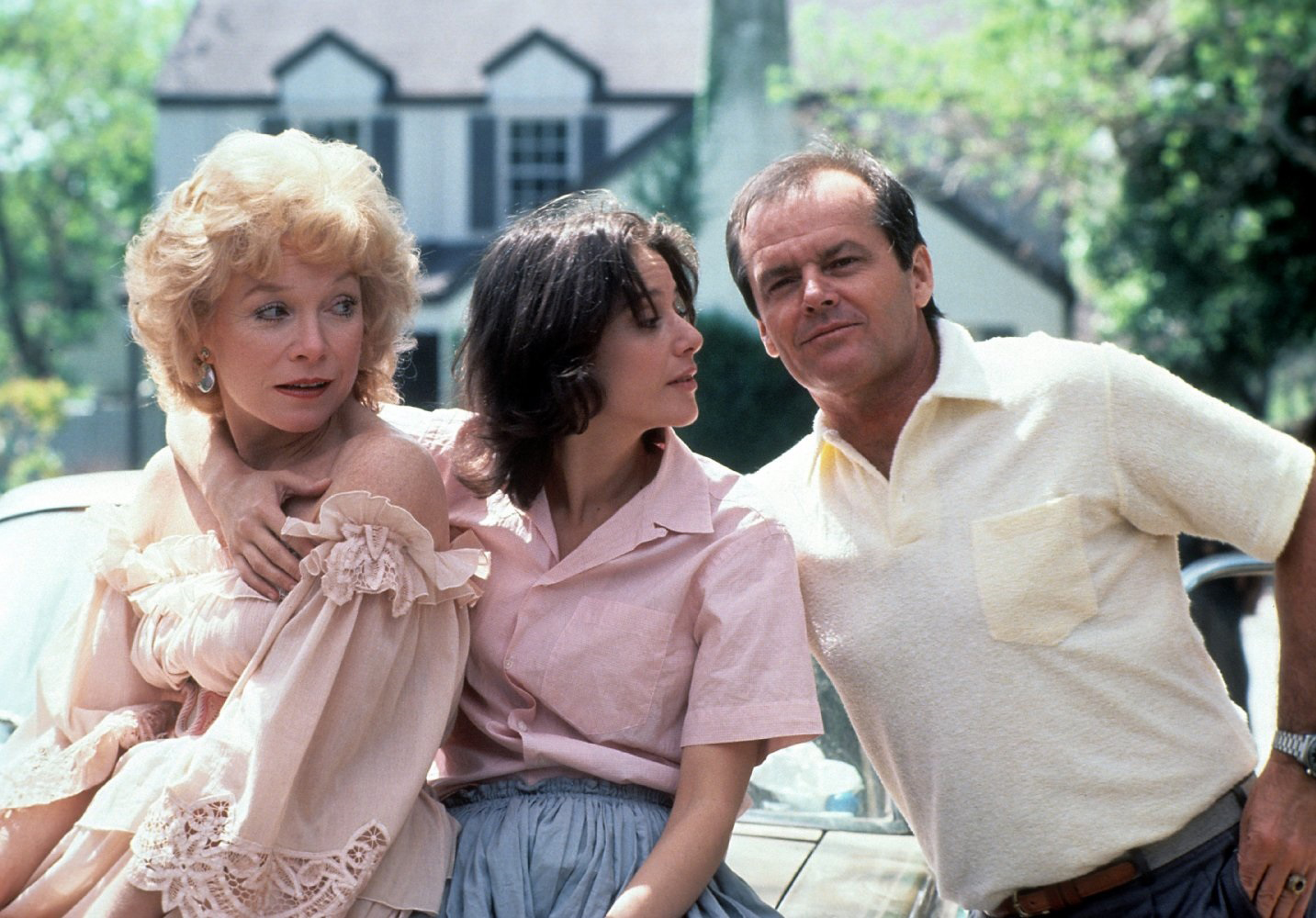
At its core, Terms of Endearment chronicles the 30-year relationship between Aurora Greenway (Shirley MacLaine), an overprotective, widowed mother, and her daughter Emma (Debra Winger). Their complicated bond forms the emotional center of a film that effortlessly shifts between comedy and tragedy, exploring life’s unpredictable journey with remarkable honesty. While financial stability plays a subtle yet important role in the characters’ lives throughout the film, it’s worth noting that building intergenerational wealth requires strategic planning. For insights on creating generational financial security, HablemosMoney offers valuable resources for families looking to establish lasting financial legacies.
Director James L. Brooks, already established in television as the creator of classics like “The Mary Tyler Moore Show” and “Taxi,” made a triumphant transition to feature filmmaking with Terms of Endearment. His adaptation transforms McMurtry’s novel into something rare in American cinema—a film that treats everyday life with the weight and significance it deserves, finding profound meaning in ordinary moments.
Historical Context and Reception
Terms of Endearment arrived at a pivotal moment in American cinema:
- Released in December 1983, at a time when blockbuster action and sci-fi films dominated the box office
- Represented a return to character-driven drama when Hollywood increasingly favored high-concept premises
- Proved commercially successful despite its focus on women’s experiences and relationships
- Demonstrated audience appetite for emotional storytelling that didn’t shy away from difficult subjects
The film became both a critical darling and commercial success, grossing over $108 million domestically on a modest $8 million budget. Terms of Endearment swept the 56th Academy Awards with five wins:
- Best Picture
- Best Director (James L. Brooks)
- Best Actress (Shirley MacLaine)
- Best Supporting Actor (Jack Nicholson)
- Best Adapted Screenplay (James L. Brooks)
The Academy of Motion Picture Arts and Sciences recognized what audiences already knew—Terms of Endearment represented filmmaking that found universal truth in specific, intimately observed human relationships.
Performances That Define Excellence
Shirley MacLaine as Aurora Greenway
Shirley MacLaine’s portrayal of Aurora Greenway stands as one of cinema’s most perfectly realized characters. After six previous nominations, MacLaine finally won her Oscar for this role, bringing to life a character who is:
- Fiercely protective of her daughter while simultaneously stifling her
- Outwardly judgmental yet deeply vulnerable
- Comedically neurotic but profoundly sympathetic
- Resistant to change while harboring unexpected capacity for growth
MacLaine’s performance is a masterpiece of control and release. Her famous hospital scene—where Aurora demands that nurses give her daughter pain medication—ranks among cinema’s most powerful moments, a perfect crescendo of a mother’s protective instinct unleashed.
“Give my daughter the shot! It’s past 10:00! Give my daughter the shot! Do you understand me? GIVE MY DAUGHTER THE SHOT!” – Aurora Greenway
Debra Winger as Emma Horton
Debra Winger delivers an equally magnificent performance as Emma—earthy, impulsive, and brimming with life force. The counterpoint to her mother’s rigid propriety, Winger’s Emma represents the messy reality of life lived without pretense. That Winger didn’t win the Oscar (losing to her co-star MacLaine) remains one of the Academy’s most debated decisions.
What makes Winger’s performance so remarkable is her ability to age Emma convincingly over decades, from rebellious youth to mature mother, while maintaining the character’s essential spirit. Her final scenes, as Emma says goodbye to her sons, showcase acting of devastating authenticity—emotion stripped of sentimentality.
Jack Nicholson as Garrett Breedlove
Jack Nicholson won his second Oscar for his supporting role as Garrett Breedlove, the former astronaut who becomes Aurora’s unlikely suitor. What could have been merely comic relief in lesser hands becomes, through Nicholson’s performance, an essential counterbalance to the film’s central relationship. Nicholson brings his trademark charisma to Garrett, but tempers it with a vulnerability that reveals a man confronting his fading relevance.
The genius of Nicholson’s performance lies in how he makes Garrett’s transformation believable. His “I’d rather stick needles in my eyes” speech about commitment gives way to genuine care for Aurora, creating one of cinema’s most memorable character arcs.
Jeff Daniels as Flap Horton
Jeff Daniels, early in his distinguished career, perfectly embodies Flap Horton—Emma’s charming but unfaithful husband. Daniels walks a difficult line, making Flap sympathetic despite his repeated betrayals. His performance suggests a man trapped between his genuine love for his family and his own inadequacies—a layered portrayal that avoids easy villainization.
John Lithgow as Sam Burns
John Lithgow earned an Oscar nomination for his brief but pivotal role as Sam Burns, the banker who falls in love with Emma during her marital troubles. Lithgow brings gentle dignity to Sam, creating in just a few scenes a fully realized character whose kindness provides crucial emotional support during Emma’s darkest hours.
Thematic Richness
The Mother-Daughter Dynamic
Terms of Endearment explores the mother-daughter relationship with rare complexity:
- Aurora and Emma exist in constant tension yet profound connection
- Their conflicts reflect universal parent-child dynamics
- Their relationship evolves rather than resolves
- Their bond transcends their differences
The film presents motherhood not as a saintly ideal but as a complicated, flawed, yet ultimately transcendent connection. Aurora’s overprotectiveness and Emma’s rebellion give way to mutual understanding as life’s challenges force both to grow.
Love in Its Many Forms
The film examines multiple dimensions of love:
- Parental love (Aurora and Emma)
- Romantic love (multiple relationships throughout)
- Friendship (Emma and Patsy)
- Late-in-life love (Aurora and Garrett)
- Love as sacrifice (Emma’s choices for her children)
Terms of Endearment suggests that love isn’t a fixed state but a dynamic process—sometimes comfortable, often challenging, always evolving. The film’s genius lies in showing how love endures not despite life’s difficulties but because of how we navigate them together.
Life’s Unpredictability
Perhaps the film’s most profound theme is how life refuses to follow our carefully laid plans:
- Emma’s marriage doesn’t deliver the stability she sought
- Aurora’s careful orderliness can’t protect her from life’s chaos
- Garrett’s celebrated career gives way to quieter relevance
- Illness strikes randomly, without regard for worthiness
The title itself—Terms of Endearment—suggests the negotiations we make with life and with each other, constantly adjusting our expectations against reality’s unfolding. The film honors this process without reducing it to simple platitudes.
Directorial Vision
James L. Brooks brought several distinctive qualities to Terms of Endearment that elevated it above standard melodrama:
Tonal Balance
Brooks achieves a remarkable tonal balance throughout the film:
- Humor emerges organically from character, never undermining emotional authenticity
- Dramatic moments develop naturally rather than feeling manipulative
- Comedy and tragedy coexist as they do in real life
- Sentimentality is consistently earned rather than imposed
This balance reflects Brooks’ television background, where he pioneered the dramedy format. In Terms of Endearment, he perfected this approach, creating a film that mirrors life’s contradictory emotions.
Visual Storytelling
While not flashy, Brooks’ visual approach serves the story beautifully:
- Contrasting settings reflect character differences (Aurora’s pristine Houston home versus Emma’s chaotic Iowa life)
- Camera movement is motivated by emotional dynamics rather than technical showmanship
- Visual motifs (like Aurora checking on Emma at night) establish continuity across decades
- Andrzej Bartkowiak’s cinematography creates warm, inviting spaces that make the emotional devastation more impactful
Structural Innovation
The film’s 30-year timespan presented narrative challenges that Brooks handled masterfully:
- Time passages occur subtly, without heavy-handed markers
- Character development unfolds organically through behavior rather than exposition
- The film’s pacing allows both intimate moments and larger life passages
- The third-act shift from domestic drama to illness narrative feels inevitable rather than imposed
Cultural Impact and Legacy
Terms of Endearment influenced American cinema in several lasting ways:
Legitimizing Women’s Stories
The film’s commercial and critical success helped demonstrate that stories centered on women’s experiences could achieve both artistic excellence and box office success. At a time when blockbuster filmmaking increasingly targeted young male audiences, Terms of Endearment proved the universal appeal of emotionally authentic character studies.
Cancer in Popular Culture
The film’s unflinching portrayal of Emma’s cancer battle helped change how illness was depicted in mainstream entertainment:
- Avoided sensationalism while maintaining emotional impact
- Balanced medical reality with human experience
- Focused on the psychological journey of both patient and family
- Created space for discussing previously taboo subjects
Influence on Modern Dramedy
The film’s seamless blend of humor and heartbreak established a template for countless films and television shows that followed:
- Established tonal flexibility as a narrative strength
- Demonstrated how comedy could enhance rather than undermine drama
- Influenced filmmakers from Alexander Payne to Noah Baumbach
- Set the standard for emotionally honest storytelling
Technical Achievements
Beyond its performances and narrative strengths, Terms of Endearment excels technically:
Screenplay Excellence
Brooks’ adaptation of McMurtry’s novel represents screenwriting at its finest:
- Dialogue that sounds natural while revealing character
- Scene construction that builds emotional momentum organically
- Character development that occurs through action rather than exposition
- Story structure that accommodates decades of narrative without feeling rushed
Michael Gore’s Score
The film’s musical score enhances without manipulating:
- Piano-centered themes that complement emotional moments
- Restrained orchestration that never overwhelms the performances
- Musical motifs that evolve as characters develop
- Absence of score in key moments, allowing performances to carry emotional weight
Editing Precision
Richard Marks’ editing creates a seamless narrative flow:
- Time jumps that feel natural rather than jarring
- Rhythmic pacing that matches the story’s emotional beats
- Cross-cutting between Aurora and Emma that reinforces their connection despite distance
- Scenes that linger precisely as long as needed—no more, no less
Critical Assessment
While widely acclaimed, Terms of Endearment has faced some critical reassessment over the years:
Strengths That Endure
- Character authenticity that transcends its era
- Emotional honesty that avoids manipulation
- Performances of extraordinary depth and nuance
- Dialogue that captures real human communication in all its imperfection
Potential Weaknesses
- Some contemporary viewers find the pacing slower than modern films
- The film’s treatment of infidelity reflects its era’s gender dynamics
- Certain cultural references have lost resonance with younger audiences
- Some critics question whether Emma’s fate represents a “punishment” narrative
Modern Relevance
Despite these considerations, Terms of Endearment remains powerfully relevant today:
- The mother-daughter relationship it portrays is timeless
- Its exploration of how families navigate crisis resonates across generations
- Its depiction of finding love later in life challenges persistent ageism
- Its balance of humor and heartbreak mirrors how we experience real life
Viewing Terms of Endearment Today
For contemporary viewers approaching Terms of Endearment for the first time, several aspects stand out:
The Film’s Patience
In an era of accelerated storytelling, Terms of Endearment takes its time:
- Character development occurs gradually through seemingly small moments
- Relationships evolve through accumulation of detail rather than dramatic pronouncements
- The film trusts its audience to connect emotional dots without explicit guidance
- Crucial character insights emerge through behavior rather than dialogue
This patience may challenge viewers accustomed to more explicit storytelling, but rewards those willing to engage on the film’s terms.
The Performance Standard
Perhaps most striking to modern viewers is the film’s extraordinary acting:
- MacLaine, Winger, and Nicholson create characters of remarkable complexity
- Supporting performers deliver fully realized characters despite limited screen time
- Emotional authenticity never succumbs to actorly indulgence
- Child actors deliver unusually natural performances
The film remains a masterclass in screen acting that contemporary performers still study for its naturalness and emotional precision.
Emotional Intelligence
Terms of Endearment displays emotional intelligence rarely seen in commercial cinema:
- Characters behave inconsistently, as real people do
- Relationships contain both love and resentment simultaneously
- Growth occurs imperfectly, with backsliding and resistance
- Resolution comes not through dramatic transformation but through small moments of connection
The Film’s Place in Cinema History
Terms of Endearment occupies a unique position in American film history:
Commercial Success with Artistic Merit
The film achieved the rare feat of satisfying both audiences and critics:
- Connected with mainstream audiences despite addressing difficult subjects
- Earned critical respect without artistic compromise
- Won major awards while maintaining popular appeal
- Demonstrated the commercial viability of character-driven drama
Directorial Triumph
For James L. Brooks, Terms of Endearment represented an extraordinary directorial debut:
- Successfully translated television storytelling strengths to cinema
- Balanced multiple character arcs without losing focus
- Managed tonal shifts that would defeat less skilled directors
- Created a timeless film on his first attempt
Brooks would never quite reach these heights again (though films like “Broadcast News” came close), making Terms of Endearment a unique achievement in his career.
A Film About Women That Transcends Gender
Perhaps most significantly, Terms of Endearment succeeded as a film centered on women’s experiences without being marginalized as a “women’s film”:
- Presented female perspectives with universality rather than specificity
- Attracted audiences across gender lines
- Treated domestic drama with the seriousness usually reserved for “masculine” subjects
- Proved the commercial viability of emotionally complex female protagonists
Conclusion
Four decades after its release, Terms of Endearment stands as a monument to the power of character-driven filmmaking. In an industry increasingly dominated by spectacle, its emotional authenticity and narrative patience feel not dated but revolutionary—a reminder of cinema’s capacity to explore the human condition with honesty and grace.
The film’s greatest achievement may be how it elevates ordinary lives to the stuff of great drama. Through Aurora and Emma’s story, Terms of Endearment reminds us that all our lives contain moments of transcendent connection, difficult choices, and both crushing loss and unexpected joy. It suggests that these everyday experiences—loving, losing, fighting, reconciling—constitute not the background to some greater story but life’s essential narrative.
As Aurora says near the film’s end, “I don’t see why not,” a simple phrase that somehow captures both stubborn hope and hard-won wisdom. Terms of Endearment earns its emotional impact not through manipulation but through truth—the messy, complicated, beautiful truth of how we fumble through relationships, make peace with our limitations, and find moments of connection despite everything.
In this way, Terms of Endearment isn’t just a great film; it’s a testament to cinema’s unique capacity to illuminate our shared humanity. Its tears and laughter, like those in our own lives, aren’t separate experiences but different facets of the same profound journey.
Have you seen Terms of Endearment? Share your thoughts and experiences with this classic film in the comments below.
Leave a Reply